
Last updated November 15, 2026
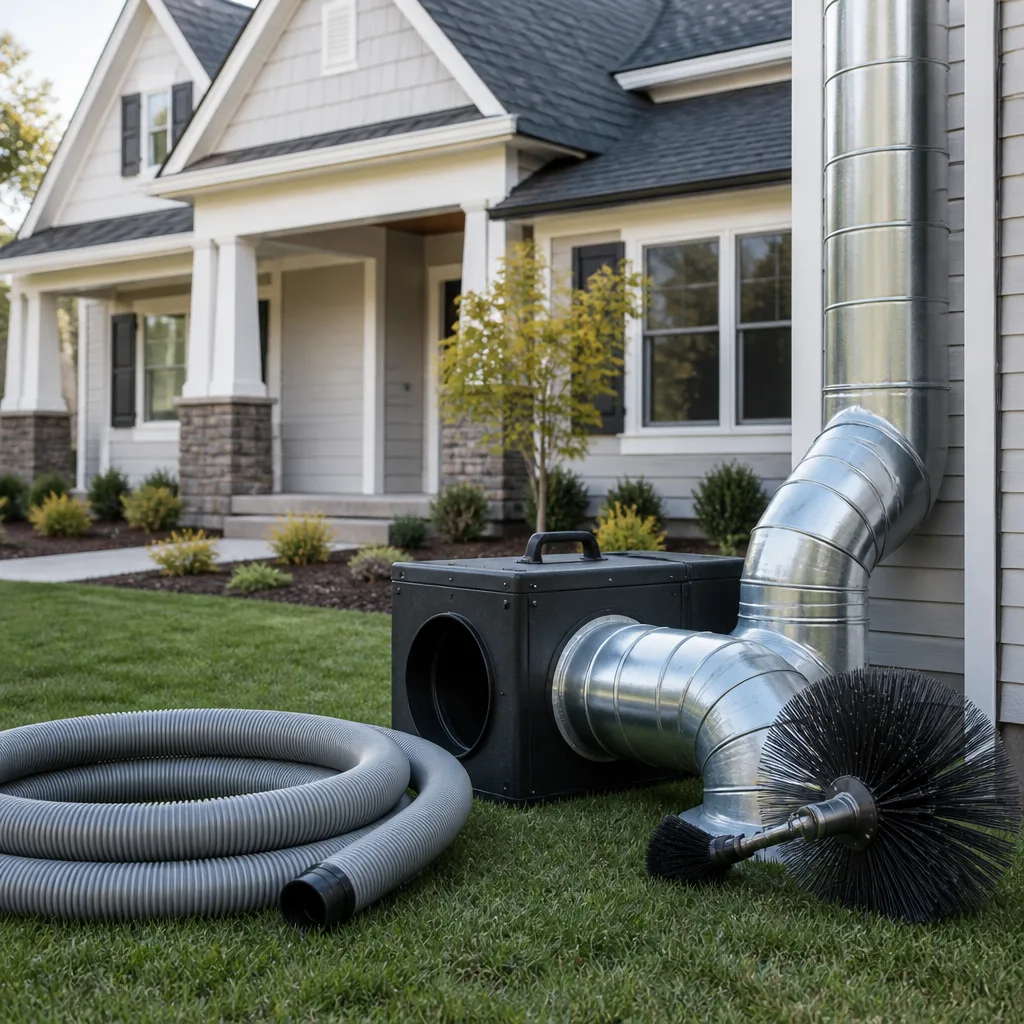 Whole-home duct cleaning
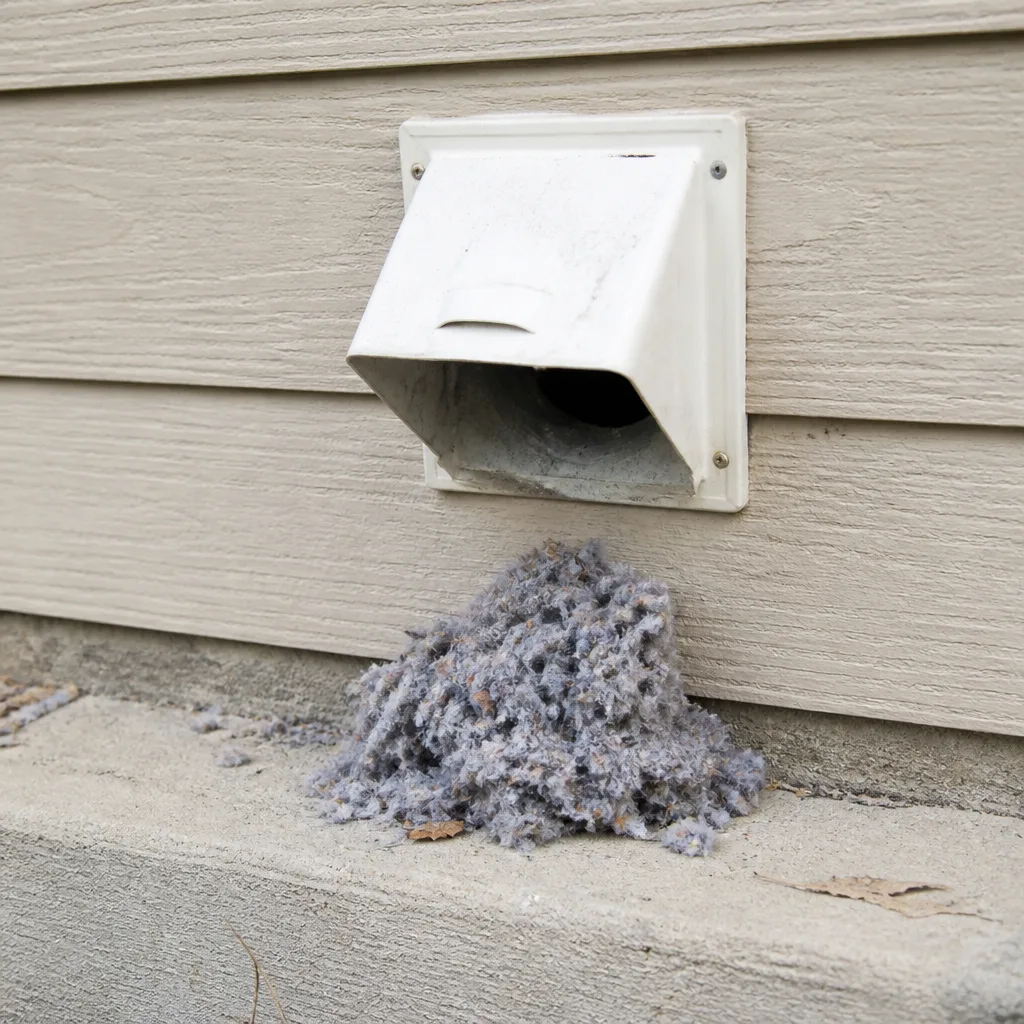 Dryer vent cleaning
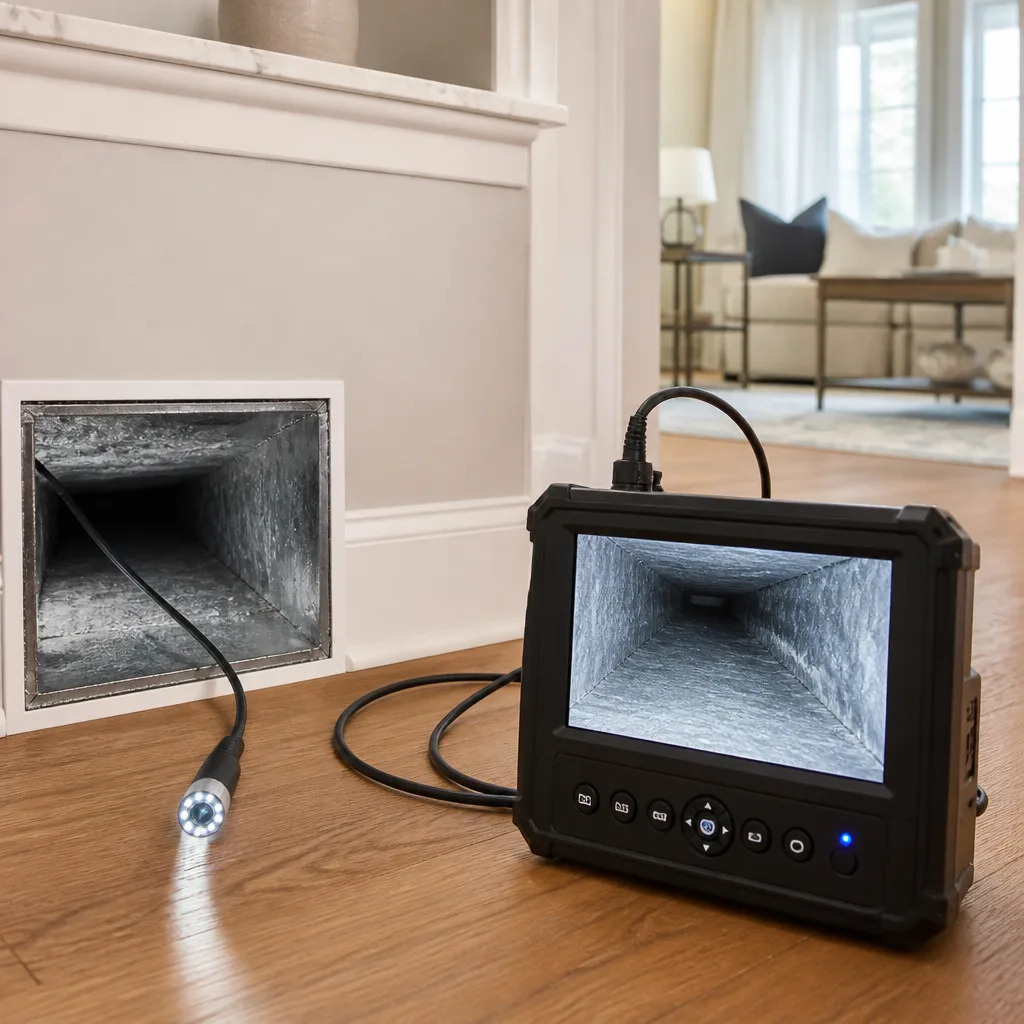 Camera inspection
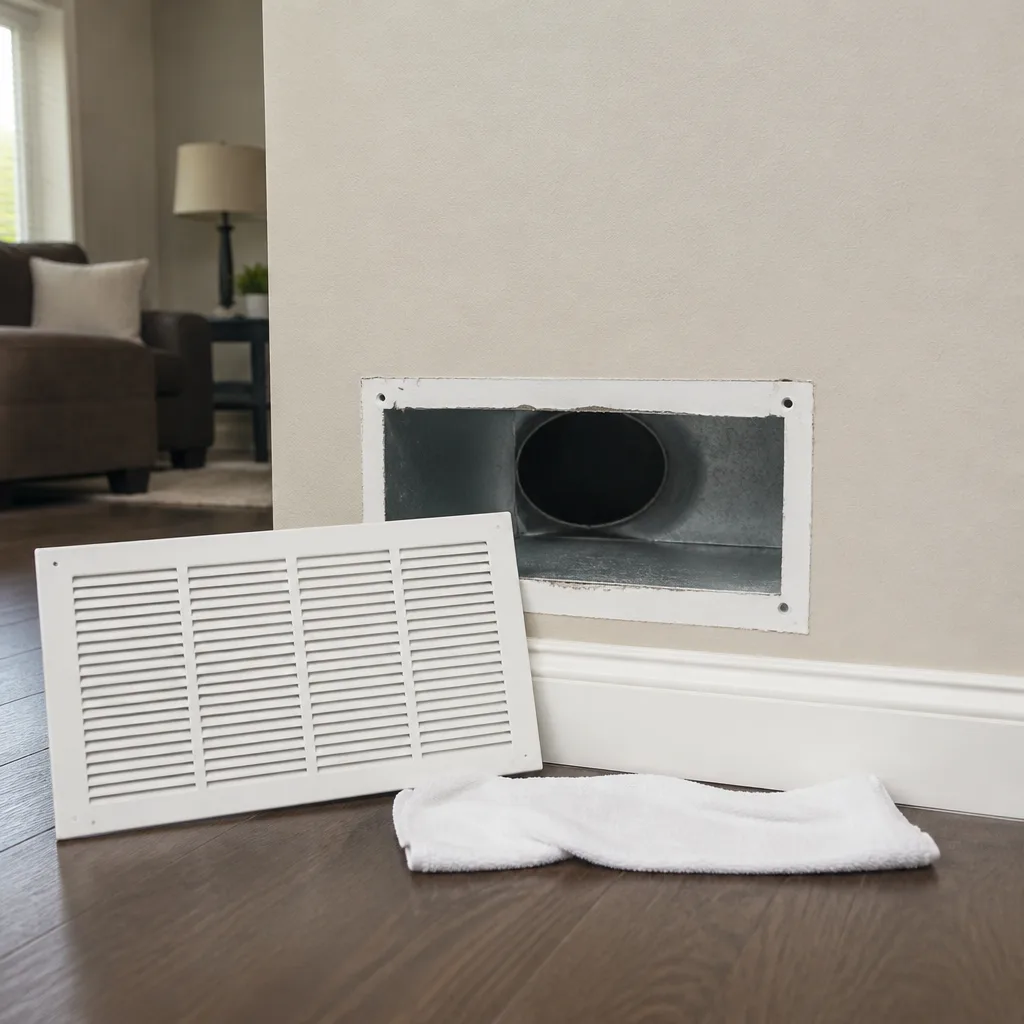 Sanitizing & deodorizing
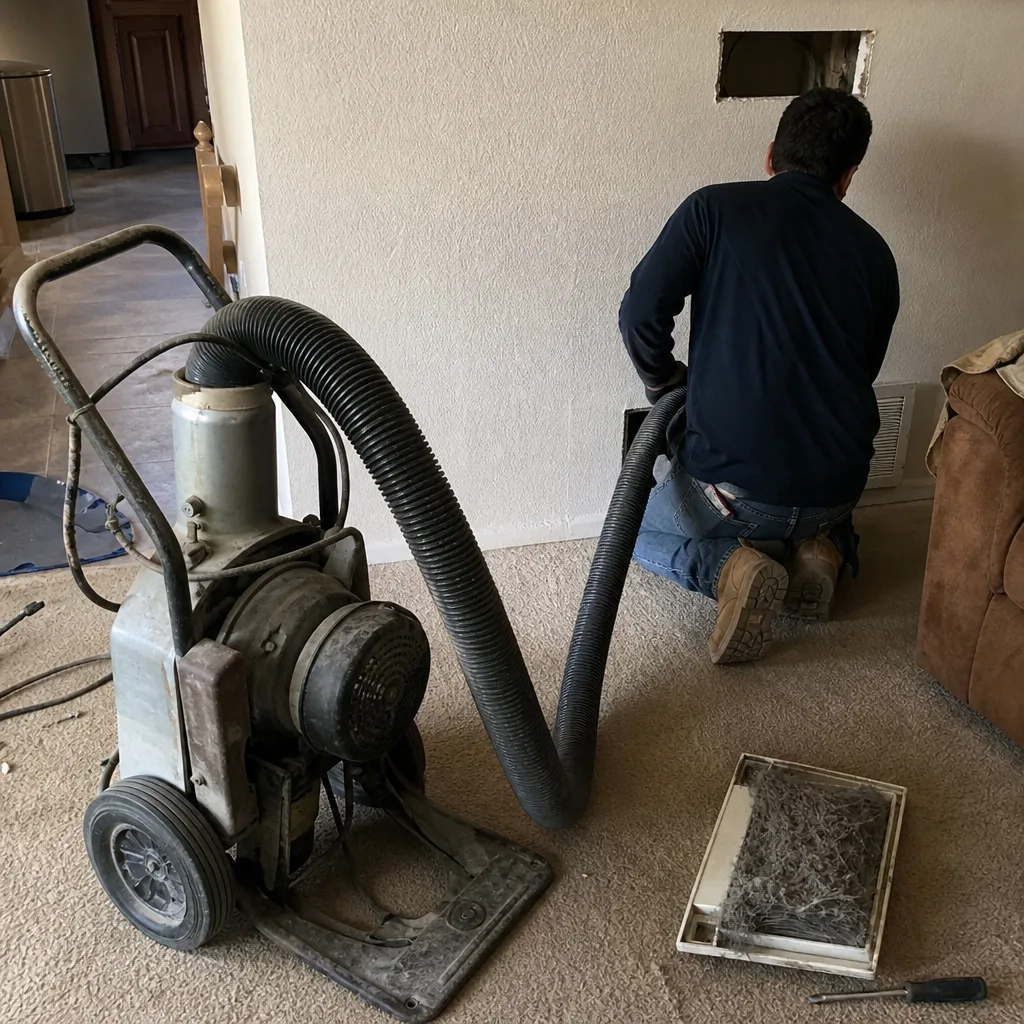
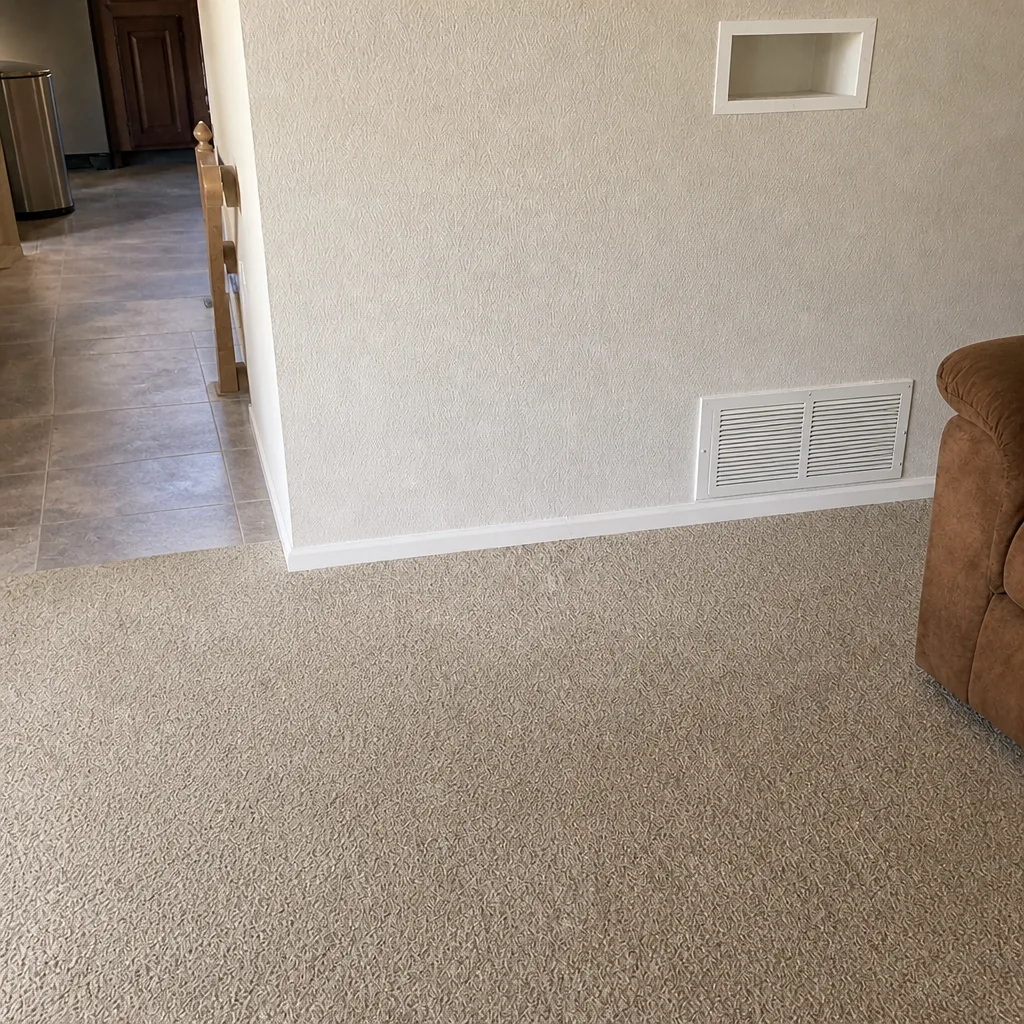
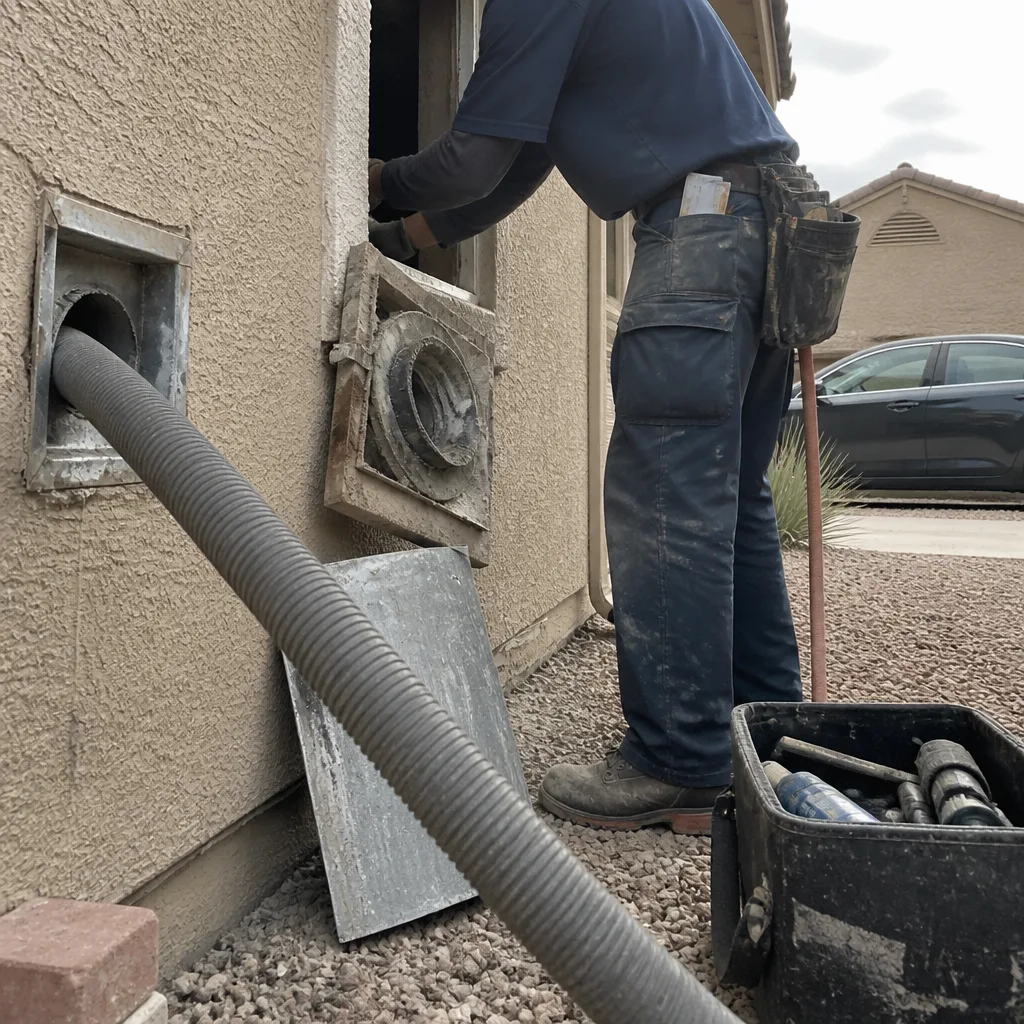
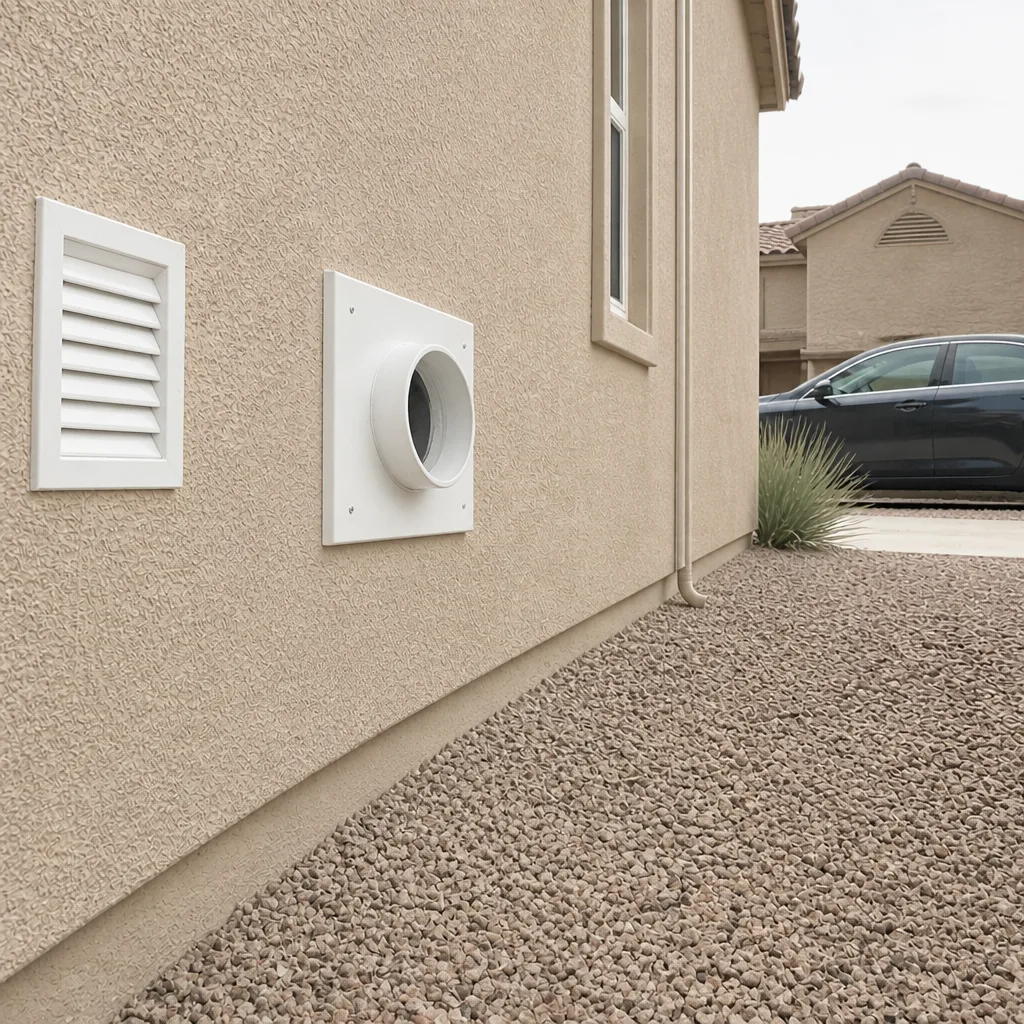
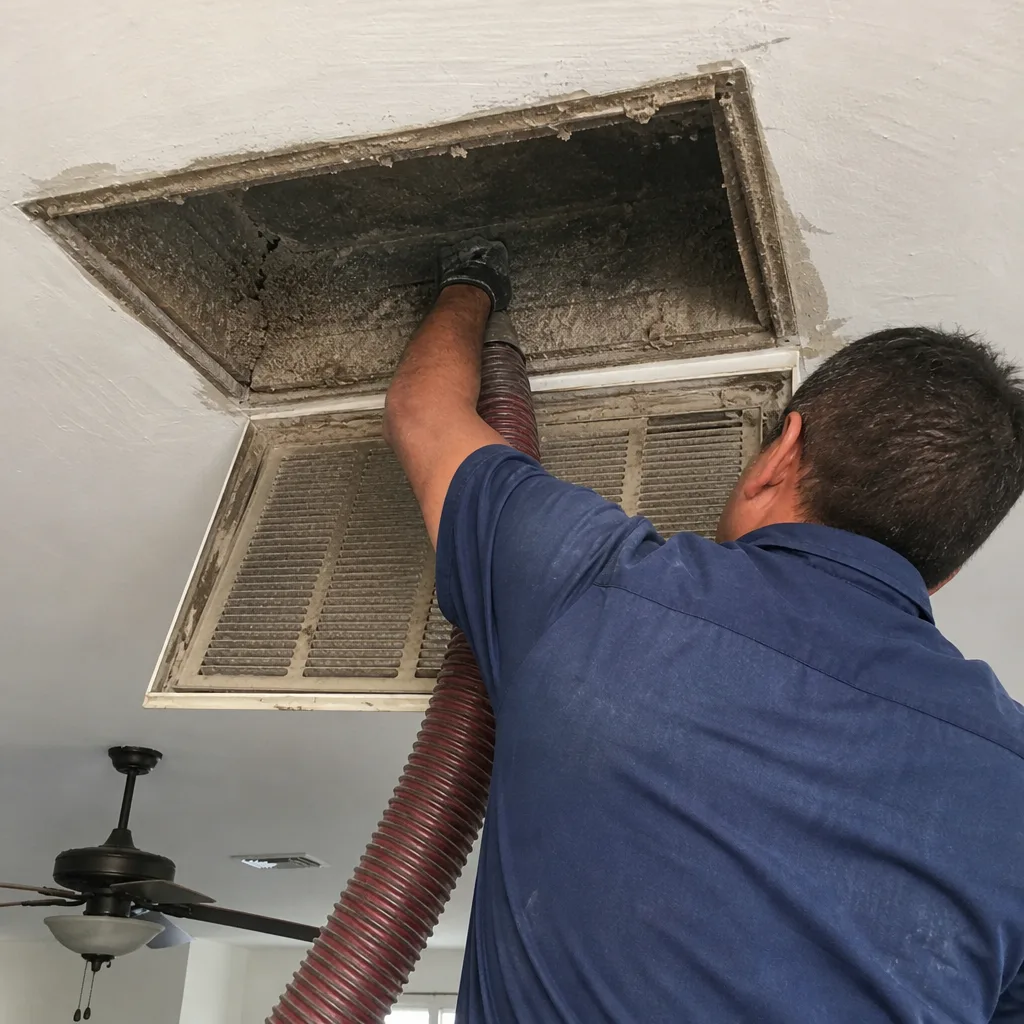
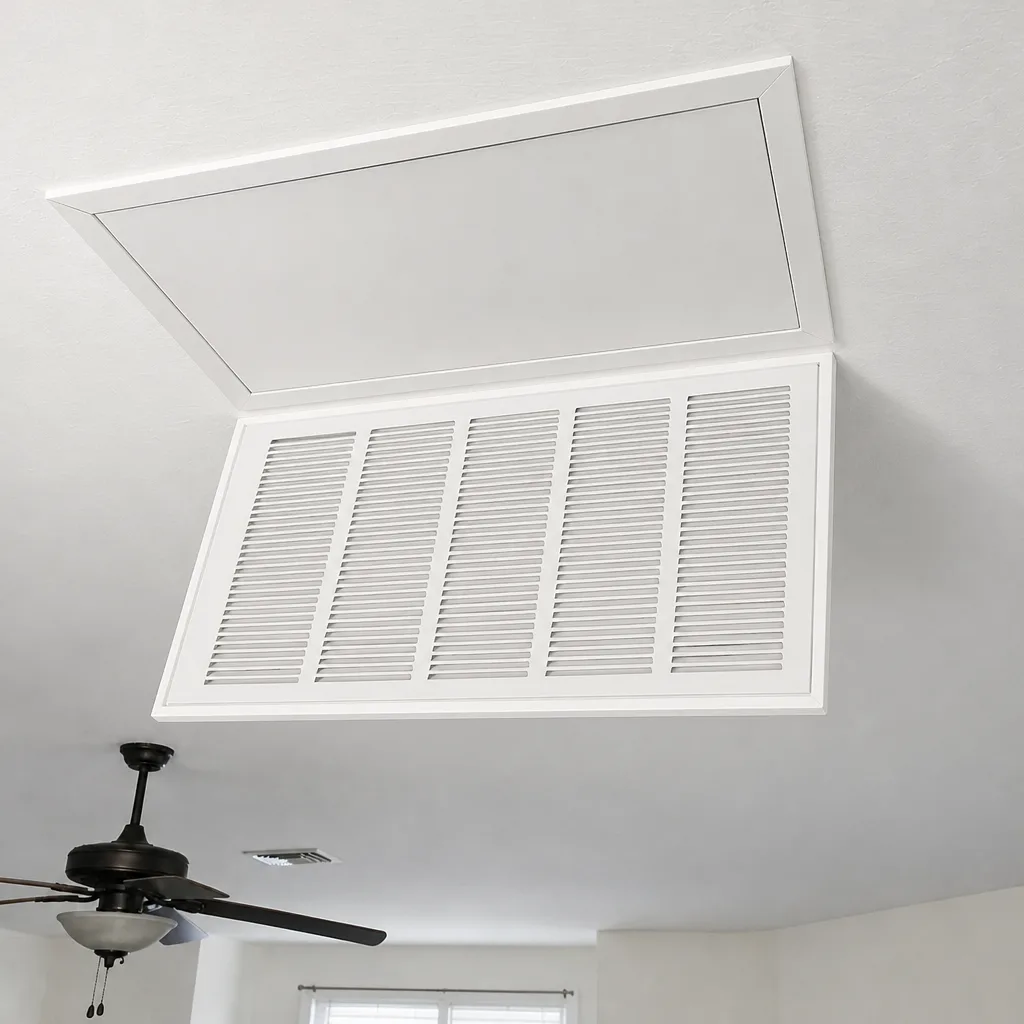
Whole-system duct and dryer vent check with before-and-after photos - you see exactly what came out of your vents
That "$99 whole-house special" is a bait ad - the real number appears once they are in your hallway, or the "clean" is a shop-vac at the register. We photograph the inside of your ducts before and after instead.
DIY vs Professional Air Duct Cleaning: The Goodyear Homeowner’s Decision Guide
Most guides on this topic dance around the one fact that settles the debate: airflow volume. A shop-vac pulls roughly 55 to 70 cubic feet per minute. The truck-mounted and portable collection units used in professional duct cleaning move 2,000 to 4,000 CFM. That gap changes the physics of what’s happening inside your ducts, not just the speed of it. You can push a hose into a register and watch dust disappear, but the contamination that settles along the flat runs and boot transitions stays put when your extraction equipment can’t pull hard enough to lift it. This guide walks through what DIY cleaning actually accomplishes, where it can go wrong, and how Goodyear’s caliche dust changes the calculation. You’ll finish knowing exactly what you can handle and what you shouldn’t.
Styles & brands we work with
- Whole-home duct cleaning
- Dryer vent cleaning
- Camera inspection
- Sanitizing & deodorizing
Quick Answer
Professional air duct cleaning removes contamination a shop-vac cannot. Consumer vacuums generate too little negative pressure to extract settled debris from duct interiors, so DIY work typically cleans registers and visible surfaces while leaving the actual problem untouched. For most Goodyear homes, professional cleaning is the right call once dust is visible at registers, allergic symptoms track with HVAC cycles, or a remodel has left construction particulate in the system.
Table of Contents
- Why Airflow Physics Decide This Debate
- What DIY Duct Cleaning Can Legitimately Accomplish
- What DIY Cleans (and What It Leaves Behind)
- Where DIY Attempts Create New Problems
- Why Goodyear’s Desert Dust Changes the Equation
- The Honest Middle Ground Between Cleanings
- How to Choose a Professional in Goodyear
- Common Mistakes to Avoid
- When to Call a Professional
- Frequently Asked Questions
Why Airflow Physics Decide This Debate
Suction distance isn’t what removes debris from a duct interior. Negative pressure differential is. That distinction matters more than any other factor in this comparison, and almost no DIY guides explain it because it makes the answer less flattering to the consumer-tool market.
Here’s the mechanism. Dust and particulate settle along the bottom of horizontal runs, accumulate at boot transitions where flow slows, and cling to the damp surfaces near evaporator coils. To lift that material, you need two things working together: mechanical agitation to break the bond between the debris and the duct wall, and enough air velocity to carry the loosened material into a collection system. Professional equipment like the Rotobrush and Nikro systems we use is built around this two-part process. Contact-vacuum heads agitate as they pull. A separate negative-air machine maintains pressure across the whole system so loosened debris moves toward collection rather than back toward the living space.
A shop-vac, even a large one, can’t do either part well. Its CFM rating measures pull at the nozzle, but it drops fast over distance, and the soft-tip attachments most homeowners use don’t agitate. What you end up with is a hose that sucks up the dust directly in front of it and leaves the settled material on the duct floor. The visible register gets cleaner. The interior either doesn’t change or shifts slightly downstream.
This is why in our experience the honest comparison isn’t “store cleaning vs pro cleaning.” It’s “surface cleaning vs system cleaning.” They’re different operations. For a fuller explanation of what professional work looks like, our air duct cleaning page walks through the actual multi-step process.
What DIY Duct Cleaning Can Legitimately Accomplish
We’re not going to pretend there’s nothing a homeowner can do, because there is. Register cleaning has real maintenance value. The supply registers and return grilles are where airflow enters and exits the system, and they collect a surprising amount of dust in a desert environment. Wiping them down, vacuuming the visible insides of the boot openings with a brush attachment, and keeping grilles unobstructed are all legitimate tasks.
What DIY handles well:
- Register and grille cleaning. Remove the grilles, wash them in the sink or hose them off outside, and let them dry fully before reinstalling. Visible dust on the slats and frame is the most common complaint we hear, and this addresses it.
- Boot surface wiping. The short transition duct visible behind each register collects dust on its lower surface. A microfiber cloth and a reach tool can clear the visible layer.
- Filter upgrades. This is where DIY genuinely moves the needle. Switching to a higher-MERV filter appropriate for your system (MERV 8 to MERV 13 is the usual range worth considering for most residential setups, though you should confirm your system can handle the increased static pressure) catches more particulate before it enters the ducts. Change it on schedule, usually every 60 to 90 days in an active home.
- Return air path clearing. Furniture, rugs, or boxes near return grilles restrict airflow and force the system to work harder, pulling more dust through the remaining openings. A few minutes of rearranging can help.
- Condensate and coil access cleanup. If your system has accessible coil panels, wiping away visible dust on the exterior covers keeps that area from reintroducing debris into the airflow.
These tasks keep the system from getting worse between professional cleanings. They don’t clean the ducts. That’s the distinction worth holding onto. A homeowner who wipes registers and changes filters on schedule is reducing load. A homeowner who assumes those tasks replace professional cleaning is misreading what the two operations do.
What DIY Cleans (and What It Leaves Behind)
Here’s the short version: DIY cleans what you can see and reach. It leaves behind what you can’t. The actual contamination in most systems lives in places a consumer tool never contacts.
That includes:
- Horizontal trunk runs. The long flat stretches of duct in the attic or crawlspace are where dust settles hardest, because airflow slows and particulate drops out of the airstream. A shop-vac hose pushed through a register can’t traverse a 20-foot run.
- Boot transitions. The change in duct geometry from the vertical boot to the horizontal run creates a pressure change where debris accumulates and clings. Agitation is required to break it loose, and shop-vac tips don’t agitate.
- Return plenums. The return side carries the highest contaminant load because it pulls room air back toward the system. Most homeowners never open the return plenum access, and many systems don’t make it easy.
- Evaporator coil fins. Dust bonded to the coil surfaces won’t come off with suction alone, and cleaning the coil requires specific technique to avoid bending fins or introducing moisture problems.
- Flex duct interior lining. Flex duct has a corrugated interior that traps dust in every groove. Extracting that material requires contact agitation plus sufficient negative pressure to justify the effort.
The pattern is consistent: the contamination that matters is the contamination that takes equipment and access to reach. For a look at what a full system extraction actually involves, our Duct Cleaning Goodyear page is a good starting point.
Where DIY Attempts Create New Problems
Beyond being ineffective, some DIY approaches actively disrupt the system. The scenario we see most often involves a homeowner with a shop-vac and a stiff-bristle attachment pushing into a flex duct run and dislodging a large amount of settled debris without having the extraction capacity to remove it. That debris now has to go somewhere. It goes downstream, into the living space, or into the air handler.
Specific risks worth knowing:
- Dislodging without extracting. Pushing a vacuum hose deep into a duct and moving it around loosens material that the vacuum can’t lift. That material settles further downstream or gets pulled into the evaporator coil, where it reduces efficiency and creates a moisture-holding dust mat.
- Disturbing flex duct connections. Flex duct is held at its connections with tape, mastic, or a collar. Repeated pushing and pulling from a homeowner with a shop-vac can break those seals or separate the inner liner from the outer jacket. Once separated, the duct loses insulation integrity and starts leaking air into the attic, which is worse than the dust problem you started with.
- Spreading particulate into living areas. Without negative air containment on the system, whatever you loosen has a path back through return grilles and into the rooms. If anyone in the household has allergies or asthma, this can trigger exactly the symptoms you were trying to address.
- Mold and moisture disruption. If there’s any mold growth in the system, dry-vacuuming can aerosolize spores and spread them through the house. This is why professional jobs involving mold use HEPA-filtered negative-air equipment like the Abatement Technologies units we handle.
- Registers reinstalled wrong. Small thing, but it happens. Grilles installed backward or with the wrong screws can strip the frame and create gaps that pull attic air.
If your system has any visible mold, a musty smell that tracks with HVAC operation, or a recent water intrusion, don’t attempt cleaning yourself. Those are contamination situations where the wrong method makes the problem worse. Call (844) 287-2528 and we’ll advise on the right approach.
Why Goodyear’s Desert Dust Changes the Equation
Goodyear’s dust is not like dust elsewhere. The fine particulate that comes off caliche soil and settles across the West Valley is largely in the PM2.5 to PM10 range. It behaves differently than the lint-and-skin-cell mix that dominates duct debris in humid climates. It’s finer, it’s mineral, and it’s abrasive.
Three consequences matter for the DIY vs professional decision:
- It stays suspended longer. PM2.5-range particles don’t drop out of airflow quickly. In the return side they stay entrained, which means the air handler is pulling them through the filter and toward the coil continuously. The filter catches most, but the fraction that gets past it (either from a low-MERV filter or from gaps in the filter housing) deposits on coil fins throughout the home’s life.
- It clings differently. Caliche-derived dust tends to develop a fine paste layer on cool surfaces when humidity rises, which is exactly what evaporator coil fins are. That paste is harder to lift with low-CFM suction than the dry fluff you get in other climates.
- It resists low-velocity extraction. The fine particle size means there’s less mass per particle for a low-CFM airflow to move. High-velocity, high-volume extraction is more effective on this dust, not less.
Add monsoon season, when Goodyear humidity climbs for a few weeks and dust that’s been dry all spring gets a chance to bond to duct and coil surfaces, and the interval between cleanings shortens for many homes. For homes near new construction in the Goodyear area, the load is higher still because construction particulate adds to household dust. We’ve seen plenty of these homes, and the pattern is consistent: DIY surface cleaning looks like it’s making progress because the registers stay clean, while the trunk runs and coil keep loading.
The Honest Middle Ground Between Cleanings
Most homeowners don’t need professional cleaning on a fixed calendar. Duct cleaning interval depends on the household, and we’d rather explain what drives the decision than hand out a number. But there’s a lot you can do to extend the interval and reduce system load in between cleanings. Here’s the sequence worth following.
- Upgrade and maintain your filter. Confirm what MERV your system can handle, then stick to it and change it on a 60 to 90 day schedule (more often during monsoon season or after dusty wind events). Filter discipline is the single biggest impact most homeowners have.
- Seal the return air path. Walk the return plenum and the return grille frames looking for visible gaps where attic air can enter. A tube of mastic and a few minutes can close a surprising amount of leakage. This matters in Goodyear because attic air carries the full outdoor dust load.
- Clean registers on a schedule. Every 90 days, remove grilles and wash them, wipe the visible boot surfaces, and check for dust trails on the boot walls that signal airborne dust in the airstream.
- Check the outdoor condenser and filter grille. Dust and cottonwood fluff accumulate on the condenser fins quickly in this climate. Rinsing from the inside out (never with a pressure washer) helps. A clogged outdoor filter grille strains the system and changes how much particulate makes it inside.
- Watch for symptom patterns. Dust appearing on surfaces within days of cleaning, allergy symptoms that flare when the HVAC cycles, a musty smell at startup, or visible dust streaks on the diffuser vanes all suggest the system has hit the cleaning threshold.
- Keep the dryer vent clean. Not a duct run in the HVAC system, but a real fire hazard that most homeowners defer. Our dryer vent cleaning page covers why that’s worth handling at the same time as any HVAC service.
This is what we’d call load management. It doesn’t replace professional cleaning. It means you’re doing fewer of them and getting more from each. The Abatement Technologies equipment we have on hand is for jobs that go past routine dust and into contamination territory, but the everyday environment here in Goodyear is more about fine particulate management than contamination removal.
How to Choose a Professional in Goodyear
If the physics makes the case, choosing the right technician is the next decision. Duct cleaning has a well-earned reputation problem, and a big reason is that the industry’s low-cost entry point is often a register-only cleaning dressed up as a full service. Here’s how to separate them.
Ask these questions before booking:
- What equipment will be used? Professional-grade contact-vacuum systems (Rotobrush, Nikro) plus a separate negative-air machine. If the answer is “a shop-vac and brushes,” the price may be lower but the work won’t be comparable.
- Will you clean the full system or just the registers? A full cleaning covers supply trunk runs, return plenum, boots, and the air handler area. Register-only cleans are common and often priced to look attractive.
- Do you agitate the duct walls? Push-pull with agitation is the standard. Suction alone doesn’t lift settled debris.
- Can you handle contamination situations? Mold, heavy allergen loads, or post-construction particulate require Abatement Technologies-level negative-air gear. Ask what that job would look like.
- Will you show before-and-after photos of our own system? Not stock photos. Yours.
- Do you also repair ducts? If the technician finds a breached connection, you want the same company to fix it rather than hand you a phone number for a second contractor. We clean it, and if we find a breach, we fix it.
- Is the price a flat per-system figure, or a per-vent quote? Per-vent pricing invites the surprise at the door. A whole-system flat price agreed in advance is the honest structure. We’ll give you both the estimate and the confirmation before any work starts.
If you’re also familiarizing yourself with filter and ventilation upgrade categories, staying aware of Honeywell and Aprilaire product families is worthwhile because a technician who knows those systems can speak to what will actually fit your air handler rather than sell you a generic accessory.
Common Mistakes to Avoid
- Assuming the register clean was the whole job. Register cleaning is the visible part of the work. If the technician never connected equipment to the plenum or trunk runs, the interior wasn’t cleaned.
- Using a leaf blower or shop-vac on flex duct. The corrugated inner lining can be damaged by aggressive tools, and the dislodged debris has nowhere to go. Skip this one.
- Filtering too aggressively without checking static pressure. A MERV 16 filter on a system designed for MERV 8 can strain the blower and reduce airflow. Ask your system installer or call us if you’re unsure what your air handler supports.
- Ignoring the dryer vent. This is the fire hazard most companies don’t mention. Lint buildup inside the dryer vent run is a documented residential fire cause, and it’s separate from your HVAC ducts. Have it cleaned on its own schedule.
- Cleanig only when visibly dusty. A system can be loaded long before you see dust trails at the register. If you’re in a Goodyear home near new construction or have recently completed a remodel, the construction particulate load is higher than visible dust suggests.
- Taking the lowest per-vent quote. When quotes look dramatically cheaper, the scope is usually narrower: register-only cleaning, no negative air, no agitation. That’s a different service. Our approach is one flat price per system, agreed before work starts.
- Reopening the system yourself after any cleaning. Once the airstream has been cleaned, opening the plenum to check inside introduces a leak that lets attic air back in. Let the technician do the final walk-through and show you the before-and-after photos.
When to Call a Professional
You should call a professional when the visual evidence goes past what register cleaning can address: dust trails on the diffusers within days of a clean, symptoms that track with the HVAC cycle, visible debris in the return, or a known construction or remodel event that pushed particulate into the system. You should call sooner if there’s any sign of mold growth, a persistent musty smell at startup, or a recent water intrusion. In those cases, low-CFM DIY work can aerosolize spores through the house and turn a manageable cleaning into a contamination removal job.
You should also call if a technician has told you your ducts are fine but your system still isn’t delivering the airflow or comfort you’d expect. Duct repair is a third-service capability that most cleaning companies don’t offer, and a breached connection in the attic can be the source of both the dust and the comfort issue. We clean it, and if we find a breach, we fix it.
Duct Cleaning Goodyear offers free estimates in Goodyear. Call (844) 287-2528 and we’ll assess the system and quote a flat price per system before any work starts. We answer 24/7. Fast dispatch from 7am to 7pm, Sunday through Friday.
Frequently Asked Questions
Most routine residential cleanings in Goodyear fall within a broad range depending on home size and system complexity, and the honest answer is that any per-vent teaser price you see advertised is priced to get a technician in the door, not to cover the actual work. We quote a flat per-system price from a written estimate before work starts, and that’s the number on the invoice. Call (844) 287-2528 for an exact quote; estimates are free.
Cheaper quotes are almost always register-only cleanings. They clean the grilles and the visible boot surfaces with a shop-vac and don’t connect equipment to the plenum or trunk runs. The register looks cleaner and the price looks honest, but the interior hasn’t been touched. The equipment tier matters too: a Rotobrush or Nikro system with a negative-air machine is a different capital and labor cost than a shop-vac rig. If the price seems unusually low, ask what equipment is used and whether the quote covers the full system.
Ask for before-and-after photos of your own ducts, taken during the job. Not stock images, not a portfolio from another house. A technician who uses professional equipment will also be willing to show you the negative-air setup and explain the process. And follow up with a visual check at the registers a few days later: if the dark dust trails return in days, the interior wasn’t cleaned.
There’s no single schedule that fits every home. Households with pets, allergy sufferers, recent construction, or a habit of keeping windows open during dusty wind events usually need more frequent cleaning than a closed-home, no-pet household. In our experience, the useful signal is symptom-driven (dust return time, allergy patterns, odor) rather than calendar-driven. Focus filter discipline and register maintenance between cleanings. When you’re not sure whether it’s time, call and describe the pattern.
Yes, occasionally. The most common damage is a dislodged flex duct connection, particularly when a shop-vac hose is pushed into a run with force. The inner liner can separate from the outer jacket, which creates a leak into the attic and reduces system efficiency. There’s also the debris-spreading problem: material loosened without sufficient extraction ends up in the air handler or the living space. If you’re cleaning registers and grilles, you’re safe. If you’re reaching into the runs, stop and call a professional.
No. The dryer vent is a separate run with a separate hazard profile. Lint buildup inside the dryer exhaust is a documented residential fire cause, and the equipment and method are different from HVAC duct cleaning. We treat dryer vent cleaning as its own service for that reason. If it’s been years since yours was cleaned, or if the dryer takes two cycles to dry a load, it’s worth scheduling on its own.
At minimum, a contact-vacuum system with agitation capability plus a separate negative-air machine. For homes with allergen, mold, or post-construction particulate concerns, HEPA-filtered negative-air units capable of maintaining containment through the job. The names you’ll see on professional-grade equipment are Rotobrush, Nikro, and Abatement Technologies. If a technician arrives with a shop-vac and a brush, you’re getting register cleaning, not duct cleaning.
Yes. Air duct repair is one of our three core services, so a technician who finds a breached connection or separated flex joint can address it during the visit rather than leaving you to schedule another contractor. That’s a real convenience when the leak is also the source of the comfort problem that prompted the cleaning call in the first place. Call (844) 287-2528 to discuss what you’re seeing.
The Bottom Line
The DIY vs professional debate has a clear answer because the physics has a clear answer. Consumer vacuum equipment generates a fraction of the airflow professional grade equipment produces, and that difference decides whether settled contamination actually leaves the duct interior or just shifts downstream. DIY register cleaning, grille washing, and filter discipline are genuinely useful maintenance tasks, and you should keep doing them. They extend the interval between professional cleanings and reduce total system loading. What they cannot do is clean a duct system, and in Goodyear’s fine caliche dust, the difference is easy to feel because the dust comes back fast. When you’re ready for the real service, our technicians have up to 13 years of experience and use professional-grade equipment from Rotobrush, Nikro, and Abatement Technologies. Call (844) 287-2528. We answer 24/7, with fast dispatch from 7am to 7pm, Sunday through Friday. Estimates are free, and the price is set per job by the written estimate.
Written by the team at Duct Cleaning Goodyear.
See the difference
 Before
 After
 Before
 After
 Before
 After