
Last updated November 15, 2026
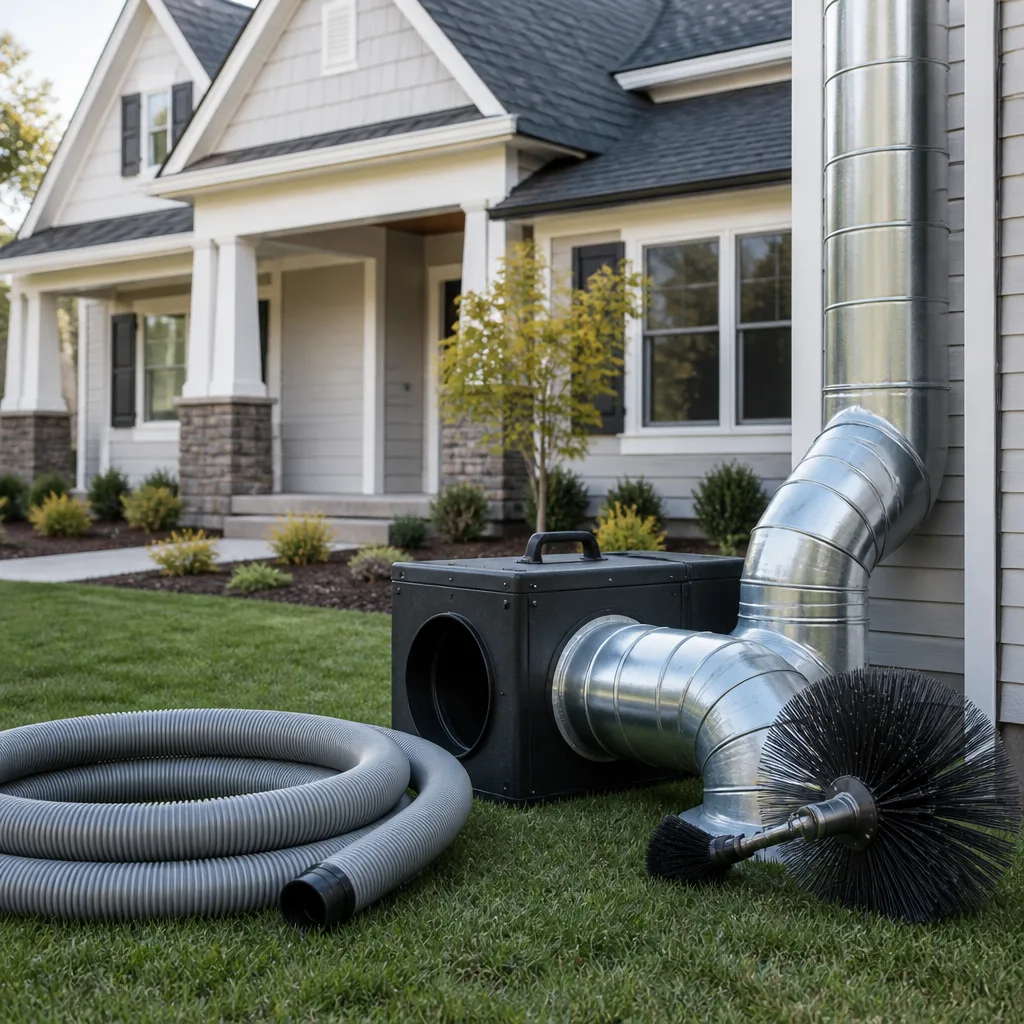 Whole-home duct cleaning
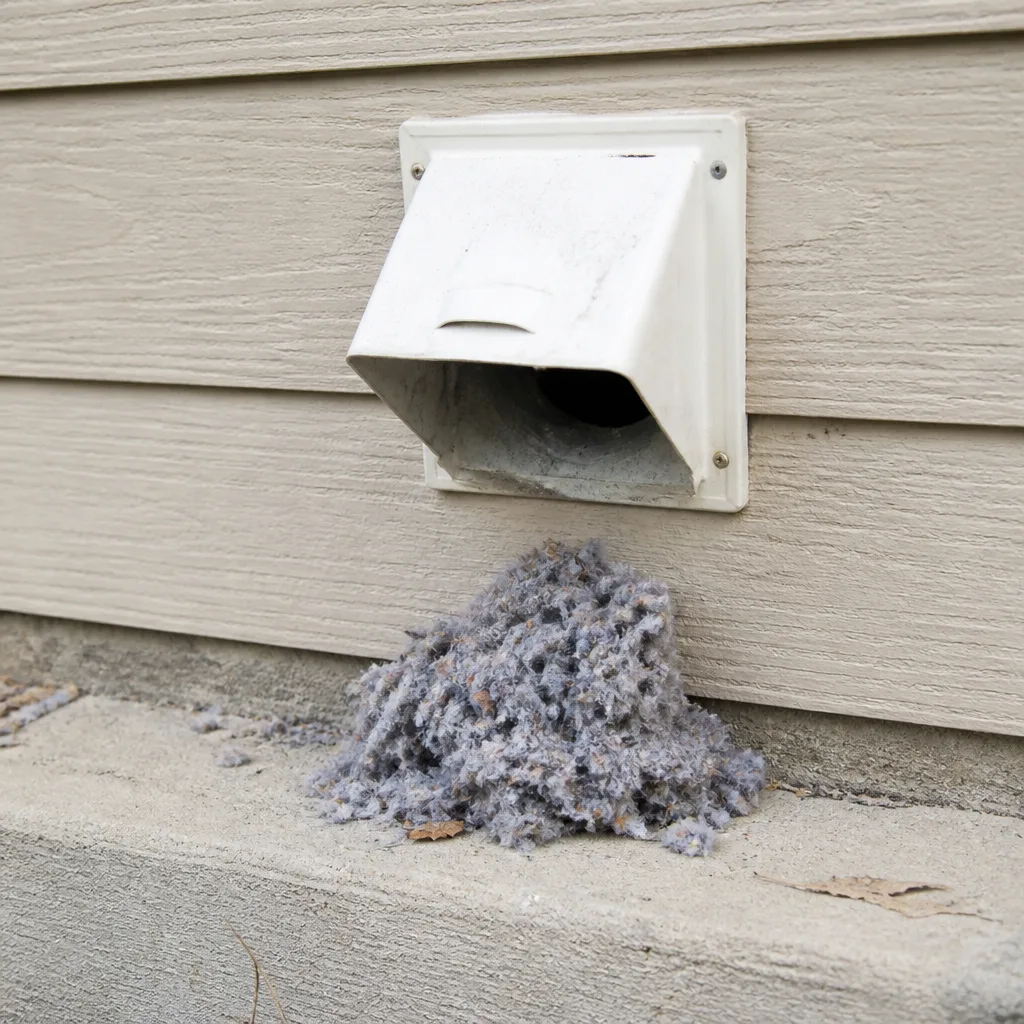 Dryer vent cleaning
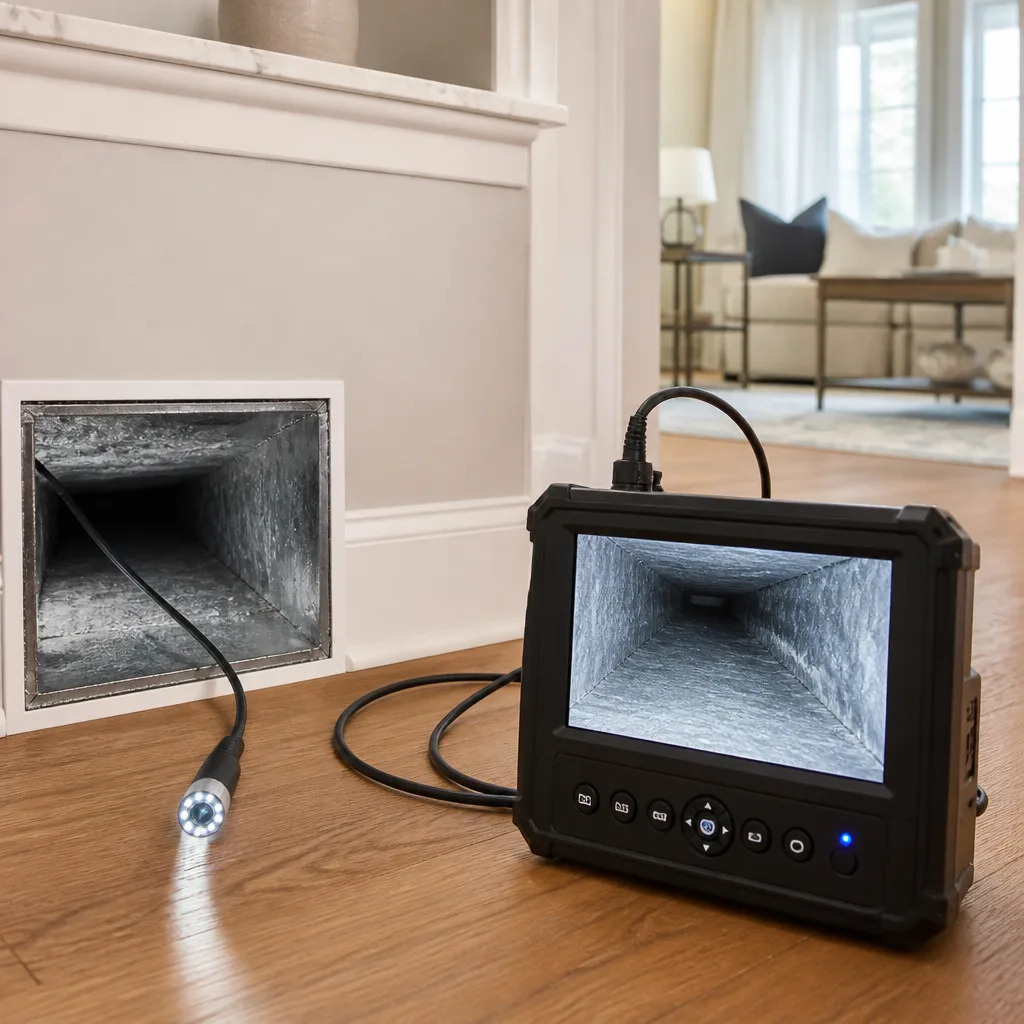 Camera inspection
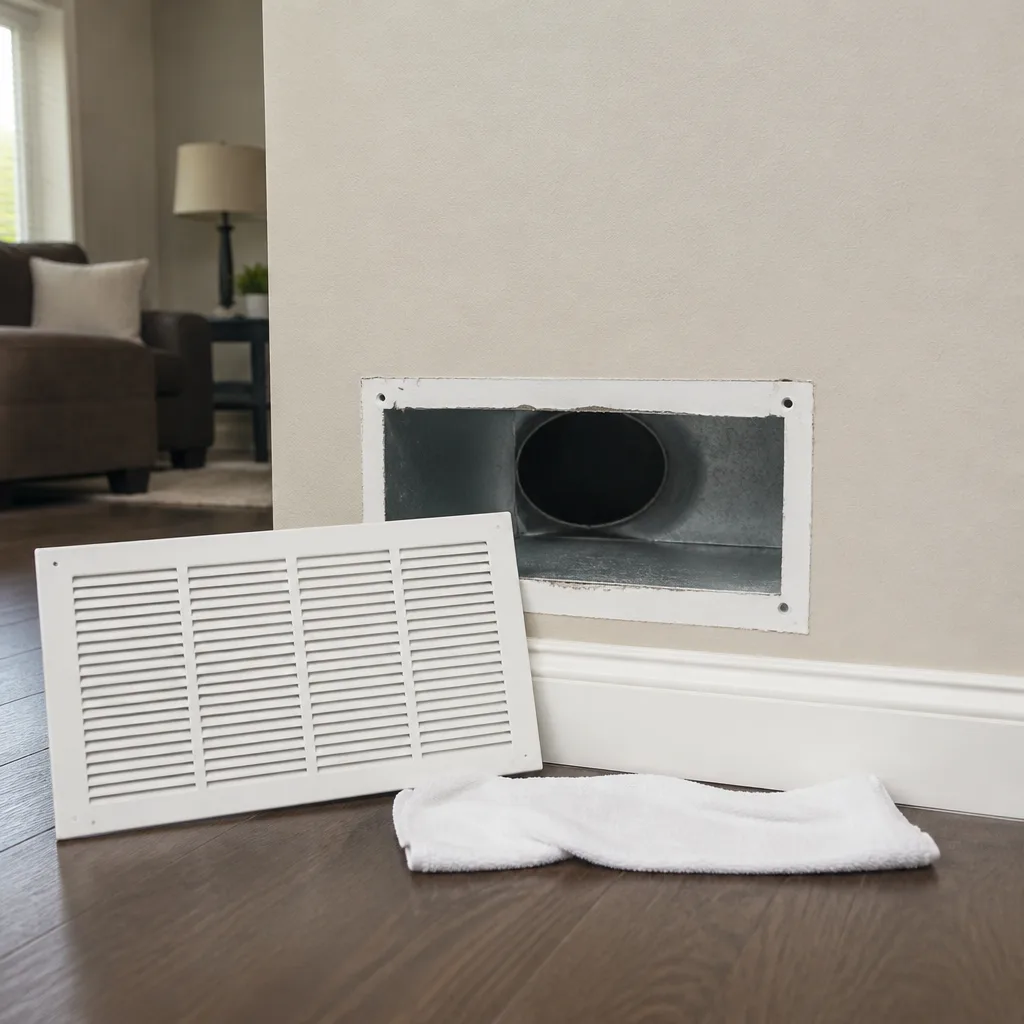 Sanitizing & deodorizing
Whole-system duct and dryer vent check with before-and-after photos - you see exactly what came out of your vents
That "$99 whole-house special" is a bait ad - the real number appears once they are in your hallway, or the "clean" is a shop-vac at the register. We photograph the inside of your ducts before and after instead.
Air Duct Cleaning Maintenance Schedule: What to Do and When
A family in Portland runs their air conditioner four months a year. A household in Goodyear runs theirs eight or nine months. Both are handed the same “clean every 3 to 5 years” recommendation by every national guide on the internet. That advice ignores everything that matters about where you actually live. Goodyear’s climate, its dust, and its cooling loads push contamination through ductwork at a pace those generic timelines were never written to describe. This guide builds a maintenance schedule around how your home actually operates in the West Valley: what to inspect, when to inspect it, and how to know when cleaning is genuinely due.
Quick Answer
For most Goodyear homes, professional duct cleaning belongs on a 2 to 3 year cycle, not the 3 to 5 year national default. Homes with pets, recent construction, or anyone with respiratory sensitivity often need it closer to every 2 years, while a newer home with sealed ductwork and disciplined filter changes can stretch toward 4. Filters need changing every 1 to 2 months here, not every 90 days. Everything else – inspection, register cleaning, return grille checks – fits into a simple seasonal calendar you can run yourself.
Styles & brands we work with
- Whole-home duct cleaning
- Dryer vent cleaning
- Camera inspection
- Sanitizing & deodorizing
Table of Contents
- Why Goodyear’s Climate Rewrites the Standard Schedule
- How to Calculate Your Own Cleaning Interval
- The Month-by-Month Maintenance Calendar
- Filter Replacement Cadence for High-Desert HVAC Loads
- What You Can Do Yourself and What Needs Professional Equipment
- Documenting Your System’s Baseline After Cleaning
- Signs Your Ducts Are Due Before the Calendar Says So
Why Goodyear’s Climate Rewrites the Standard Schedule
Duct contamination is a function of how much air moves through the system and what rides along with it. In Goodyear, both numbers run high. Summer temperatures regularly pass 100°F for more than 70 days a year, which means air conditioners run through the night and into the morning rather than cycling off in the afternoon cool. Every one of those hours pulls air – and the particulate suspended in it – through the return side of the system and across the blower, coil, and supply trunk.
Then there’s the dust. Goodyear sits in the West Valley where wind events and haboobs lift fine desert particulate into the air with little warning. A single storm can push a visible layer of dust across driveways and patios, and some of that same material finds its way indoors, through gaps, and into return grilles. Standard 1-inch filters catch the coarse fraction. The fine silt that gets past them settles on duct walls, where low-velocity air in the branch runs lets it stay put.
What does that mean in practice?
- AC runtime is the engine. Eight or nine months of cooling duty circulates far more air through your ducts annually than a four-month cooling season does elsewhere.
- Dust events add load. Each haboob or high-wind day deposits material that a normal week of operation wouldn’t deliver.
- Newer housing stock isn’t exempt. Areas of Goodyear that saw heavy residential building over the past two decades carry construction particulate that can stay in branch ducts for years if the system wasn’t properly cleaned after the build.
- Duct material changes the picture. Sheet metal with sealed joints holds less than flex duct with loose connections or older duct board, which can shed fibers and trap dust in ways metal doesn’t.
If you want the service story behind all of this, our Duct Cleaning Goodyear page explains the equipment we bring to a residential job, from Rotobrush contact-vacuum systems to Abatement Technologies gear for heavier particulate loads. The schedule below is what matters first.
How to Calculate Your Own Cleaning Interval
Instead of picking a number out of the air, score three variables specific to your home. This gives you an interval grounded in your actual conditions rather than a national average written for a milder climate.
- Average daily AC runtime. Pull a summer power bill and compare it to your spring bill. Heavy year-round runtime through a long cooling season means more air has passed through the ductwork since your last cleaning. Households running the system nearly continuously for eight or nine months accumulate exposure roughly twice as fast as a household running it four months.
- Home age and duct material. A home built in the last two decades may still carry construction dust in branch runs. A retrofitted system with flex duct and loose connections collects material at the joints first. Metal trunk lines with mastic-sealed joints hold less. Note your duct type before you set an interval.
- Dust storm exposure in your ZIP code. Goodyear neighborhoods on the western and southern edges, closer to open desert, catch more windblown silt than pockets tucked behind developed areas. If you sweep your patio more often than your neighbors do, your ducts probably see more of the same material.
Combine them into a working number:
- Heavy load, older or flex duct, high dust exposure: clean every 2 years, and check the blower and evaporator coil annually.
- Moderate load, mixed ductwork, average dust exposure: every 2 to 3 years.
- Newer home, sealed metal ductwork, disciplined filter changes, no pets: stretch toward 3 to 4 years, but verify with a visual inspection first.
Add one adjustment: anyone in the household with allergies or asthma, or a home with multiple pets, should sit at the short end of their range regardless of the other scores. When you’re ready for the cleaning itself, our air duct cleaning service page covers what a whole-system job involves.
The Month-by-Month Maintenance Calendar
Goodyear’s year has three distinct transitions for an HVAC system: the run-up to monsoon season, the dust-heavy stretch that follows it, and the handoff to heating season. Build your inspection schedule around those, not around arbitrary quarterly reminders. Here’s the calendar we’d hand to any homeowner in Goodyear.
March through May: Pre-Season Prep
- Replace the filter at the start of cooling season, and again 30 to 45 days in.
- Walk every supply register and confirm airflow and grille fit. Rattling or loose grilles pull unfiltered air from the room side.
- Check the return grille for visible dust matting. If the grille face is coated, the duct behind it likely is too.
- Look at the outdoor condenser and clear any debris. This isn’t ducts, but a struggling system runs longer and circulates more air.
June: Before Monsoon Season
- Do a visual inspection of accessible duct runs and the air handler closet. Look for dust accumulation at the coil face and loose duct connections.
- Confirm the filter fits snugly in its slot – gaps around a filter let unfiltered air bypass it entirely.
- Record what you see. This becomes your baseline for comparison after the dust season ends.
July and August: Peak Dust Watch
- Expect dust storms and wind events. After any significant one, check filters early rather than waiting for the next scheduled change.
- Watch for increased dust settling on horizontal surfaces indoors. That’s a signal particulate is getting past the filter.
- Filtration upgrades are worth considering now if you’ve been on the fence – Honeywell and Aprilaire whole-home systems are designed to handle exactly this kind of seasonal particulate load.
September: After Peak Dust
- Inspect return grilles and filters for visible dust accumulation from the storm season.
- Check for any new whistling or rattle at registers – a sign a duct joint shifted or a connection loosened during the high-load months.
- This is the ideal window to book a professional cleaning if your interval is due, before the system shifts to heating duty.
October and November: Before Heating Season
- Replace the filter before switching from cooling to heating.
- Inspect ductwork in the attic if accessible – heat rises, and duct runs there see the biggest temperature swings.
- Check dryer vent airflow as part of the same walkthrough. Cooler months are a good time to look at it before the heavier laundry cycles of the holidays.
December through February: Low-Load Inspection Window
- The system runs less. This is a good window for professional service if scheduling matters to you.
- Do a visual check for condensation or staining near the air handler – not common in the desert, but worth ruling out.
- Review your baseline notes from June and plan the next cleaning based on what changed.
Filter Replacement Cadence for High-Desert HVAC Loads
The standard “change your filter every 90 days” advice fails in West Valley homes. That number assumes a system running a few hours a day across a mild cooling season. Your system runs for months at a stretch, pulling air through a filter that loads up faster than the national average accounts for. In our experience, 30 to 45 days is a much more realistic cadence from May through September, and 60 days outside the cooling season.
What to change matters as much as when:
- 1-inch filters: budget-friendly but low surface area. They load quickly under desert conditions and should be changed at the 30-day mark in summer.
- 4- to 5-inch media filters: more surface area means a longer service life, though 60 to 90 days is still realistic under heavy runtime.
- Whole-home filtration: Honeywell and Aprilaire systems use media cabinets designed for better capture. These still need checking on the same cadence; they just hold more before loading.
Two habits worth building. First, write the install date on the filter frame in marker. Second, keep a spare on the shelf so a June filter change doesn’t turn into a three-week delay. A filter that’s visibly gray and clogged is bypassing air around its edges rather than through the media, which is worse than having no filter at all.
Air quality starts behind the walls, and the filter is your first line of defense there. Getting the cadence right reduces how hard the ductwork downstream has to work to stay clean.
What You Can Do Yourself and What Needs Professional Equipment
There’s a clear split between tasks that fit a homeowner’s Saturday morning and tasks that require machinery a homeowner can’t reasonably buy or operate. Knowing the line keeps you out of trouble and makes the cleaning interval easier to judge.
Homeowner Tasks
- Replacing filters on schedule.
- Removing and washing supply register grilles with mild soap and water.
- Vacuuming the return grille face.
- Visually inspecting accessible duct runs and photographing what you find.
- Checking dryer vent exterior flapper operation and clearing visible lint.
- Sealing obvious gaps between register boots and drywall with caulk or foam.
Tasks That Require Professional Equipment
- Cleaning the interior surfaces of duct runs. A shop vac doesn’t develop the negative pressure or agitation needed to dislodge material that’s adhered to duct walls.
- Cleaning the evaporator coil face and the interior of the air handler cabinet.
- Any situation involving visible mold or heavy allergen accumulation. Abatement Technologies negative-air equipment exists specifically because this work requires containment, not just suction.
- Repairing breached or disconnected duct runs. A cleaning done without repairing the breach is only half the job.
- Dryer vent cleaning from the interior run. Lint that has compacted along the metal duct cannot be removed with a homeowner vacuum, and this is where residential fire risk concentrates.
If you find a disconnected duct, sagging flex run, or a register boot disconnected from the ceiling, the repair matters more than the cleaning. We clean it, and if we find a breach, we fix it – which is why having a company that handles both dryer vent cleaning and duct repair under one roof is worth considering. In our experience, half the value of a professional visit comes from what we find while we’re in there, not just what we clean.
Documenting Your System’s Baseline After Cleaning
One of the biggest complaints homeowners have about duct cleaning is that they can’t verify what was done, and they can’t tell if the next cleaning is actually necessary. Both problems are solvable with a proper baseline documented after a cleaning.
- Before-and-after photos of your own ducts. Ask for images of the return plenum, at least one trunk section, and the air handler. Compare them side by side. The difference should be visible, not implied.
- A written summary of what was cleaned and what was repaired. The summary should list any breach found, what was repaired, and what was left as-is.
- A photo of the filter slot. Confirms the right filter size and fit at the time of service.
- A note on your current duct material and condition. Sheet metal, flex, or duct board – and the approximate age of the run.
- The measured static pressure reading at the air handler. Not every installer takes this, but a professional-grade visit should. It’s the number future cleanings can be compared against.
Once you have this baseline, the next cleaning gets scoped accurately. If a company opens the conversation with “we should do a full clean” without asking about your timeline, your duct type, or your household, that’s worth questioning. With a baseline on file, you can compare what’s actually accumulated and make a fact-based call. That protects you from being sold a full service every visit.
If you’re in a Goodyear neighborhood where scheduling a basement-to-attic service inspection feels like a project, ask the technicians to leave the baseline in writing. We photograph every job and leave a written summary, which makes future decisions straightforward.
Signs Your Ducts Are Due Before the Calendar Says So
The calendar is a starting point. Visible symptoms override it every time. Here’s what to watch for:
- Visible dust on register faces within a few weeks of cleaning them – the supply is pushing dust out rather than pulling it in.
- A persistent musty or dusty smell when the system starts up, especially after a long idle period.
- Dust settling faster than usual on horizontal surfaces across the house.
- Increased allergy symptoms indoors that don’t track with outdoor pollen or season.
- Airflow that feels weaker at some registers than others – a sign of partial blockage or a loose connection.
- Recent renovation or construction in the home – drywall dust and sawdust find their way into return ducts quickly.
- Pest activity in the attic or crawl space, which can leave material inside duct runs.
Any single sign is worth a professional look. Two or more is a strong signal the interval has shortened.
Common Mistakes to Avoid
- Following the national 3-to-5-year default. That advice was written for milder climates running shorter cooling seasons. In Goodyear, it usually pushes cleaning 12 to 24 months too late.
- Changing filters on a fixed calendar instead of by condition. A filter that looked clean in April could be clogged by mid-July. Check it in person, not just in your head.
- Using a household shop vac on duct interiors. Consumer vacuums can’t generate the negative pressure to lift adhered material and can actually stir up dust that settles back into the system.
- Getting duct cleaning without a duct inspection. If a run is disconnected or a joint has separated, cleaning without repair leaves the problem in place.
- Ignoring the dryer vent as a separate system. It has its own contamination timeline and its own risk profile. It isn’t covered by “air duct cleaning” and needs its own interval.
- Skipping documentation after a cleaning. Without a baseline, every future visit looks identical and scoping becomes guesswork.
- Treating a new-build home as clean. Construction particulate in branch runs is common. Homes in Goodyear’s newer subdivisions often benefit from a cleaning within the first few years.
See the difference
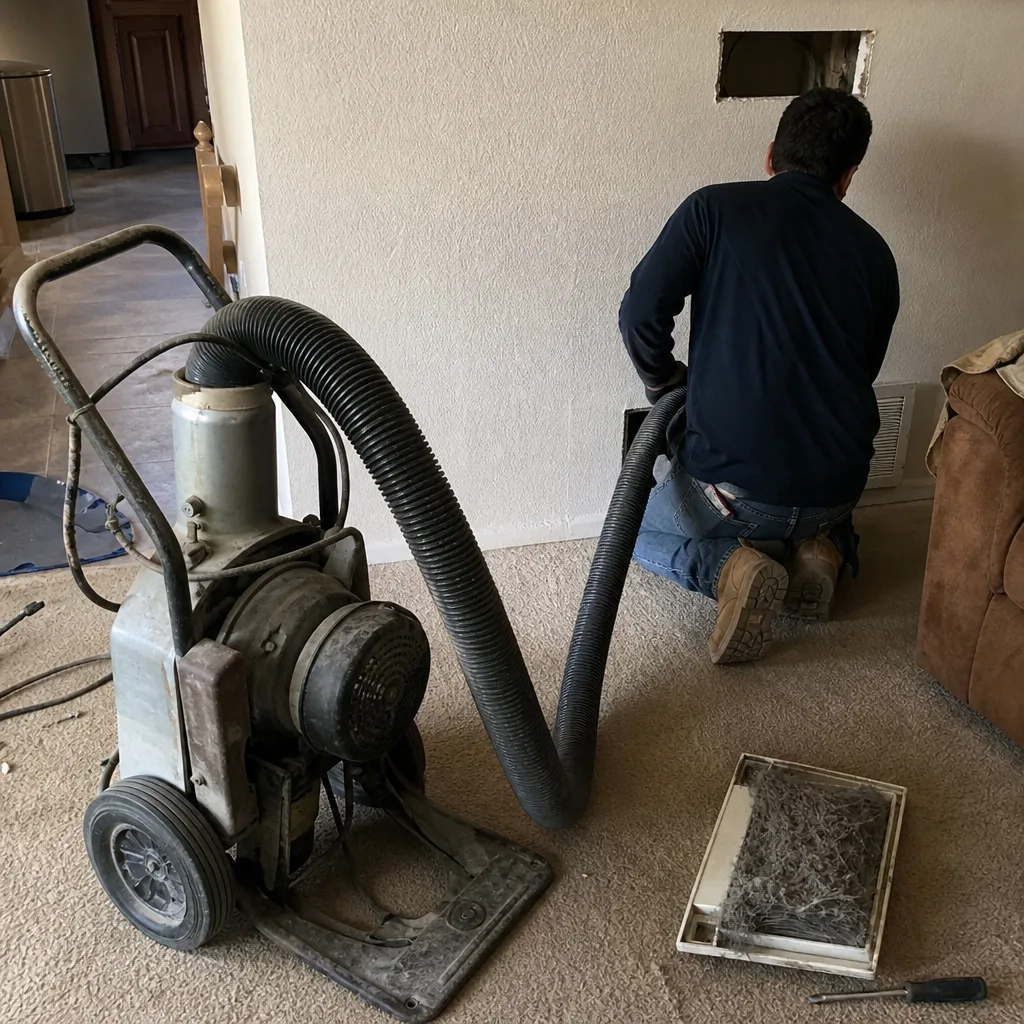 Before
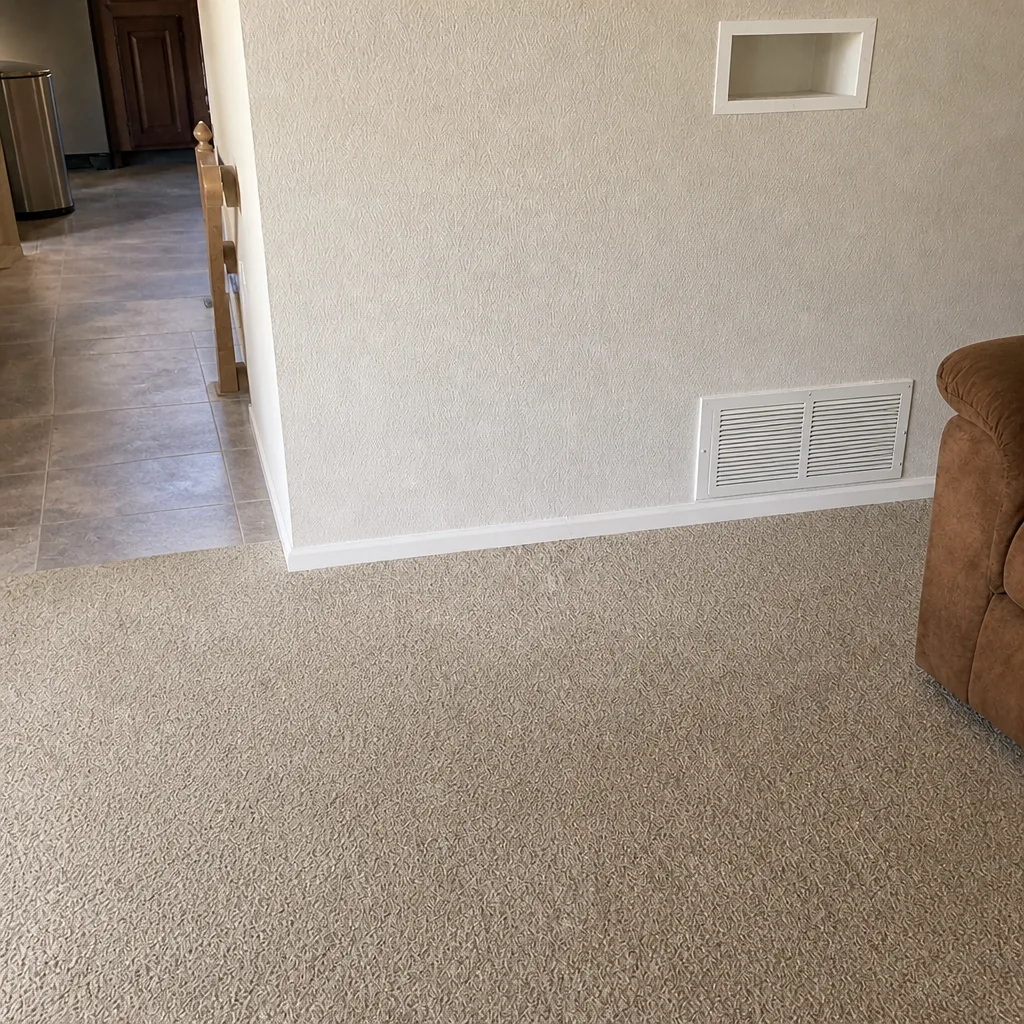 After
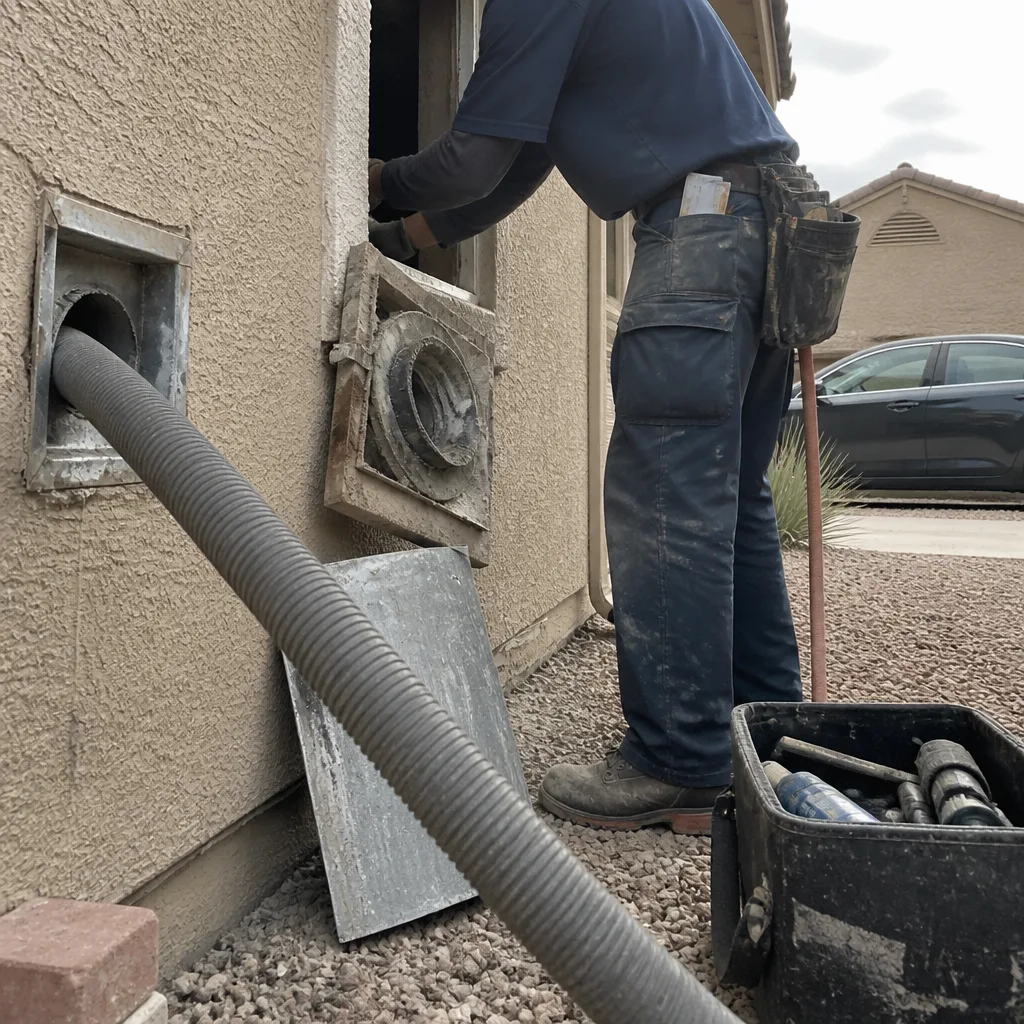 Before
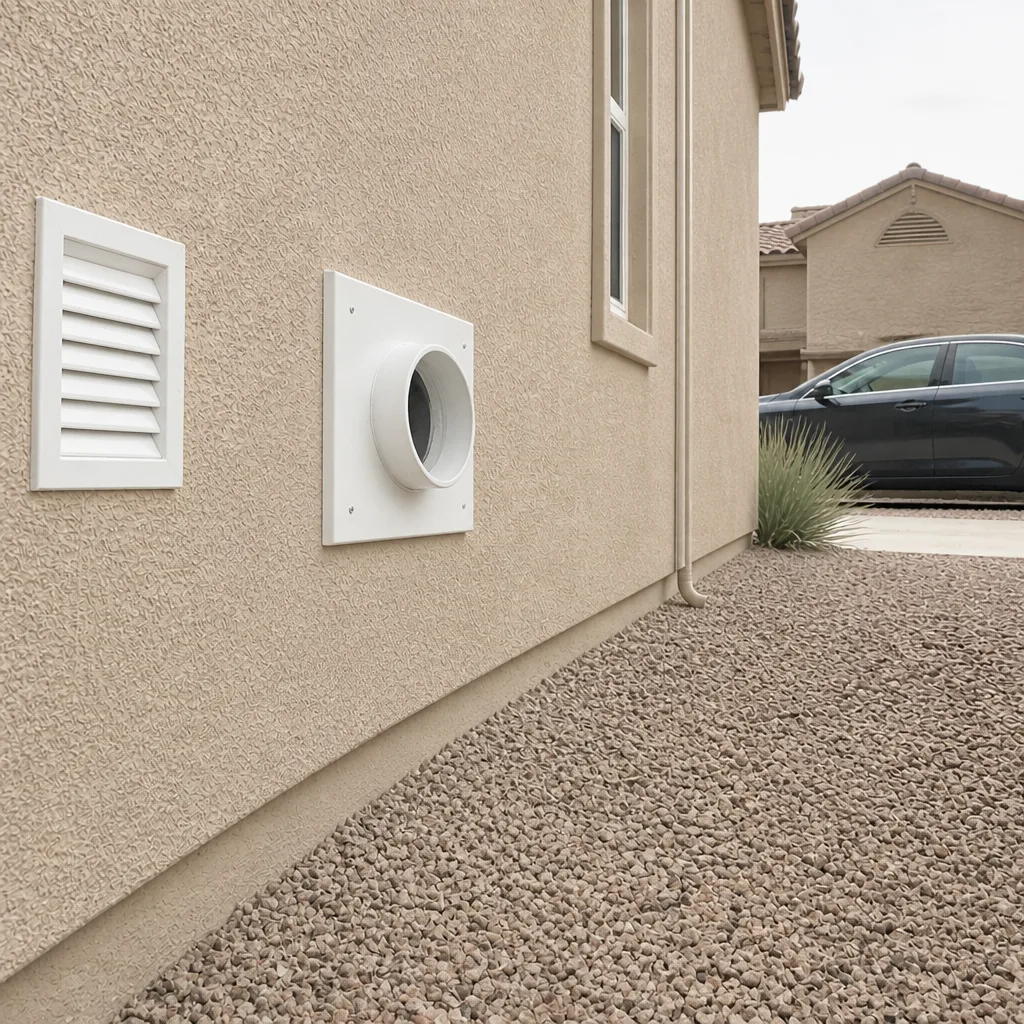 After
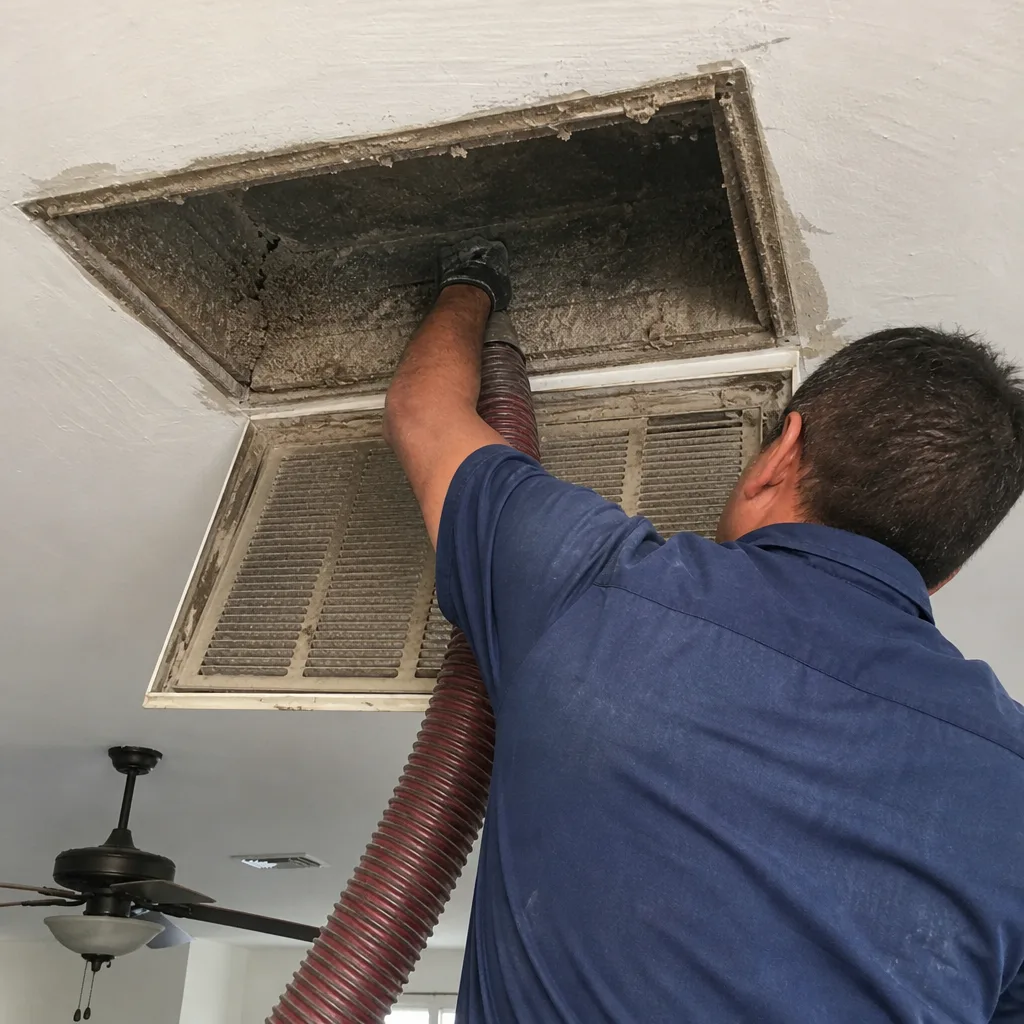 Before
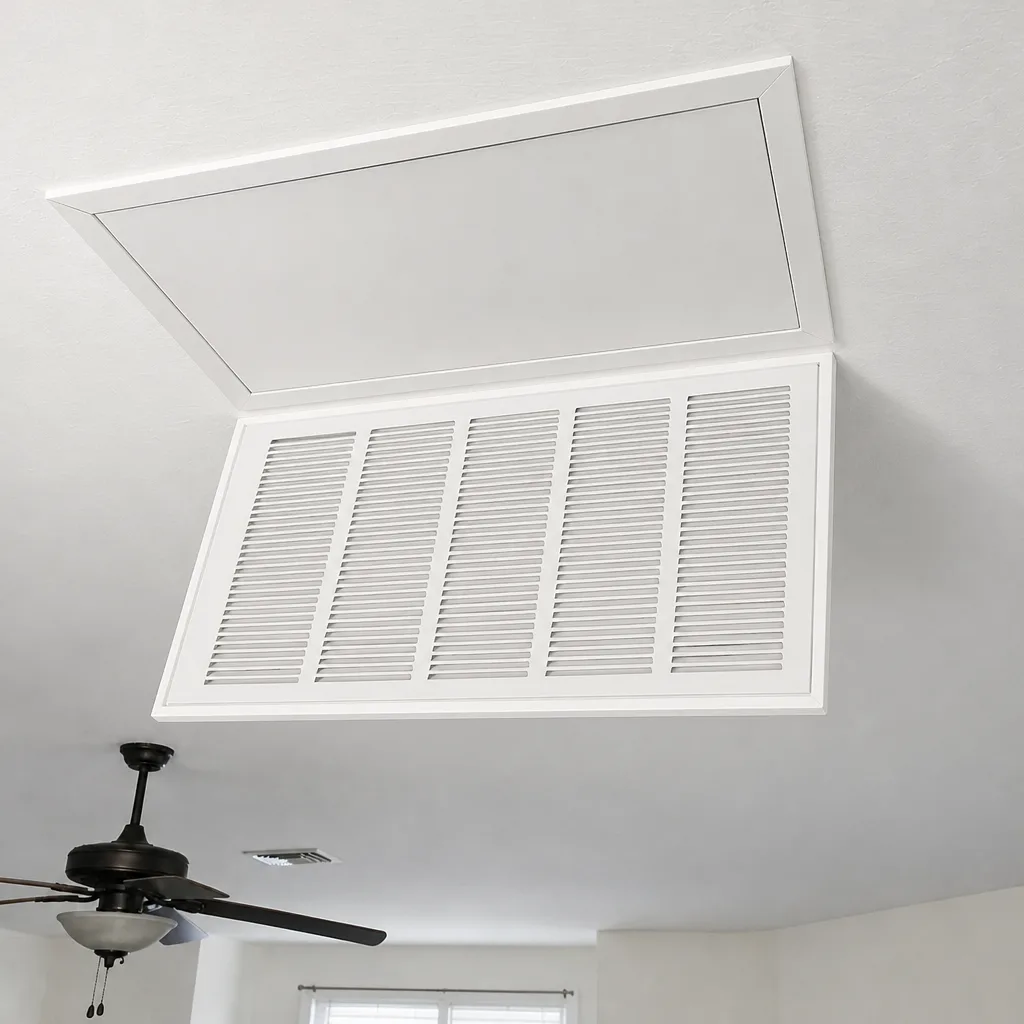 After
When to Call a Professional
Call a professional when you see two or more of the signs above, when your home’s interval comes due on the calendar, or when anything looks unusual during a visual inspection. Call sooner if you’re seeing visible mold in or near ductwork, if the dryer is taking significantly longer to dry a load, or if you’re moving into a home and don’t know its cleaning history. New owners of Goodyear homes in older neighborhoods benefit from a baseline cleaning before the first cooling season in the house.
Duct Cleaning Goodyear offers free estimates in Goodyear – call (844) 287-2528. We answer 24/7. Fast dispatch from 7am to 7pm, Sunday through Friday. We use professional-grade equipment, not shop-vac shortcuts, and our technicians have up to 13 years of experience. Every job is documented with before-and-after photos and a written summary. Call (844) 287-2528 for a free estimate.
Frequently Asked Questions
Most Goodyear homes need professional cleaning every 2 to 3 years, not every 3 to 5 years. The short cooling season window that national guides assume doesn’t apply here – eight to nine months of heavy AC runtime plus dust events accelerates accumulation. Homes with pets, allergy sufferers, or recent construction land closer to the 2-year mark. Call (844) 287-2528 for an exact quote – estimates are free.
It depends on the size of the system, the number of returns, and whether repairs are needed. A straightforward whole-system cleaning typically sits in the mid-hundreds for a single-family home; adding duct repair or heavy contamination work pushes the range up. We set one flat price per system agreed before work starts, never per vent, and the written estimate sets the final price. Call (844) 287-2528 – estimates are free.
Cheap quotes are often scoped to a brief pass with consumer-grade equipment that doesn’t develop the pressure needed to clean duct interiors properly. Some are seed prices for a sales visit designed to add services on-site. Ask what equipment they use, whether the price is per system or per vent, and whether they provide before-and-after photos. Call (844) 287-2528 for an honest whole-system estimate.
Ask for before-and-after photos of your own ducts, not stock images. A written summary listing what was cleaned, what was repaired, and the condition of your ductwork is standard on a professional-grade job. If a company can’t provide these, that’s a signal the service is being sold, not performed. Call (844) 287-2528 to schedule a documented estimate.
Because 90 days was calculated for a system running a few hours a day across a four-month cooling season. Goodyear systems run nearly continuously from May through September, which loads filters roughly twice as fast. Change at 30 to 45 days during summer and 60 days the rest of the year.
Yes, in most cases. Drywall dust, sawdust, and fine particulate settle into return ducts during construction and can persist for years if the system wasn’t sealed off. A cleaning after major renovation catches this material before it cycles through the living space. Call (844) 287-2528 for a free estimate. We answer 24/7 with fast dispatch from 7am to 7pm, Sunday through Friday.
The Bottom Line
The maintenance schedule that keeps a Goodyear home’s ductwork in good shape is shorter than a national guide would tell you and more seasonal than a simple calendar reminder. Change filters every 30 to 45 days in summer and 60 days the rest of the year. Inspect your ductwork before monsoon season, after peak dust, and before heating season. Calculate your own cleaning interval from AC runtime, duct material, and dust exposure rather than taking a national default at face value. When it’s time for professional service, ask for the equipment details, the flat price per system, and documented before-and-after photos. Our technicians have up to 13 years of experience and use Rotobrush, Nikro, and Abatement Technologies equipment designed for contamination-level work. Call (844) 287-2528 for a free estimate. We answer 24/7. Fast dispatch from 7am to 7pm, Sunday through Friday.
Written by the team at Duct Cleaning Goodyear.