
Last updated November 15, 2026
 Whole-home duct cleaning
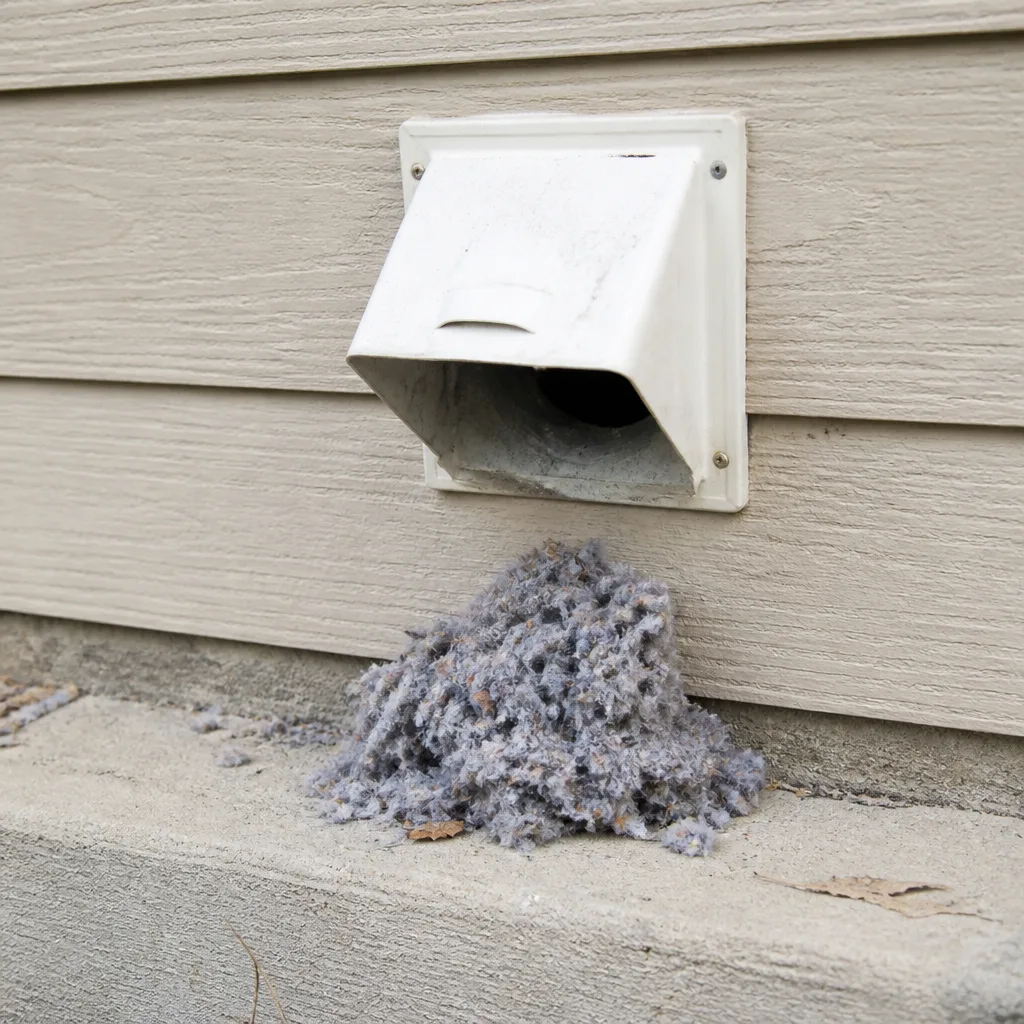 Dryer vent cleaning
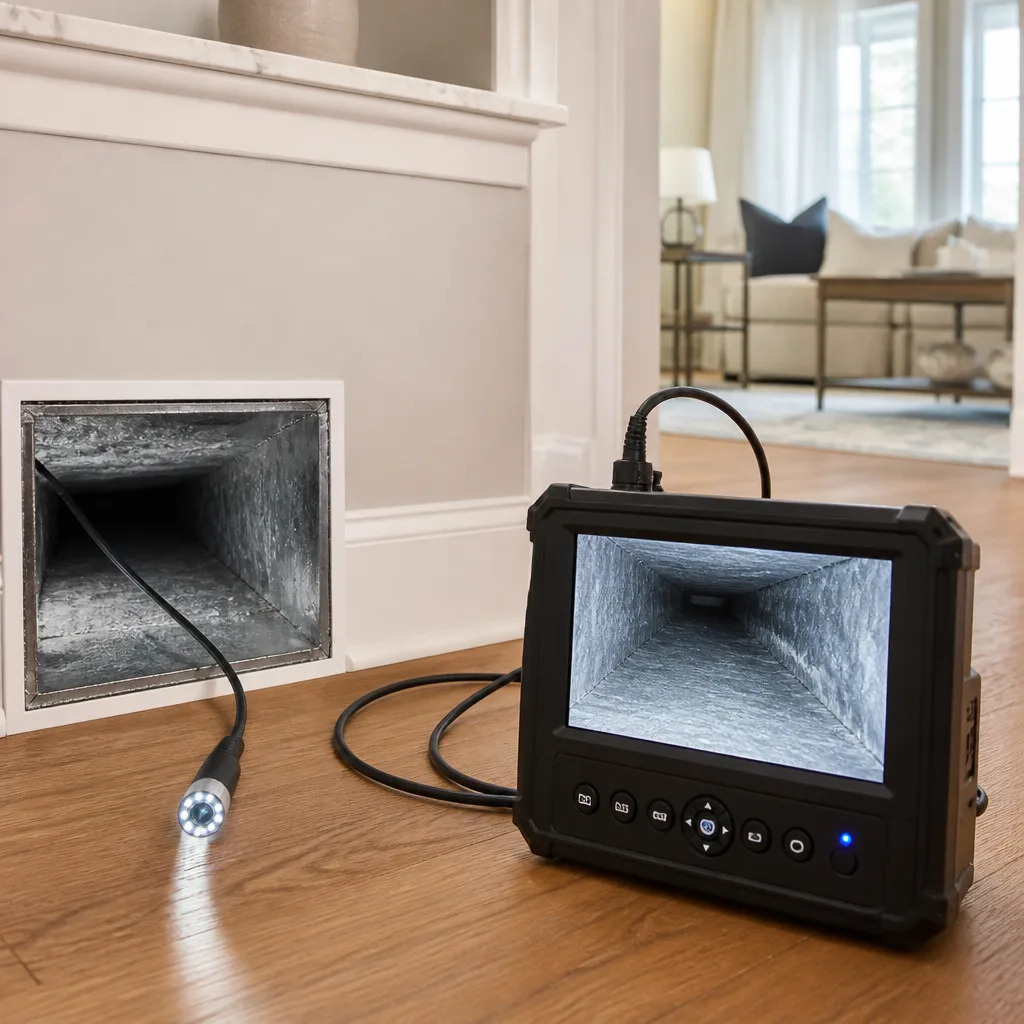 Camera inspection
 Sanitizing & deodorizing
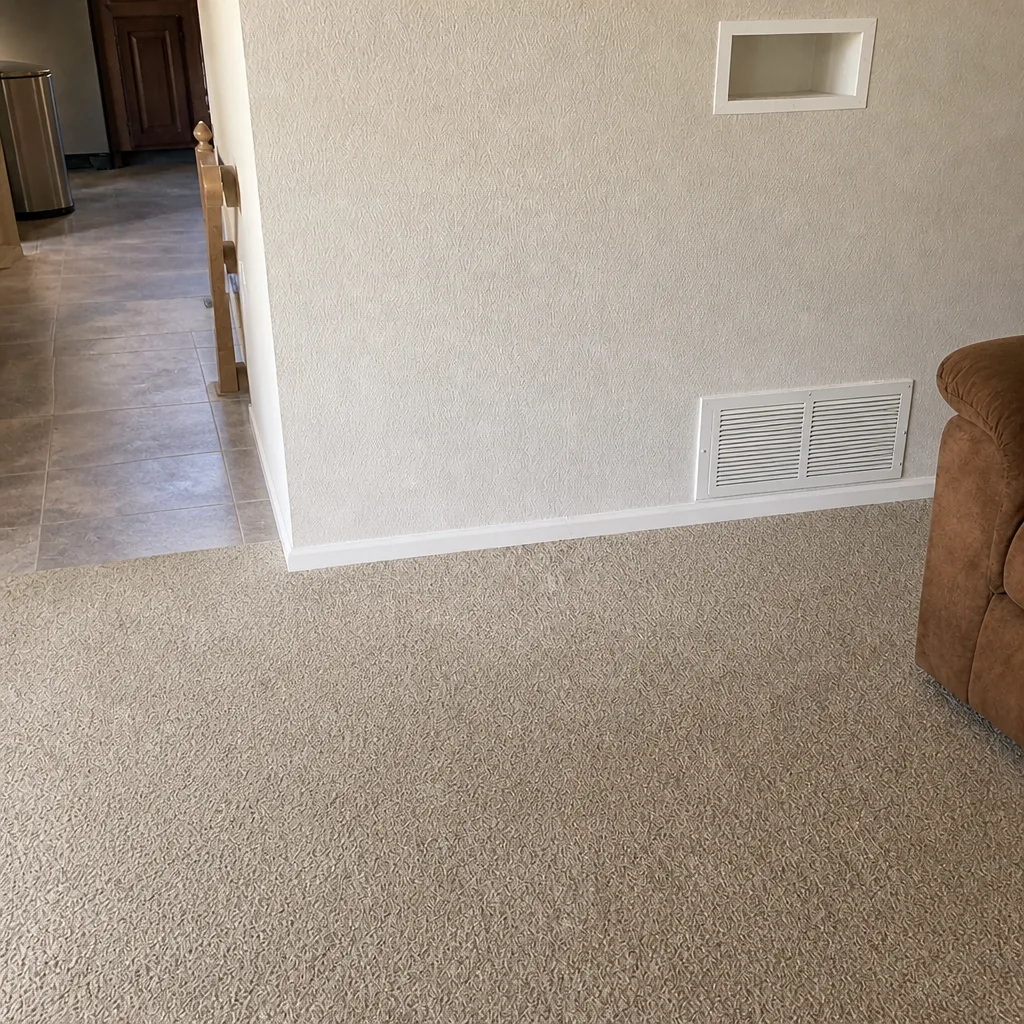
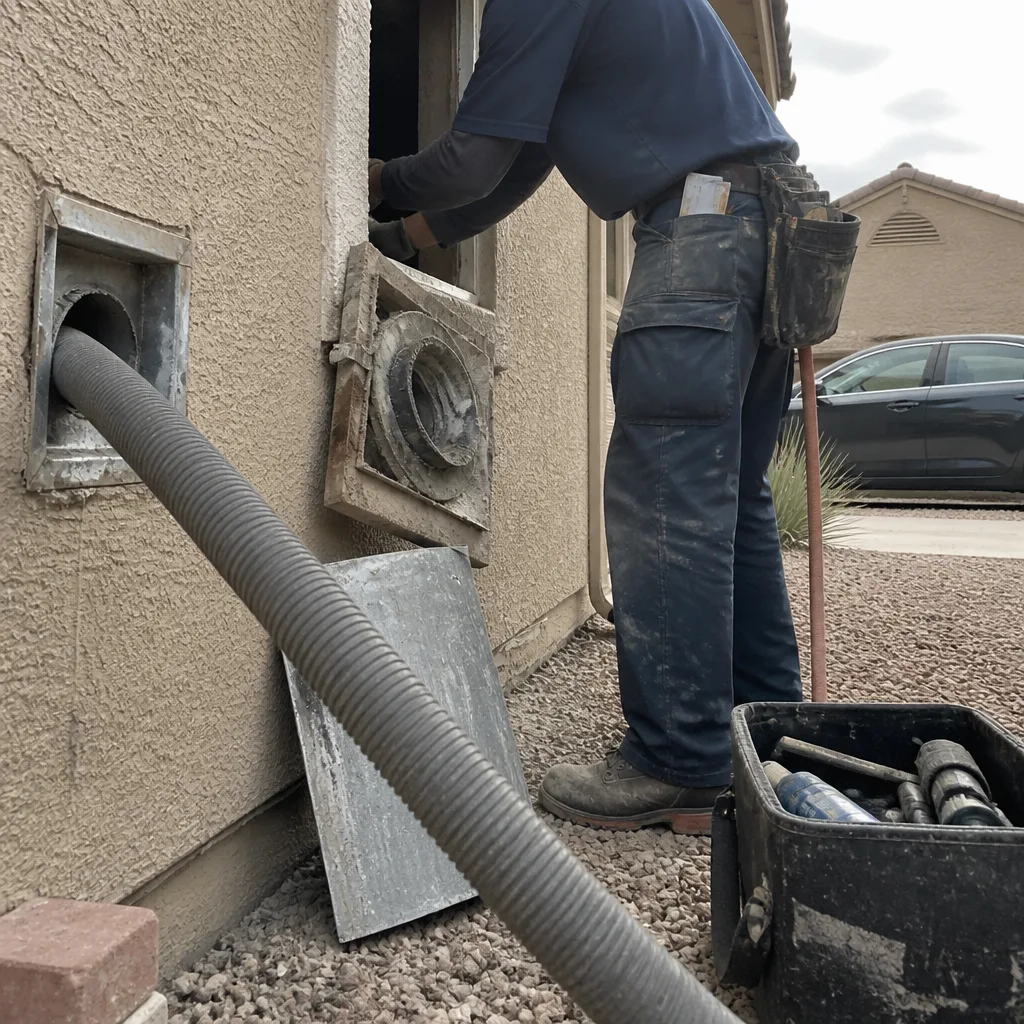
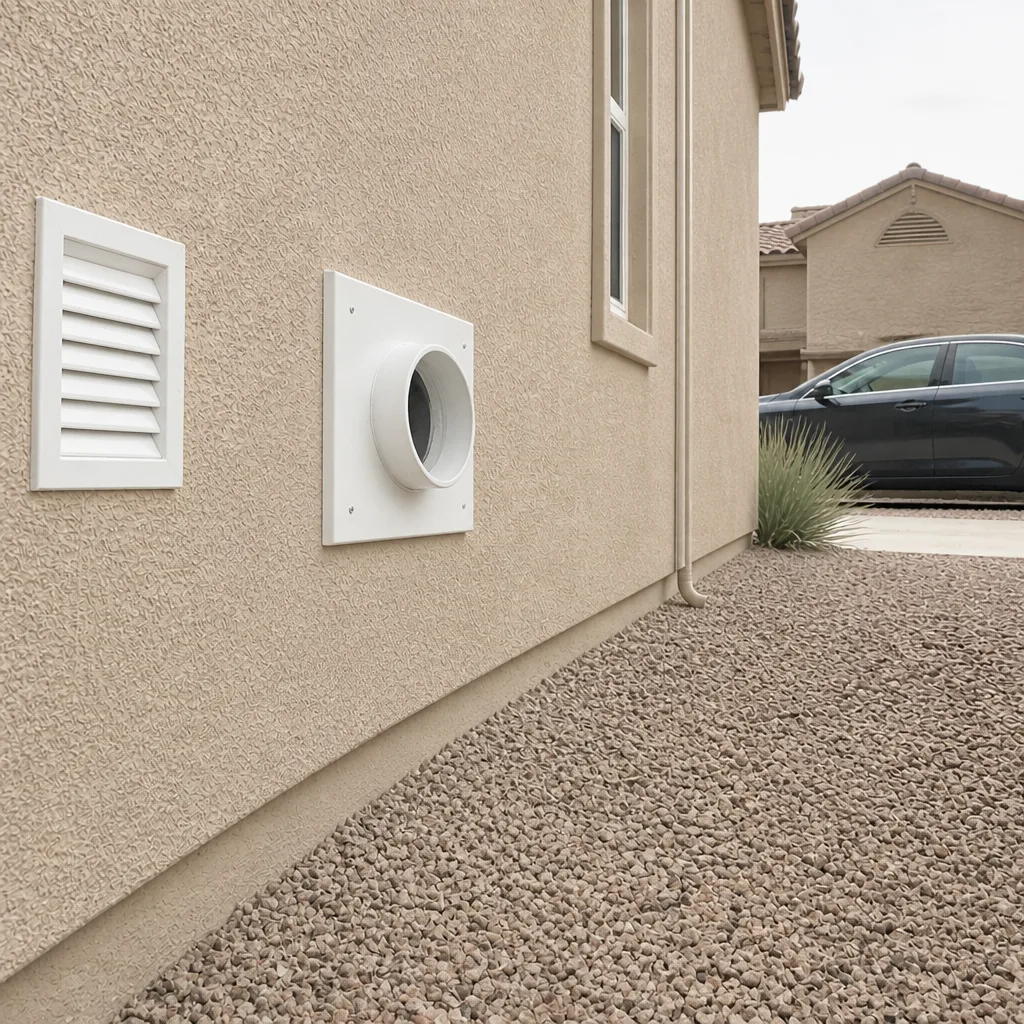
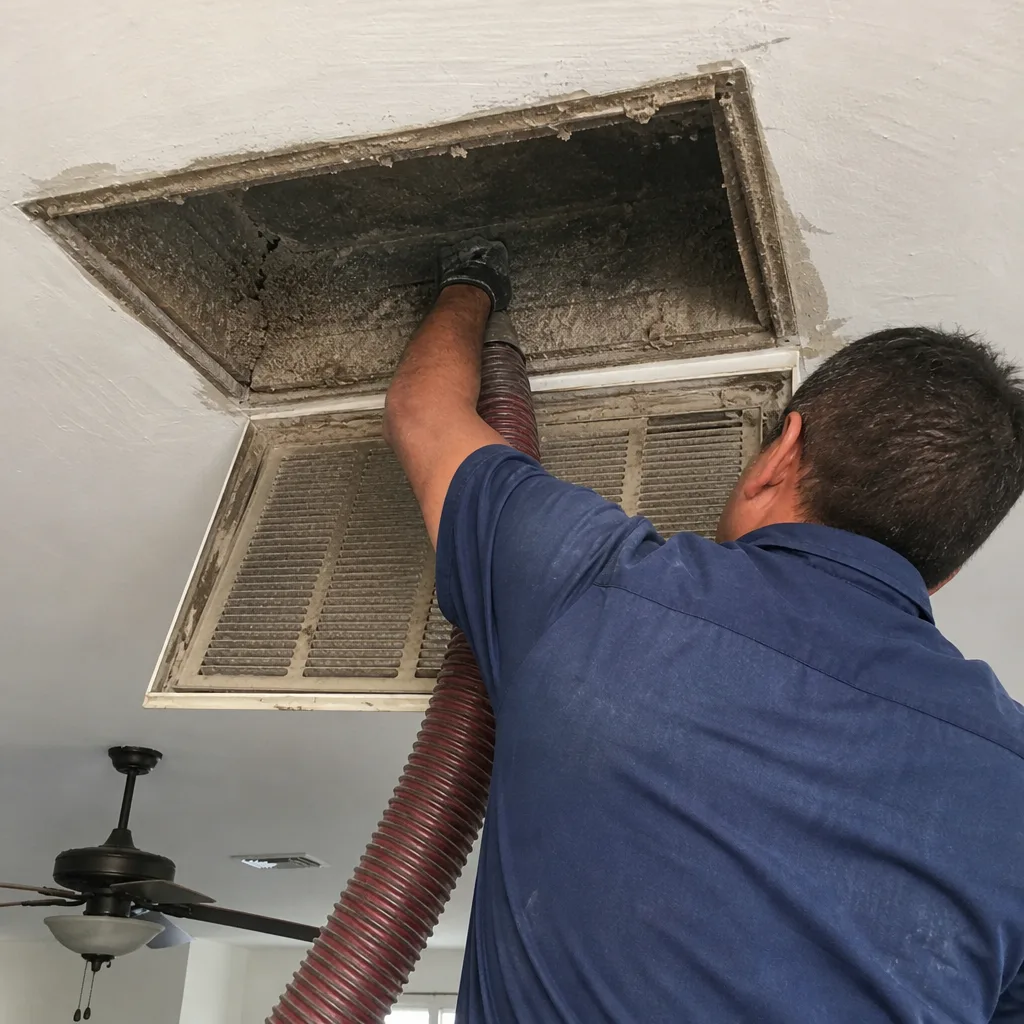
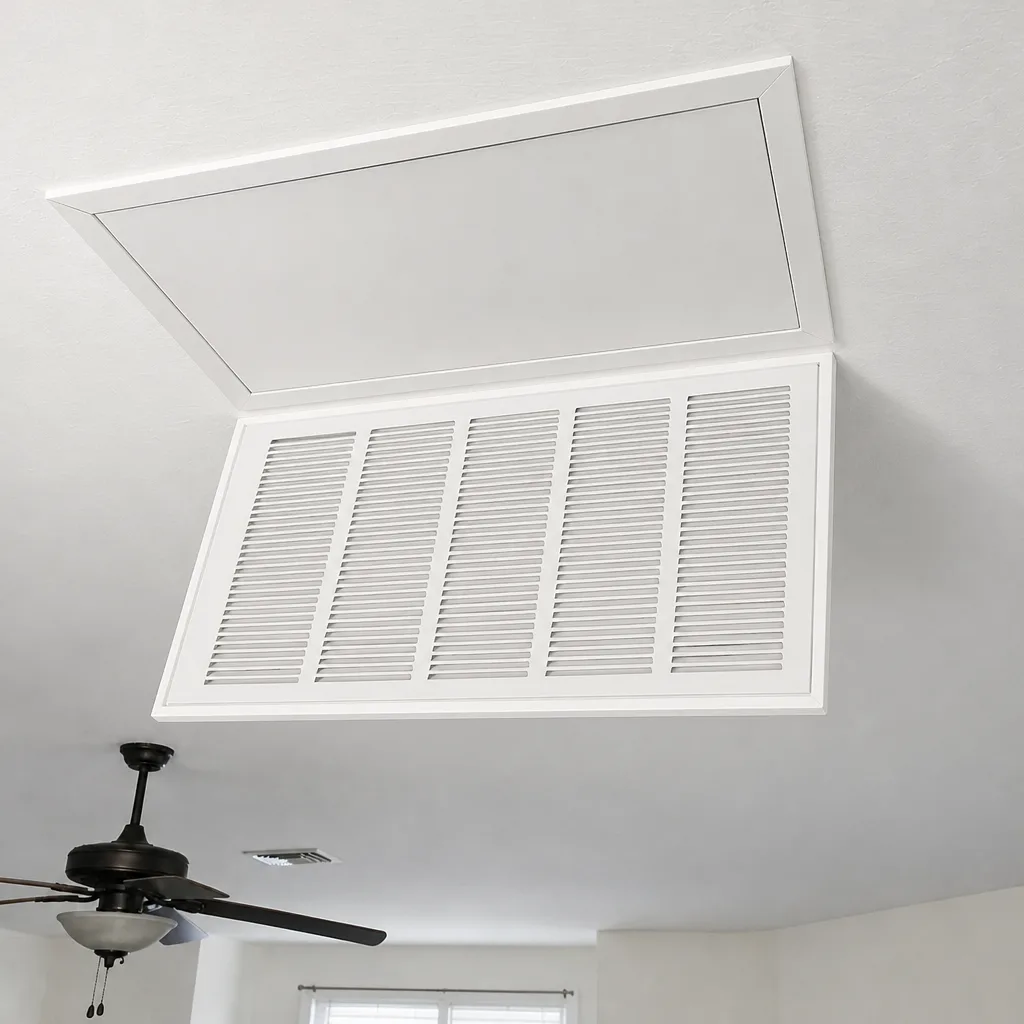
Whole-system duct and dryer vent check with before-and-after photos - you see exactly what came out of your vents
That "$99 whole-house special" is a bait ad - the real number appears once they are in your hallway, or the "clean" is a shop-vac at the register. We photograph the inside of your ducts before and after instead.
Air Duct Cleaning Warning Signs: A Goodyear Homeowner’s Reference Guide
Visible dust on your supply registers is almost never a sign that your ducts need cleaning. Registers collect surface dust no matter how clean the duct interior is, because air passing over them leaves a film behind. The warning signs that actually point to contamination inside the system are quieter: a filter that loads faster than it should, a room that never quite catches up, an odor that shows up at a specific time of day. This guide walks through the signals worth acting on in Goodyear, separates them from the ones most lists get wrong, and explains what each one physically means inside your ductwork. We’ll also cover when a call makes sense and when it doesn’t.
Quick Answer
In Goodyear, the warning signs that genuinely justify a duct cleaning are: a filter that clogs in well under its rated interval, visible dust streaking at return grilles or access panels after renovation, a musty odor that returns during cooling season, and uneven room temperatures that persist after you’ve checked the filter and the vents. Dark dust on supply registers by itself is not one of them. If two or more of the real signals show up together, the next step is an inspection, not a guess.
Styles & brands we work with
- Whole-home duct cleaning
- Dryer vent cleaning
- Camera inspection
- Sanitizing & deodorizing
Table of Contents
- Why Dusty Registers Don’t Mean What You Think
- What Uneven Room Temperatures Actually Tell You
- The Odor Profile: Biological Growth vs. Normal Startup Smell
- Post-Renovation and New Construction Dust Intrusion
- Filter Loading Rate as a Diagnostic Tool
- Increased Allergy Symptoms: A Soft Signal, Not Proof
- The Warning Sign Most Guides Ignore: Your Dryer Vent
- What a Proper Inspection Looks Like
Why Dusty Registers Don’t Mean What You Think
A grey film on the face of a supply register is one of the most-cited “signs your ducts need cleaning.” It’s also one of the least reliable. Registers sit in the open, exposed to room air, pet dander, and the fine dust that settles on every horizontal surface in a Goodyear home. Air moving out of the register at low velocity deposits a little of what it carries onto the metal. You’d see that film in a house with brand-new, spotless ductwork.
The distinction matters because it’s the difference between spending money on a real problem and spending it on a cosmetic one. A register with dust on the outside tells you almost nothing about the inside of the duct. What you’re looking for is evidence of what’s happening beyond the grille.
What actually counts
- Dust streaks radiating from the register frame onto the surrounding drywall or ceiling. This points to air leaking around a poorly sealed boot, pulling dust from the wall cavity or attic and pushing it into the room.
- Dark dust on the return grille floor, where a return pulls air across a cavity before it reaches the filter. Dust accumulation on the return side is more meaningful than anything on the supply side.
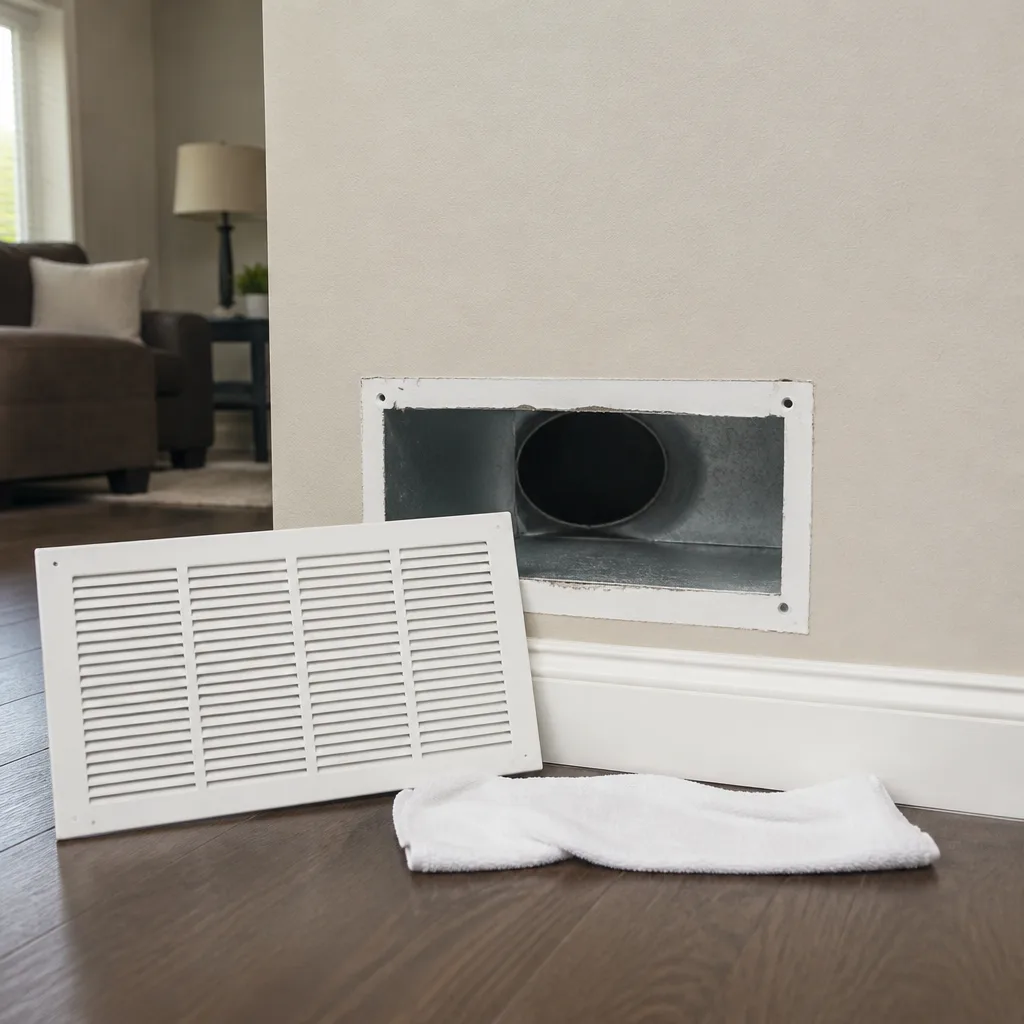
- Visible debris on the duct walls when you look through a register with a flashlight. If you can see the duct surface and it’s coated rather than clean metal, that’s real evidence.
- Debris piles at the base of a vertical run, visible only when an access panel is open. This is where we look first, and it’s where a professional inspection should start too.
If your only symptom is surface dust on the grille, a filter change and a quick wipe is the honest answer in most Goodyear homes. If two or three of the signals above show up together, keep reading and take the next signals seriously.
What Uneven Room Temperatures Actually Tell You
One bedroom is always a few degrees warmer than the rest of the house. Most homeowners blame the ducts, and most lists say “uneven temperatures mean dirty ducts.” That’s only sometimes true, and the difference is worth understanding before you spend anything.
Uneven temperatures usually come from one of three things: the system wasn’t balanced (damper positions, register sizes, returns placed wrong for the layout), the equipment is undersized or overworked, or the ductwork itself is leaking or restricted. Cleaning addresses only the last category, and only part of it. In our experience, a lot of Goodyear homes in two-story layouts have temperature differences that have nothing to do with dirt and everything to do with how air was routed when the house was built.
When temperature difference points to the ducts
Uneven cooling matters more when it arrives with other signals. Look for a room that’s fine in winter and hot in summer, or a hot room that also has a weak airflow at its register compared to the others. Combine that with:
- A flexible duct that’s visibly crushed or kinked in the attic, restricting flow to that room.
- A run whose interior you can inspect through an access point, showing debris coating the walls.
- Air noise at one register but not others, suggesting a pressure problem rather than a dirt problem.
- A room that got worse after a renovation, filter change, or new furniture blocking a return.
The reliable test is a static pressure check on the air handler, done by a technician, not a homeowner guess. If pressure is high, airflow is restricted somewhere, and the duct system is the first place to look. If pressure reads normal and the room is still hot, an air duct repair job (sealing, rerouting) will do more than cleaning will. That’s why we clean it, and if we find a breach, we fix it. Cleaning without addressing a restriction just re-coats the problem.
The Odor Profile: Biological Growth vs. Normal Startup Smell
A smell from your vents is one of the louder warning signs, but “smell” is too vague to act on. Two very different smells come out of residential duct systems in Goodyear, and only one means there’s contamination.
Normal startup odor
When the cooling season starts and the system runs after sitting idle, a faint, warm, dust-burning smell for the first few minutes is common. It’s dust that settled on the indoor coil and heat strips over the off-season, heating up briefly before the air moves. It fades within a few cycles. That smell is a nuisance, not a warning sign.
Biological growth in the ducts
What points to growth is a musty, wet-earth, or stale-laundry odor that keeps coming back. It typically shows up most strongly when the system first starts in the morning, then fades, then returns when the system cycles on again. The pattern matters more than the smell itself. Growth inside a duct system needs moisture, which is not common in the desert interior of a Goodyear house, but condenses readily on the evaporator coil and in the first run of return ductwork where cool air meets warm attic air. The moisture is local and small, but it’s enough for microbial growth to establish.
If the smell is musty and recurring, the right response is a professional assessment with negative-air equipment and a real look at the coil and the return plenum, not a vent-block air freshener. A technician using Abatement Technologies or Nikro negative-air gear can isolate the section holding the growth and confirm it before any cleaning begins. A citrus spray masks the reading entirely, which is exactly the opposite of what you need.
Post-Renovation and New Construction Dust Intrusion
Renovation is the single most reliable trigger for real duct contamination, and the most common reason a Goodyear homeowner calls us for a first cleaning. Drywall dust is the culprit. It’s extremely fine, it stays airborne for hours, and it takes very little of it to coat a duct interior with a hard, fine film that doesn’t blow out on its own.
The critical question after a remodel is whether the fine particulate reached the return plenum, not whether the house looks dusty. The house will always look dusty after drywall work. What matters is whether it got past the filter.
How to check specific access points
- The return plenum is the first box connected to the air handler on its intake side, usually accessible through a service panel on the air handler cabinet floor. Shine a light on the interior surfaces. Heavy white or grey dust means the return pulled air from the dust cloud during the remodel.
- The filter slot. Pull the filter and look at the frame around it. Drywall dust accumulates in the slot if the filter was removed or bypassed during work, which is common when contractors were moving around the cabinet.
- The first supply trunk. If the return plenum is contaminated, it’s a near-certainty the supply side got it too, because the forced air system circulates the same air.
- Return grilles in the room that was worked on. A grille in a room that had walls open for a week will show much more interior dust than the rest of the house.
New construction is the same story on a slower timeline. A new Goodyear home’s system runs through the final construction phase, and every bit of sawdust, drywall, and tile dust the builders generated gets pulled through it. A builder-grade filter doesn’t stop fine drywall particulate. Professional-grade equipment, using a contact vacuum, is the way that comes out.
Filter Loading Rate as a Diagnostic Tool
Filter loading rate is the single best early indicator of a return-side duct leak, and almost nobody talks about it. Here’s how it works: your filter catches dust from the return air. If the duct that feeds your return is sealed tight, the only dust reaching the filter comes from your house. If the return duct leaks, it also pulls dust from the attic, wall cavity, or garage ceiling, which is far dustier than any living room, and the filter loads much faster.
Filter manufacturers rate filters for a rough service interval. Most High-MERV filters in a well-sealed residential system should last through their rated window, give or take. They don’t last for a specific number of months in every home; the interval depends on pets, occupancy, and how dusty your return path is. What you’re watching for is the house’s own rhythm.
What to track
- How often you change the filter. Write the date on the filter frame with a marker. Over the first year, you’ll build a baseline for this house.
- How visible the dust is at each change. A filter that’s grey and matte at three months is normal. A filter that’s visibly caked and flexing at three weeks is not.
- Where the dust is heaviest. Dust clumping heavily at one side of the filter (rather than evenly) points to a leak upstream of that side, or to a return that’s routed through a cavity with dust sources.
- When the rate changes. A sudden shift to faster loading, especially after a remodel or a roof job or a new pet, is a much stronger signal than steady loading at the same rate as always.
If a house that typically goes three months on a filter now caking in under a month, the filter isn’t the problem. It’s doing its job. The return duct is pulling air it shouldn’t be pulling. A professional inspection of the return trunk and the plenum is the next step, not a heavier filter, which only masks the symptom by straining the blower.
Increased Allergy Symptoms: A Soft Signal, Not Proof
We hear this one a lot in Goodyear: “My kids’ allergies are worse this year, must be the ducts.” The honest answer is that allergy symptoms are a weak signal when taken alone. Indoor air quality affects symptoms, but the cause-and-effect chain between duct dust and congestion is not measurable from the sofa. A house that’s consistently occupied, with pets and a family that’s home most days, may show all its symptoms in the same house regardless of the ducts.
That said, “soft signal” is not “ignore it.” The right move is to look for harder evidence alongside the symptom pattern, then act on the evidence. These are the harder indicators:
- Family members who leave for a few days report feeling better, then symptoms return on about the second day home. This is an anecdote, not proof, but combined with other signals below it’s worth a look.
- Visible debris on cold-air returns, especially a fireplace-style central return grille, where dust and fibers are visibly accumulating between filter changes.
- A recurring musty smell in the same ducts the family uses most, particularly while the system runs.
- Pets, recent remodeling, or a new baby in the house, each of which changes the particle load and usually sharpens the case for an inspection.
- A filter loading rate that’s changed over the last year, as described above.
Two of those together, on top of the allergy complaint, is a reasonable case for an inspection. The inspection gives you an answer, and that’s better than scheduling a cleaning on a guess or dismissing the concern entirely. Professional-grade equipment gives you a readable result: what’s actually on the duct interior, not what a sales pitch says is there.
The Warning Sign Most Guides Ignore: Your Dryer Vent
Your dryer vent is a duct system too, and it carries a documented fire risk when lint builds up inside it. Every guide about duct cleaning should mention this, and most don’t, because most duct-cleaning companies don’t offer the service. We do, and in a Goodyear home with a dryer vent run that exits through a wall or up through the roof, the warning signs are physically clear.
A clogged dryer vent is a different problem from a dirty air duct, but the two are usually reported together by homeowners. When you call us for a duct inspection, we can check the dryer vent on the same visit, and the diagnosis is fast.
Dryer vent warning signs
- Clothes take longer than one cycle to dry, especially a load that used to finish in a single pass.
- The dryer itself is hot to the touch on the cabinet or the top, more than usual after a normal load.
- Lint is visible behind the dryer, or around the vent connection.
- The lint trap fills unusually fast, or the outdoor vent flap doesn’t open fully when the dryer runs.
- A burning or hot-lint smell during operation, which is a stop-and-call signal, not a keep-going signal.
We handle dryer vent cleaning with the same professional-grade equipment we use on air ducts, and it’s a routine service, not an alarm. What makes it worth mentioning in a warning-signs guide is that the signs are quiet. Nobody’s clothes stop drying all at once. It gets a little slower, a little slower, and by the time a homeowner notices, the vent is heavily restricted.
What a Proper Inspection Looks Like
An inspection is the answer to every signal in this guide, and the right inspection is specific. It should confirm what’s inside the duct before anyone quotes you a cleaning, and it should give you real evidence, not a scare story. Here’s what a proper inspection covers:
- A look at the return plenum through the air handler cabinet, with a light and a mirror or a small camera. The plenum is where contamination starts.
- A static pressure reading at the air handler, which tells you whether airflow is being restricted somewhere in the system.
- A look at accessible duct interiors through register boots, access panels, and the first supply trunk run. Visual confirmation of what’s inside, not a guess based on register dust.
- A dryer vent check if the homeowner has one in the home, since the two systems often need attention together.
- A short summary, in plain language, of what we found and what, if anything, needs to happen. Some inspections come back with “your ducts are fine, change your filter more often.” That’s a useful answer too.
What a proper inspection should not include: a camera pointed at a duct that shows dirt on every house in the neighborhood, a scare pitch about what’s being breathed in, or a same-visit discount for signing now. Those are the sales patterns that gave this trade its reputation. We give a written estimate before any work starts, and the estimate is what we charge.
Common Mistakes to Avoid
- Cleaning based on register dust alone. A dusty supply grille is normal surface accumulation. Booking a cleaning because the grille looks dirty risks paying for a job that didn’t need doing, which is exactly the pattern this guide exists to prevent.
- Replacing a loaded filter with an even higher-MERV filter to compensate. A filter that’s caking fast is telling you the return is pulling extra dust. A heavier filter restricts airflow and strains the blower without fixing the source. Match the filter to the system, and find the leak first.
- Blocking the return grille to “see if it helps.” A central return grille that’s blocked will increase return-side vacuum and pull more attic air through leaks. This makes filter loading and indoor air quality worse, not better.
- Assuming a musty smell comes from the ducts when the coil is the source. In our dry desert climate, growth usually starts on the evaporator coil and drains, then spreads into the adjacent duct. Cleaning the ducts without looking at the coil leaves the source in place.
- Skipping the dryer vent because it’s a hassle. Dryer lint is a documented fire risk, and a clean vent is a routine piece of home maintenance that most Goodyear households can schedule alongside an air duct check.
- Hiring on price alone without seeing the equipment. A shop-vac and a wand is not duct cleaning. Ask what equipment will be used and whether the estimate is per system or per vent. A per-vent price is a red flag.
- Panicking about a new-home smell after the first month. Drywall dust and paint off-gassing take months to settle out. The right move is an inspection to confirm whether drywall dust reached the return, not an immediate cleaning.
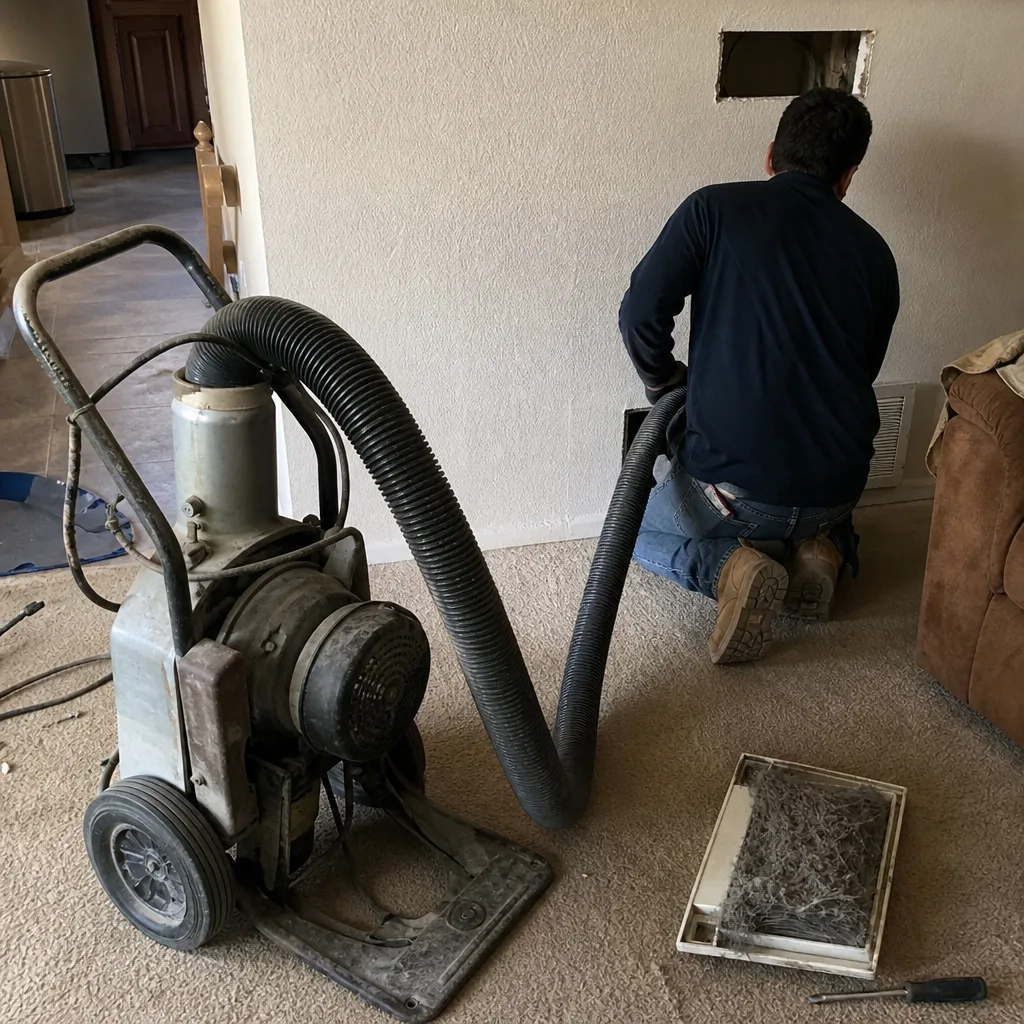
See the difference
 Before
 After
 Before
 After
 Before
 After
When to Call a Professional
Call when the signal is specific and repeatable. Two or more of these in the same house is a good reason to pick up the phone: a musty smell that returns when the system cycles on, a filter that’s caking at a markedly faster rate than this house’s own history, visible dust accumulation on the return-side duct surfaces, or a room temperature problem that persists after you’ve changed the filter and checked that the register is open. Add a recent renovation or new construction to the list, or a dryer that’s taking noticeably longer to dry a load, and an inspection is the sensible next step. Duct Cleaning Goodyear offers free estimates in Goodyear and can look at the air ducts and the dryer vent on one visit. Call (844) 287-2528. We answer 24/7. Fast dispatch from 7am to 7pm, Sunday through Friday.
Frequently Asked Questions
Air duct cleaning in Goodyear is priced per system by a written estimate, not per vent, and the estimate is free. Pricing depends on the number of zones, the type of ductwork, the level of contamination, and whether a dryer vent or duct repair is included. We don’t quote a teaser number over the phone and then change it on-site. Call (844) 287-2528 for an exact quote, and the written estimate locks the price.
Cheaper quotes usually buy less: a shop-vac, a short wand, and a brief surface pass that doesn’t touch the duct interior. A real cleaning uses contact-vacuum equipment and negative air so the debris comes out rather than being pushed around. Before you book, ask what equipment will be used and whether the price is per system or per vent. If the answer is a per-vent coupon number, that’s not a cleaning quote, that’s a call-out fee for a sales visit. Call (844) 287-2528 for an honest per-system estimate.
Ask for before-and-after photos of your own ducts, taken during the job, not a stock photo off the company’s website. A professional job produces documentary photos at the plenum, the first trunk, and the dryer vent. We provide photos as part of the service, and the estimate you approve is the price you pay at the end. Call (844) 287-2528 to schedule.
Most Goodyear homes with standard occupancy don’t need duct cleaning on a fixed calendar. The signals in this guide are the better schedule. A new home, a recent renovation, a home with pets or heavy shed, and a home where filter loading has changed are the situations that usually justify a cleaning sooner than a set interval would suggest. If the inspection comes back clean, we’ll tell you so. Call (844) 287-2528 for an inspection and a straight answer.
Not by itself. Filter loading rate is a diagnostic tool: if a filter that used to last three months now caked in under one, the return duct is pulling dust from outside the living space and the right next step is an inspection. If the filter is simply dirty at its normal interval, replace it and don’t overthink it. Call (844) 287-2528 and we’ll help you tell the difference.
It can, and it’s the signal most worth checking with equipment. A recurring musty odor that fades and returns with the cooling cycle often starts on the evaporator coil and moves into the adjacent return duct. Growth in the ductwork should be confirmed with negative-air equipment and a visual inspection, not assumed. Abatement Technologies gear on hand is what lets us handle that level of job, and our technicians have up to 13 years of experience with it. Call (844) 287-2528 for an inspection.
Yes, because a clogged dryer vent carries a real fire risk that a regular duct inspection can catch on the same visit. Signs include clothes taking longer to dry, a dryer cabinet that’s hot after a normal load, and lint accumulating behind the machine. We handle dryer vent cleaning with the same equipment. Call (844) 287-2528 to schedule both on one visit.
The Bottom Line
The signals in this guide that actually matter are the ones tied to physical mechanisms: filter loading rate shifts on the return side, a recurring musty odor from a specific part of the system, visible dust accumulation on duct interiors accessed through panels, and renovation dust reaching the return plenum. Everything else on the standard list, especially surface dust on registers, is a cosmetic signal and shouldn’t drive a decision. In our experience working Goodyear homes, the inspection is what converts a suspicion into an answer. Contact Duct Cleaning Goodyear for a free estimate on air duct cleaning, and we’ll check the Goodyear home’s ducts and dryer vent on one visit. Our technicians have up to 13 years of experience, and we use professional-grade equipment from Rotobrush, Nikro, and Abatement Technologies. Call (844) 287-2528. We answer 24/7, with fast dispatch from 7am to 7pm, Sunday through Friday. Air quality starts behind the walls, and the inspection is how you find out what’s back there.
Written by the team at Duct Cleaning Goodyear.