
Last updated November 15, 2026
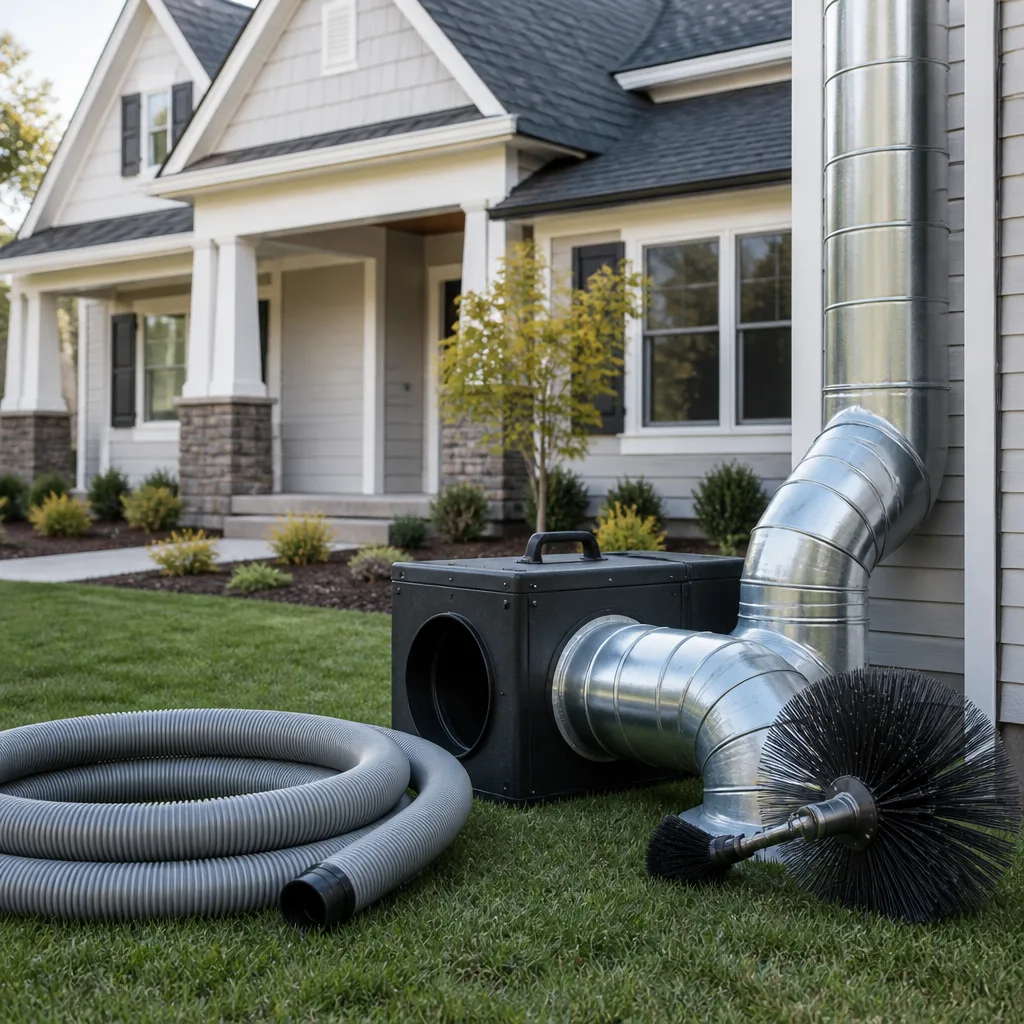 Whole-home duct cleaning
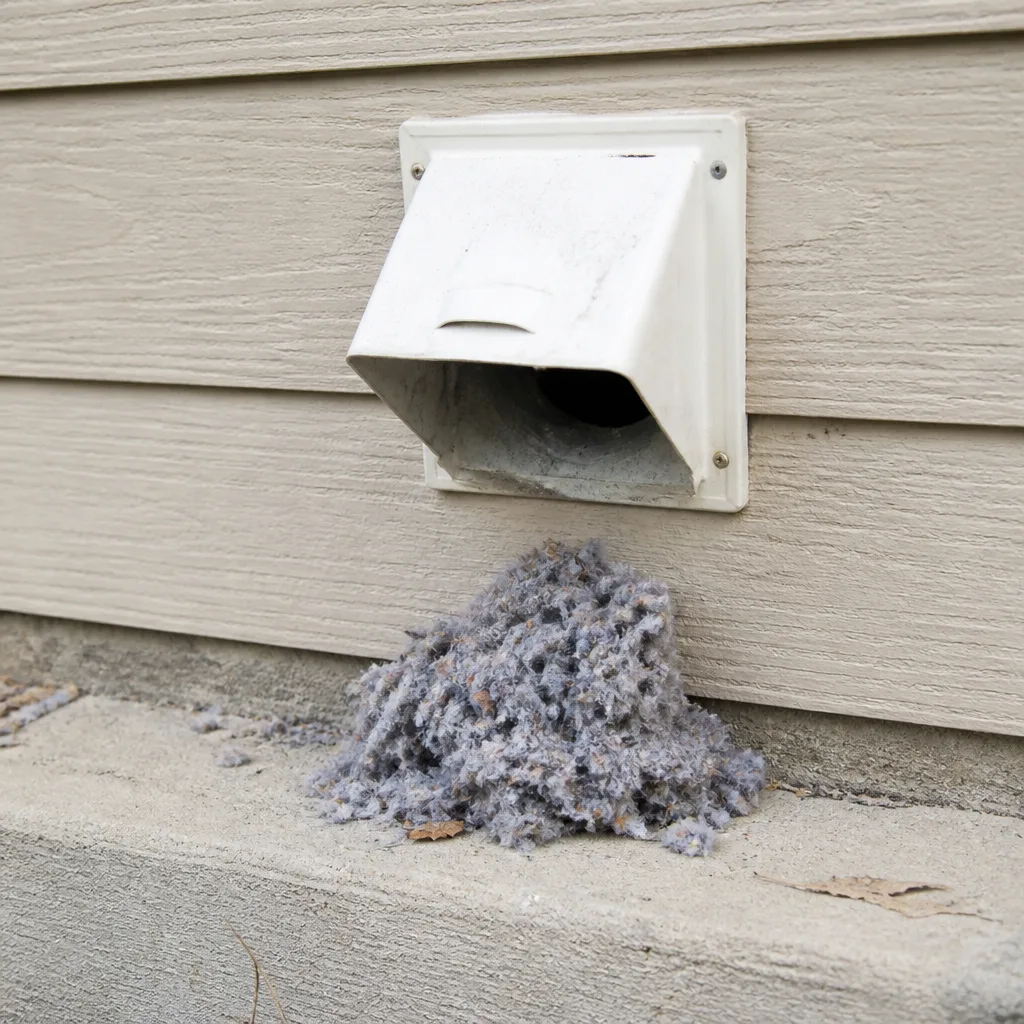 Dryer vent cleaning
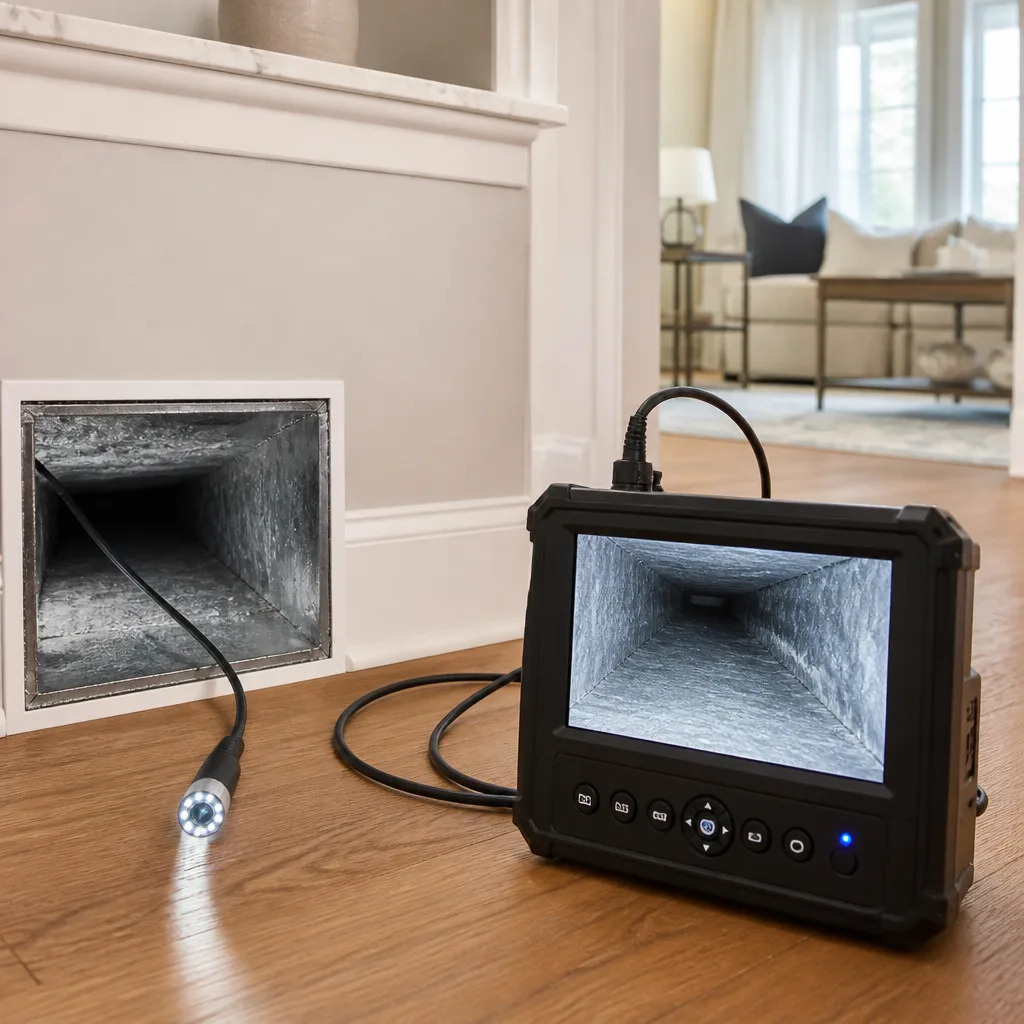 Camera inspection
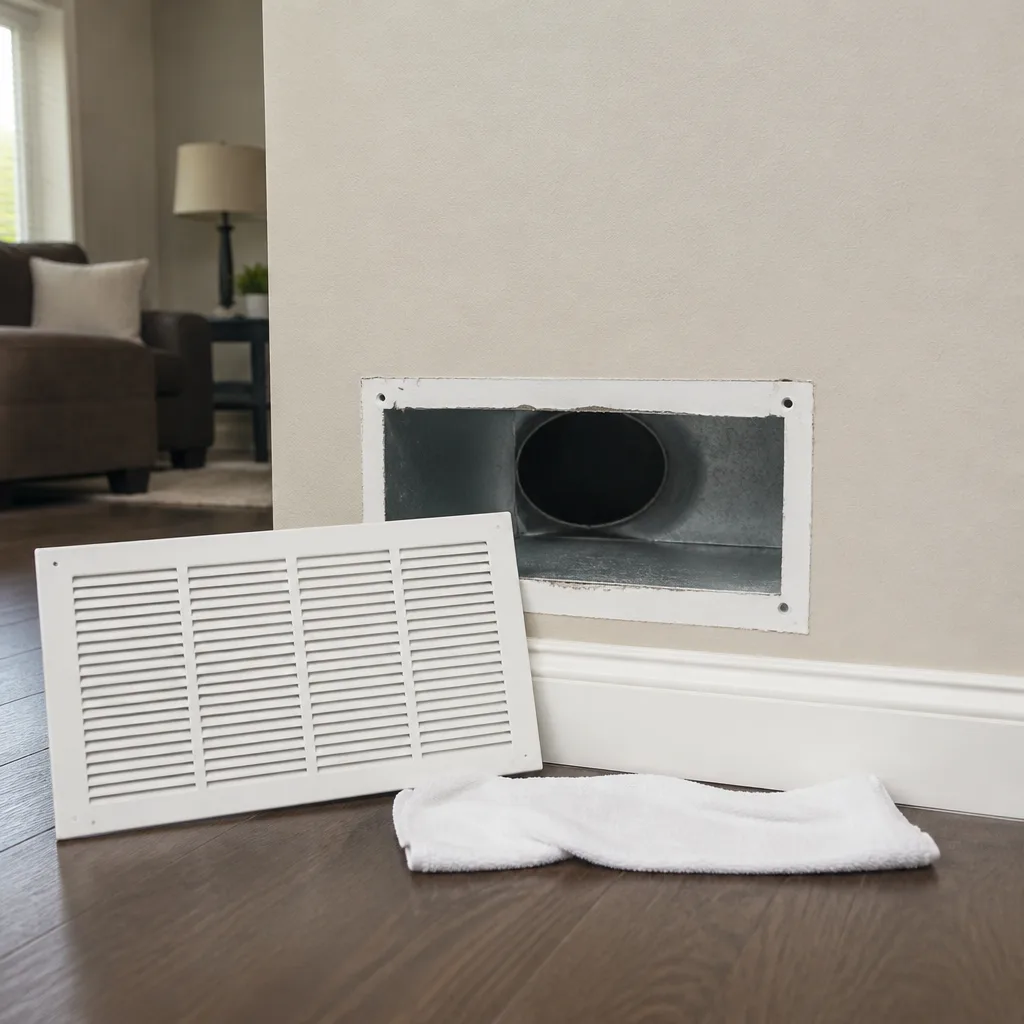 Sanitizing & deodorizing
Whole-system duct and dryer vent check with before-and-after photos - you see exactly what came out of your vents
That "$99 whole-house special" is a bait ad - the real number appears once they are in your hallway, or the "clean" is a shop-vac at the register. We photograph the inside of your ducts before and after instead.
The Complete Guide to Air Duct Cleaning in Goodyear
Most air duct cleaning advice you’ll find online was written for a house in Ohio. It assumes four seasons, a furnace that runs a few months a year, and ductwork that sits idle half the time. Goodyear doesn’t work that way. Here in the desert, your HVAC system runs the better part of the calendar, pulling air through the same ductwork day after day, month after month. That changes what builds up inside your ducts, how fast it accumulates, and what a real cleaning has to remove. This guide maps the contamination profile specific to Goodyear homes, walks through what a proper negative-pressure cleaning looks like step by step, and shows you how to tell a surface wipe-down from a full system extraction.
Quick Answer
Air duct cleaning in Goodyear should focus on the fine caliche-derived dust, monsoon-season humidity effects, and heavy runtime particulate that desert homes accumulate, and it should be done with commercial-grade negative-air and contact-vacuum equipment rather than consumer tools. A thorough job includes the return plenums and branch runs, not just the visible registers, and ends with airflow verification and photos of your own ductwork. Homes here typically book a cleaning every two to four years depending on pets, allergies, and recent renovation.
Styles & brands we work with
- Whole-home duct cleaning
- Dryer vent cleaning
- Camera inspection
- Sanitizing & deodorizing
Table of Contents
- Why Goodyear Ducts Get Dirty Differently
- How Caliche Dust Gets Past Your Filter
- What Near-Constant Runtime Does to Contamination Timelines
- What a Legitimate Negative-Pressure Cleaning Looks Like
- Surface Cleaning vs. Full System Extraction
- Post-Cleaning Verification: Airflow and Visual Checks
- The Dryer Vent Connection
- How Often Goodyear Homes Actually Need This
Why Goodyear Ducts Get Dirty Differently
National duct cleaning content assumes a temperate climate where the HVAC system cycles on and off across a long shoulder season. In Goodyear, cooling season dominates the year and the system runs hundreds of extra hours compared to most of the country. That extra runtime is the single biggest reason local ductwork accumulates debris faster than the national average would suggest.
Combine that runtime with the local air itself. Desert soil around Goodyear is caliche-heavy, meaning it’s high in calcium carbonate and other mineral content that breaks down into extremely fine, powdery particulate when it’s disturbed. It blows off undeveloped lots, construction sites, and unpaved shoulders, and much of it is small enough to slide straight past a standard residential filter. Once inside the return, that mineral dust settles onto duct walls and slowly bonds there, aided by the slight moisture the system picks up during the monsoon months.
Then there’s the monsoon season. When humidity spikes from the usual single digits into the double digits over a few weeks, the settled dust layer becomes a clingier film rather than loose powder. That film holds onto biological particulate and makes it harder to blow out with a shop vac.
So the contamination profile in a Goodyear duct system is really three things stacking on top of each other:
- Fine mineral dust from caliche-heavy local soil, small enough to bypass basic filtration.
- Organic particulate (pet dander, skin cells, pollen) bound into the dust film by monsoon humidity.
- Construction-era debris in newer builds, from drywall dust, framing sawdust, and installation fragments left in the runs.
That combination is why cleaning ductwork in Goodyear means removing bonded material, not just vacuuming loose dust. It calls for contact agitation and real negative pressure, not a broom and a shop vac.
How Caliche Dust Gets Past Your Filter
A standard pleated filter catches the bigger particles. It does not catch the fine fraction of caliche-derived mineral dust, and that’s the fraction that matters for duct fouling. When you walk past a graded lot or a construction entrance in Goodyear on a breezy afternoon, you’re seeing exactly the material that ends up in your return plenum.
The mechanics work like this:
- Wind lifts fine dust off caliche-rich soil and construction sites.
- The particulate drifts into your home’s return air stream.
- Your filter catches the large particles but passes the fine fraction.
- The return plenum and branch runs coat in a thin, even layer of mineral dust.
- That layer bonds over repeated cooling cycles and monsoon moisture.
Because the dust is mineral, it’s also abrasive and mildly alkaline, which is why poorly sealed duct joints and older flex runs can degrade faster here. In a house with pets or an allergy sufferer, the effect is magnified. You may notice more dust settling on surfaces, a slightly stale smell when the system first kicks on, or visibly dusty returns even shortly after changing the filter.
Knowing that caliche dust is the main culprit is useful because it tells you what to look for. A cleaning that only targets dust that’s loose on the floor of the duct will miss most of what’s actually there. Look for a company that uses professional-grade contact-vacuum equipment, like the Rotobrush and Nikro equipment we work with, to agitate and lift that bonded layer, and that brings the negative-air capacity to keep it from spreading into the living space.
What Near-Constant Runtime Does to Contamination Timelines
A national article will tell you to clean your ducts every three to five years. That’s a reasonable baseline for a mild climate, but in Goodyear the math shifts. Because the system runs so many more hours a year, the same amount of airborne dust is pulled through the same ductwork in a compressed timeframe.
A practical way to think about it: if a system running a typical national average moves a certain volume of dust through per cycle, a Goodyear system moving nearly double the annual runtime is filtering roughly double the volume. The buildup curve steepens. A three-to-five year window in a cooler climate can look more like two to four years of accumulation here, and closer to two years for a household with shedding pets or family members with allergies.
The seasons also matter for what accumulates when:
- Late spring and summer: peak dust intrusion combined with peak runtime, the fastest dirtiest phase.
- Monsoon weeks: humidity bonds dust into the film described above and can create the musty smell some homeowners notice in late summer.
- Fall and winter: lower runtime, but the dust film that built up over the hot months stays put.
The practical takeaway: don’t anchor your cleaning interval to the national average. Anchor it to what’s actually happening inside your ductwork. A cleaning every two to four years is a reasonable window for most Goodyear homes, and the right interval should follow an inspection rather than a calendar rule.
What a Legitimate Negative-Pressure Cleaning Looks Like
The single most useful thing you can learn as a homeowner is what a real cleaning process looks like so you can recognize it when it’s done right. It is not a person with a shop vac at each register. It’s a coordinated flow-management process that keeps the whole system under controlled extraction.
Here are the steps a proper negative-pressure cleaning follows, from intake to exhaust:
- Seal the system. Registers and other openings are closed or covered so the only air movement is the extraction the equipment creates.
- Connect the negative-air machine. A commercial-grade vacuum unit, like the Nikro and Abatement Technologies systems used for contamination-level work, pulls the whole system under negative pressure so dislodged debris leaves the building instead of drifting into the room.
- Insert a contact-vacuum source. A rotary brush tool, such as the Rotobrush systems we run, travels each run to agitate the bonded dust layer and pull it into the air stream.
- Work each branch and return individually. Every run is treated separately, because the return plenum collects more debris than any single supply branch.
- Reach the plenums and the air handler cabinet. The sections downstream of the main return and around the air handler are where the heaviest accumulation sits and where a proper cleaning has to reach.
- Disconnect and inspect. Equipment is pulled and the ductwork is checked through access points before the job is closed out.
The presence of Abatement Technologies equipment matters because that class of machine is built for contamination-level jobs, not just household dust. Having it on hand means a company can handle mold, heavy allergen loads, and post-construction particulate without improvising. If a cleaning provider has only a shop vac and a promise, that’s your cue to ask questions.
Surface Cleaning vs. Full System Extraction
Two cleanings can happen in the same house and produce very different results, so it’s worth knowing the difference between the two.
Surface cleaning removes what’s visible and loose. It may sweep up debris in the visible duct sections, wipe the registers, and change the filter. It leaves the bonded caliche dust film in the return and branch runs, and it does nothing to the air handler cabinet. That’s fine for a fresh coat of dust on a newly built home, but it doesn’t address the accumulation we described above.
Full system extraction uses negative pressure from a commercial machine and a rotating contact-vacuum source to agitate and remove both loose and bonded debris from every branch and return, then verifies airflow afterward. It’s the standard a serious cleaning should meet.
How to tell which one you’re buying:
- Ask what equipment they use. If it’s a shop vac and a pressure nozzle, it’s a surface job.
- Ask what’s covered in the price. Registers-only cleaning is not a system cleaning. Your written estimate should name which runs are included.
- Ask for before-and-after photos of your own ductwork. Not stock photos, not a video loop. A company willing to show you your ducts is telling you something about its confidence.
- Ask whether they seal the system before extraction. A cleaning that lets debris drift back into the room isn’t a cleaning.
The point isn’t to distrust every company. It’s to recognize that the cleaning you get is only as thorough as the equipment and process behind it. When we quote a system cleaning, we’re pricing one flat rate per system agreed before any work starts, not a per-vent price that grows as the job drags on. That mirrors the standard at air duct cleaning work done right.
Post-Cleaning Verification: Airflow and Visual Checks
A cleaning should end with evidence you can see and, ideally, with a baseline you can compare later. That’s the part most homeowners never get to see.
Here’s what a proper closeout looks like:
- Visual inspection through access points. The technician opens the access caps and shows you the inside of a return and a branch so you can see the difference.
- Before-and-after photos. The same valve or run is photographed before agitation and after extraction so you can confirm the change.
- Airflow measurement. A baseline airflow reading at a few representative registers tells you how the system is moving air today. It’s a number worth keeping, because if the same register measures significantly different next time, you’ll know to investigate.
- Filter and seal check. The filter is replaced or confirmed clean, and any gaps around the air handler cabinet are noted.
That last point matters in Goodyear specifically. Since caliche dust is fine and relentless, an unsealed return cabinet or a gap around the filter slot will pull local dust straight past your filter every day. If the technician finds one, that’s also a repair opportunity. We handle both, which is why we describe our approach as “we clean it, and if we find a breach, we fix it.” Knowing you have a repair service built in means you’re not calling a second contractor after the cleaning reveals a problem.
For a property manager, the verification set matters more than the cleaning itself. Photos, airflow baselines, and a written summary are the record you need for a tenant file or an insurance trail.
The Dryer Vent Connection
Duct cleaning and dryer vent cleaning aren’t the same job, but they belong on the same list. A clogged dryer vent is a well-documented fire hazard and a strain on the dryer’s efficiency, and it’s one of the risks most companies never mention when they’re quoting air duct work.
Why it’s relevant in Goodyear: the same fine dust that coats your ductwork also gets into the dryer’s exhaust path along with lint. The local dust load plus pets plus long hot dry seasons mean dryer vents here accumulate faster than a national average would suggest. If your dryer takes two cycles for a load that used to take one, that’s usually a vent restriction, not a failing appliance.
What a dryer vent cleaning involves:
- Detaching and cleaning the full run from dryer to exterior vent.
- Verifying there are no crushed sections, bird nests, or lint dams along the way.
- Confirming the exterior flapper opens and closes freely.
- Recording airflow so you know the vent is clear.
We handle dryer vent work under the same standard as duct cleaning, and doing both in one visit means you don’t have two contractors on two calendars. See dryer vent cleaning if you want the full picture on that service.
How Often Goodyear Homes Actually Need This
Calendar intervals are a starting point, not a rule. The right interval depends on the household and how the system is running.
A rough guide for Goodyear households:
- Every 2 to 4 years for most homes with no special conditions.
- Every 1 to 2 years if you have shedding pets, an allergy sufferer, or recent renovation.
- After any major renovation, especially one that involved drywall or major cutting.
- When you move into a resale home whose service history you don’t know.
- After visible mold, water intrusion, or pest activity inside the ductwork.
For landlords and property managers, a two-to-three year interval across a portfolio, plus a cleaning between tenants, keeps the documentation trail current and prevents deferred maintenance from turning into a complaint. Because the same company can also handle duct repair and dryer vent cleaning, you’re not managing three separate vendor relationships for one property’s air quality.
If you’re unsure where your home sits on that schedule, an inspection is the honest way to find out. We’d rather tell you the ducts are fine than sell you a cleaning you don’t need.
Common Mistakes to Avoid
- Hiring on price alone. In Goodyear, where caliche dust bonds tightly and runtime is high, a cheap quote often means a shop vac and a short visit. The invoice you save on is the cleaning you don’t get.
- Believing a per-vent price is a system price. A per-vent quote can balloon once the technician is on site and finds “extra” runs. Ask for one flat rate per system, agreed in writing before work starts.
- Skipping the return plenum and air handler cabinet. These are the dirtiest sections in a Goodyear home because they sit right where the fine dust lands. A cleaning that skips them is a partial job.
- Assuming a filter change solves it. Standard filters don’t catch the fine caliche fraction; changing the filter helps, but it doesn’t remove what’s already bonded to the duct walls.
- Ignoring the dryer vent. The same local dust load clogs dryer vents faster, and that’s the fire risk most duct cleaning quotes never mention. Get both done in one visit.
- Not asking for before-and-after photos. Without photos of your own ductwork, you have no way to confirm the work was done. Ask before booking, and expect them in the closeout.
- Cleaning only after a smell or visible dust. By the time you notice, the buildup has been feeding your system for a while. A scheduled inspection catches it earlier.
See the difference
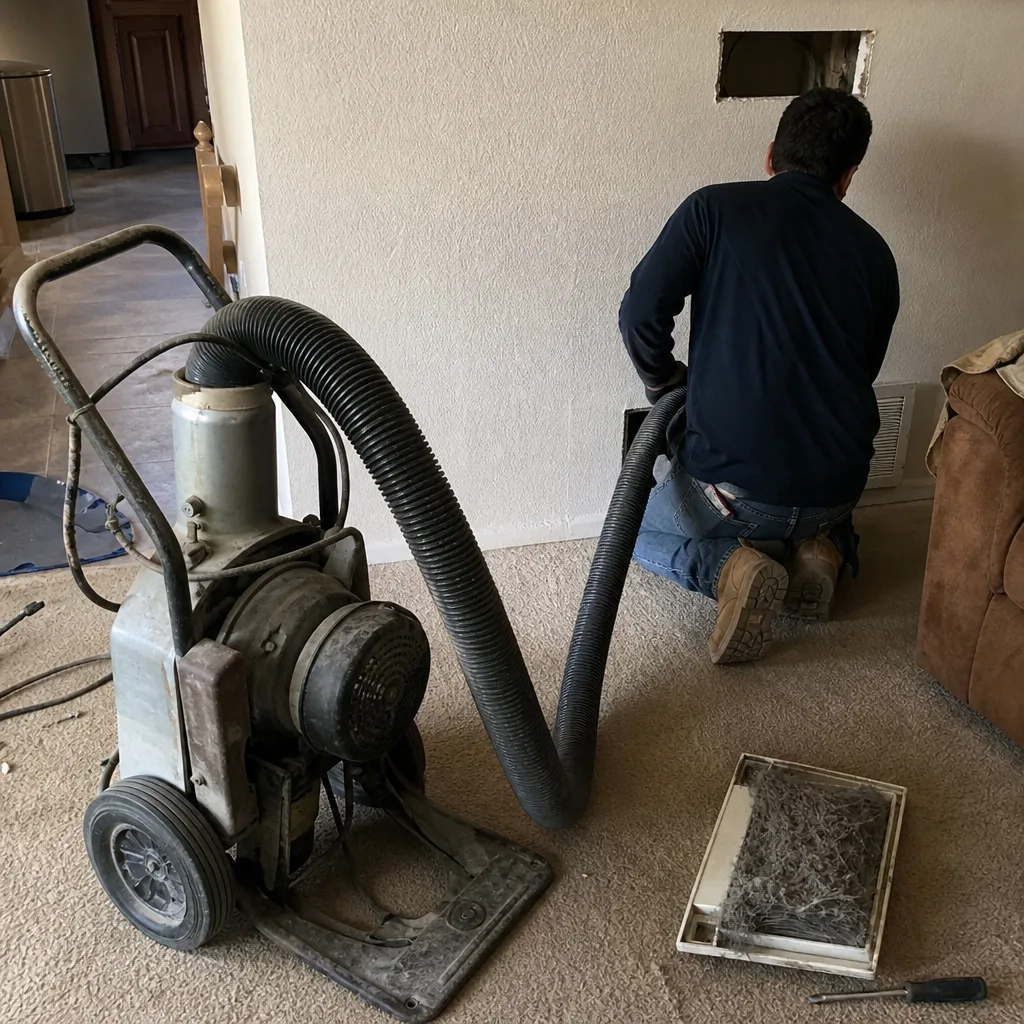 Before
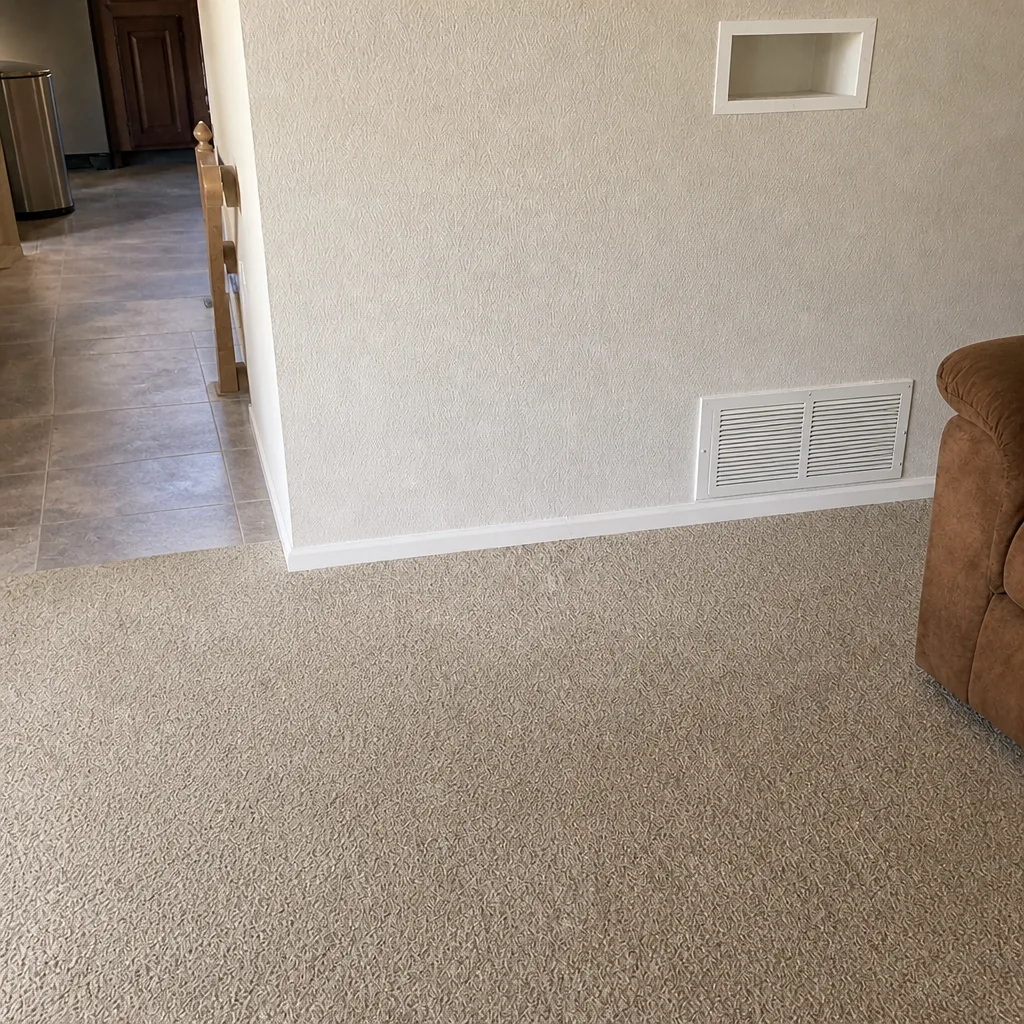 After
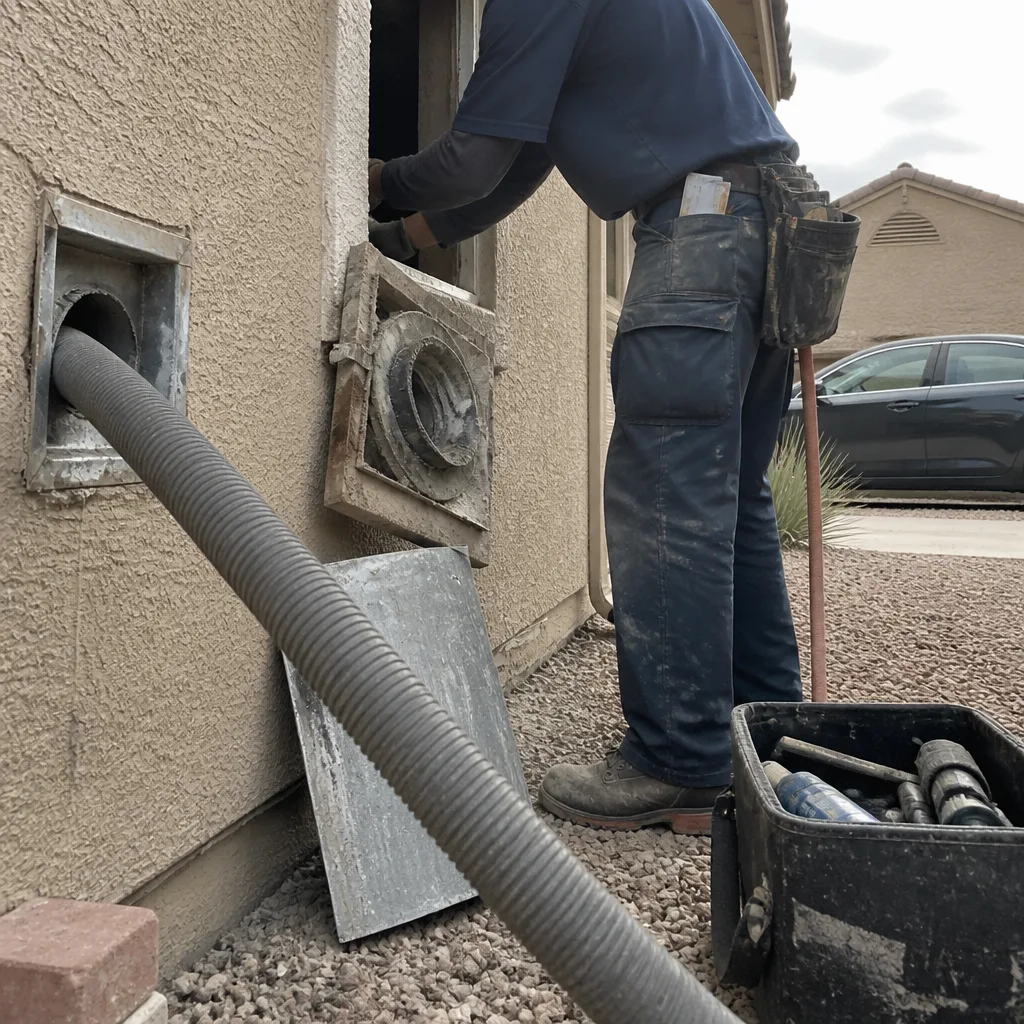 Before
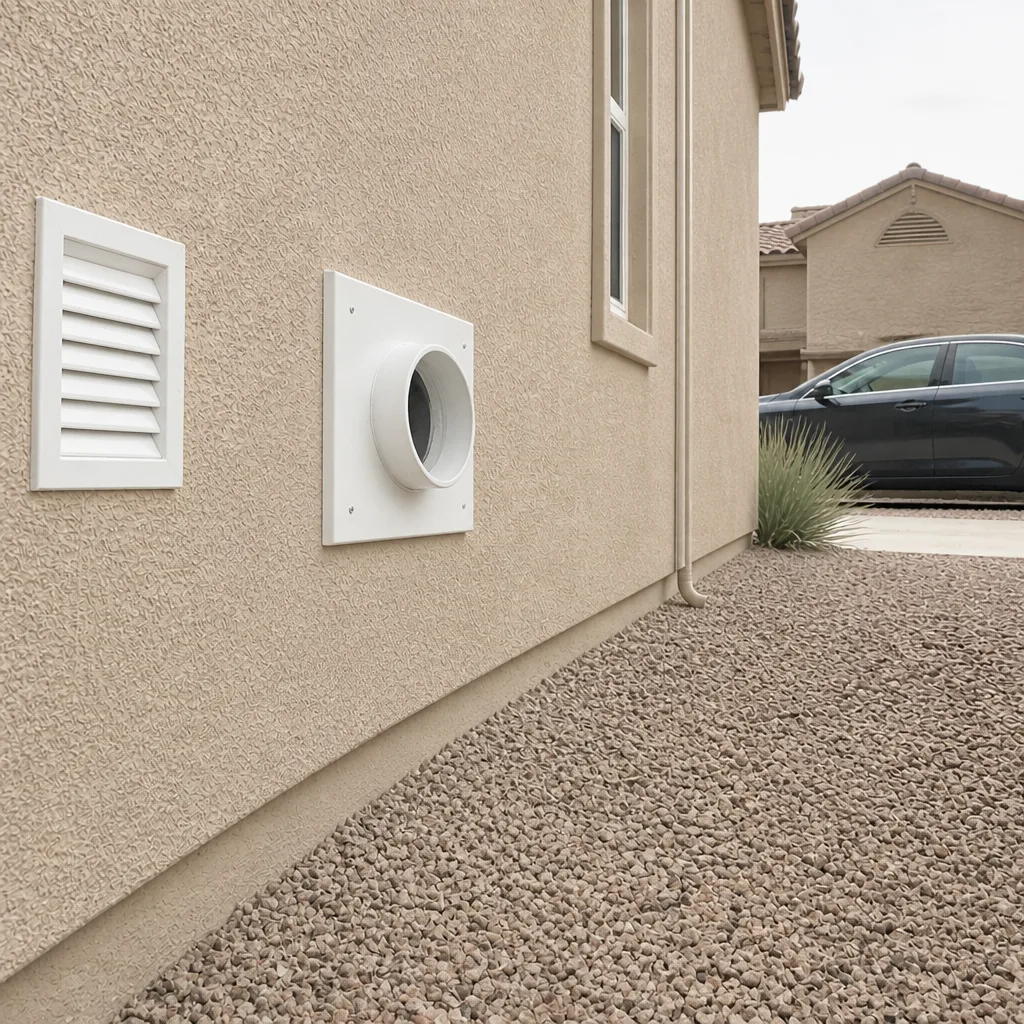 After
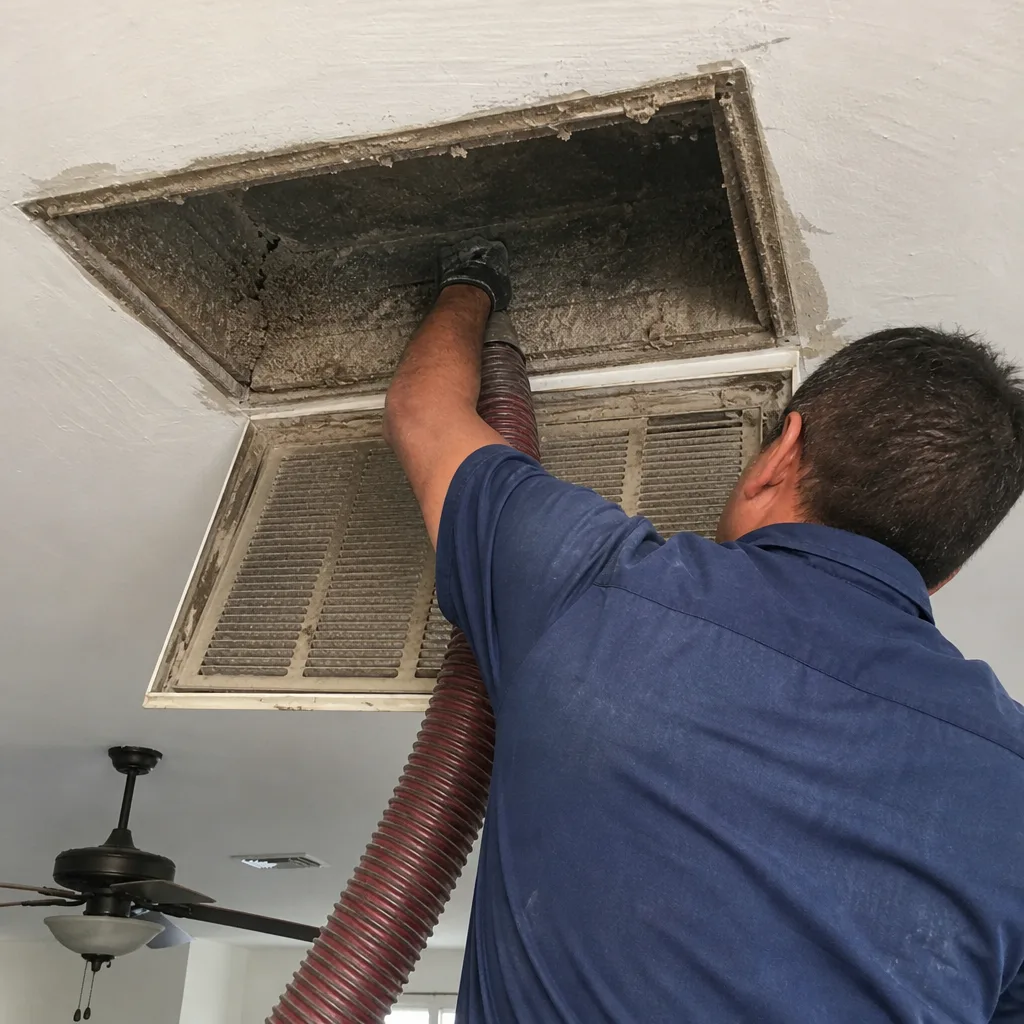 Before
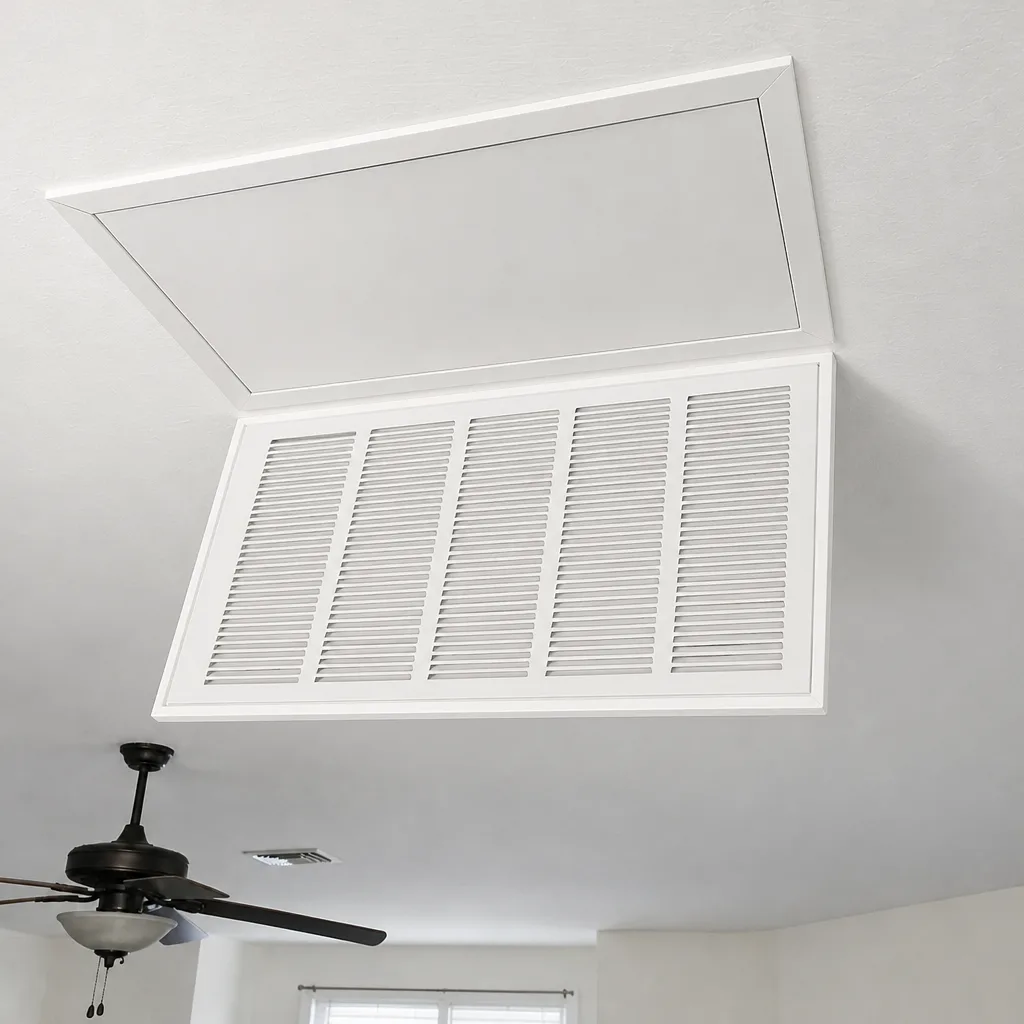 After
When to Call a Professional
Some signs don’t wait for a calendar. If you can see dust puffing out of a register when the system kicks on, or a musty smell lingers for the first minutes after startup, the ductwork is overdue. If a family member with allergies is reacting more than usual and you’ve already changed the filter, an inspection is worth the call. After a renovation that involved drywall or significant cutting, book a cleaning before you move furniture back in, because construction particulate settles into ductwork and stays there. If your dryer takes two cycles to dry a normal load, treat it as a vent restriction and get it checked. Duct Cleaning Goodyear offers free estimates in Goodyear, and our technicians have up to 13 years of experience with the equipment these jobs actually require, so you get a straight answer about what’s inside your system. Call (844) 287-2528 to book.
Frequently Asked Questions
A whole-system cleaning typically fits within a moderate residential range, and the exact figure depends on the number of runs, system size, and whether the return and air handler are accessible. We price one flat rate per system, agreed in writing before work starts, so there’s no per-vent billing that grows once the technician is on site. Call (844) 287-2528 for a free estimate, and the written quote sets the final price.
Cheaper quotes usually mean less equipment and less time. A shop-vac cleaning with no negative-air machine and no contact agitation can’t remove the bonded caliche dust that Goodyear homes accumulate, and it may not reach the return plenum. Ask what machine they use and what’s covered in the price before booking. Call (844) 287-2528 and we’ll walk you through what a real cleaning covers.
Ask for before-and-after photos of your own ductwork, taken at the same valve and the same run, plus a visual inspection through access points so you can see the result yourself. A proper closeout also includes an airflow baseline at a few registers. If a company won’t show you the ducts, that’s your answer. Call (844) 287-2528 to book a job that includes the closeout.
Every two to four years is the typical interval for Goodyear homes, and one to two years if you have pets, allergy sufferers, or recent renovation. The frequent HVAC runtime here compresses the contamination timeline compared to cooler climates, so the national three-to-five year guidance runs long here. Call (844) 287-2528 for an inspection so the schedule matches your home, not a generic rule.
Yes, and it’s one of the most common jobs we see in newer builds. Drywall dust, framing debris, and installation fragments settle into the branch runs and plenums and don’t clear with normal operation. A full extraction after construction is the right move, and if the cleaning reveals a joint that needs repair, we handle that on the same visit.
We use equipment rated for contamination-level work, including Abatement Technologies systems, so heavier particulate, mold spores, and post-construction debris are within the scope of what we can address. The first step is a visual inspection to confirm what’s actually present, then a cleaning plan sized to the job. Call (844) 287-2528 and we’ll walk you through what the inspection found.
The Bottom Line
Duct cleaning in Goodyear isn’t a generic annual chore; it’s a response to a specific local contamination pattern. Caliche-heavy soil feeds fine mineral dust into the returns, near-constant runtime moves that dust through the system at a compressed pace, and monsoon humidity bonds it into a film that a shop vac won’t lift. A real cleaning uses commercial-grade negative-air and contact-vacuum equipment, reaches the return plenums and branch runs, and ends with photos and an airflow baseline. The company that can also handle duct repair and dryer vent cleaning on the same visit saves you a vendor. If you’re ready for an inspection, Duct Cleaning Goodyear offers free estimates, one flat price per system, before-and-after photos of your own ducts, and satisfaction-guaranteed work. Duct Cleaning Goodyear is where you start. Call (844) 287-2528. We answer 24/7. Fast dispatch from 7am to 7pm, Sunday through Friday, closed Saturday.
Written by the team at Duct Cleaning Goodyear.