
Last updated November 15, 2026
 Whole-home duct cleaning
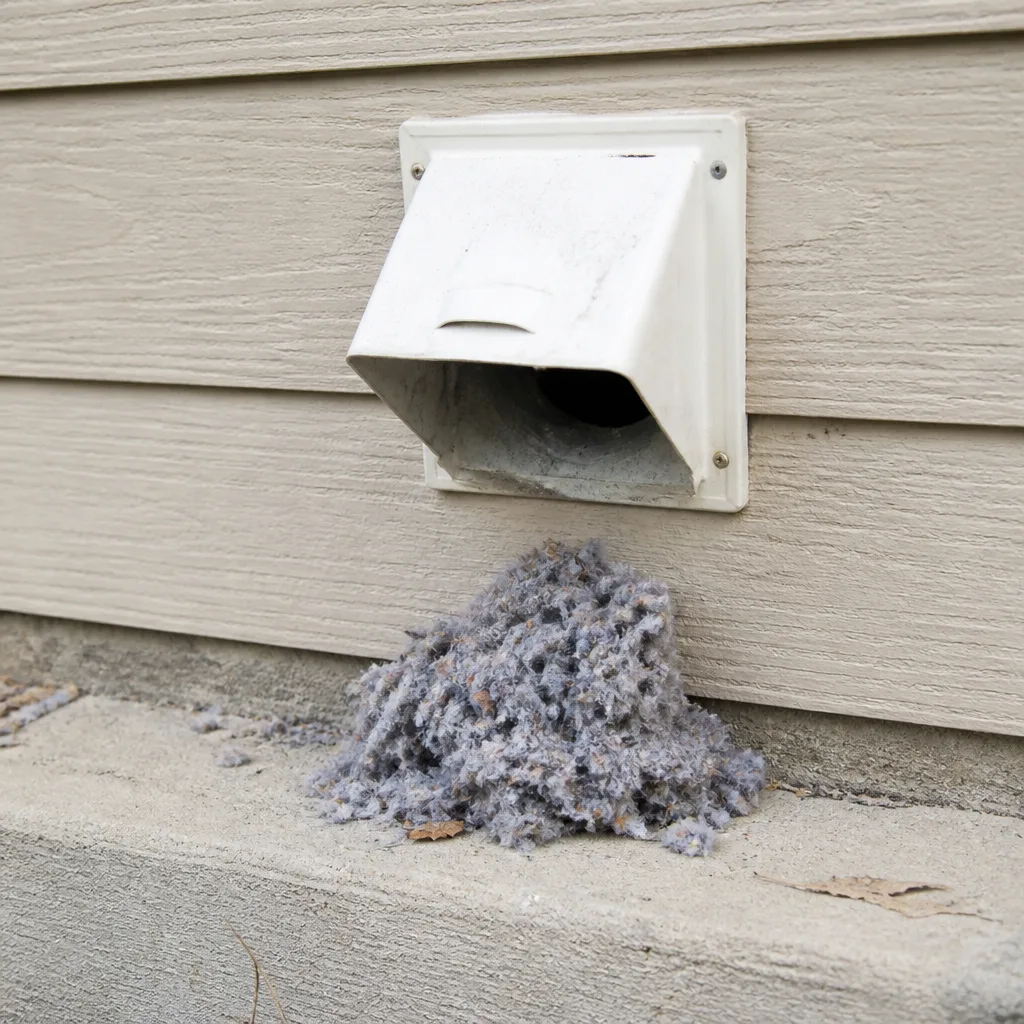 Dryer vent cleaning
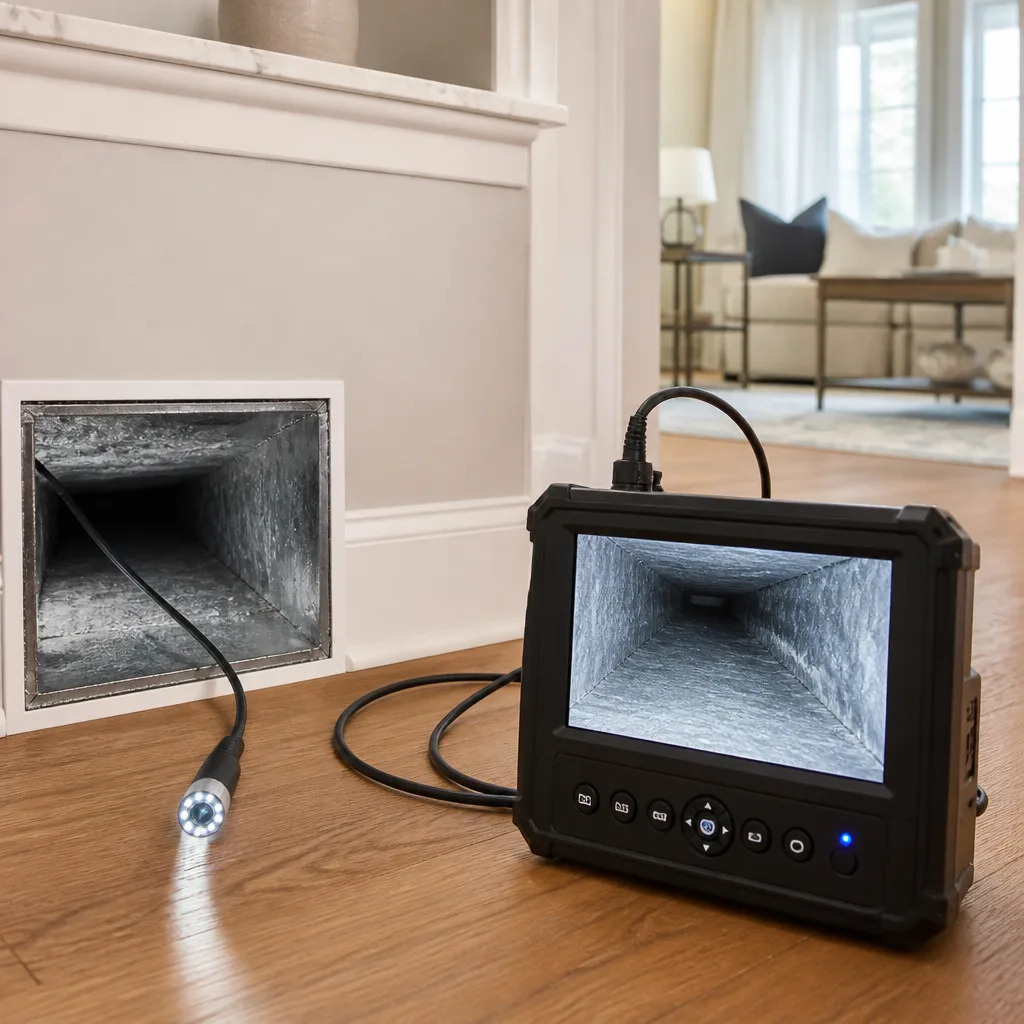 Camera inspection
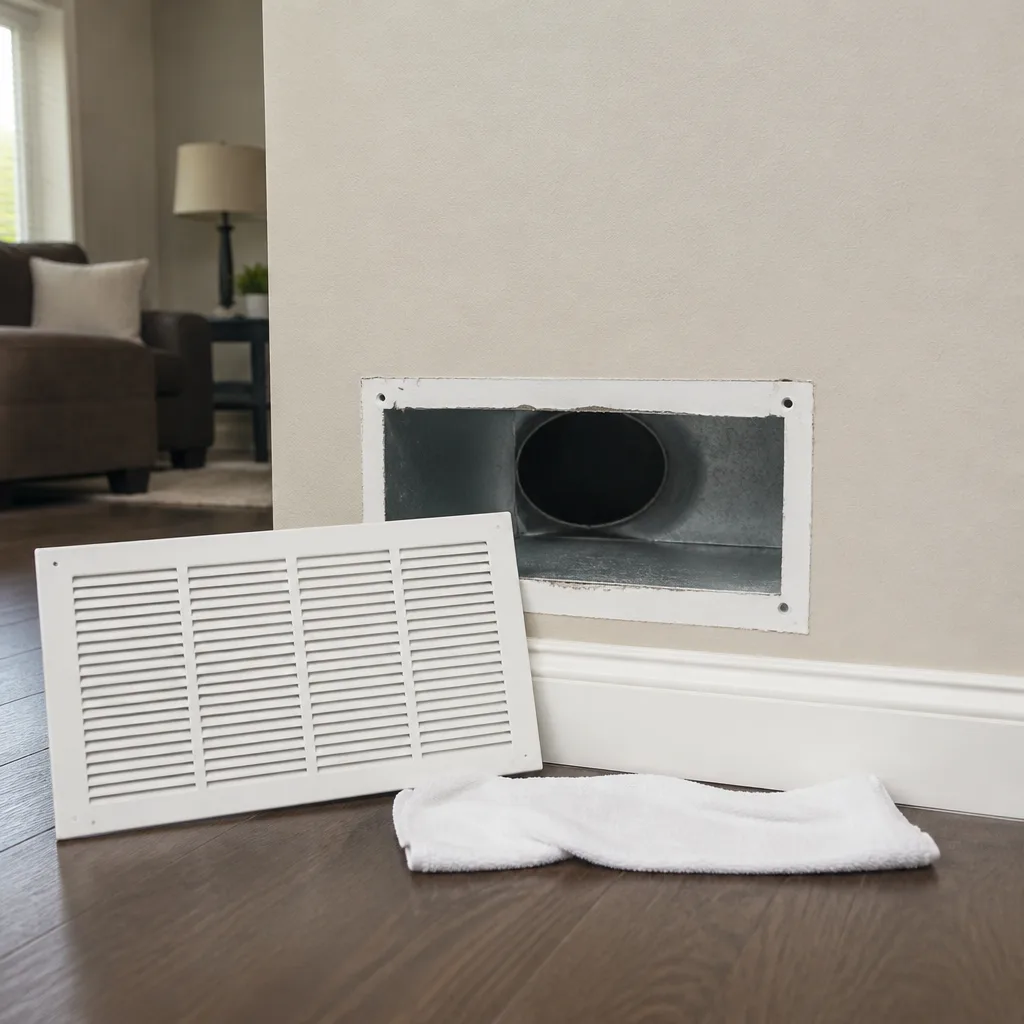 Sanitizing & deodorizing
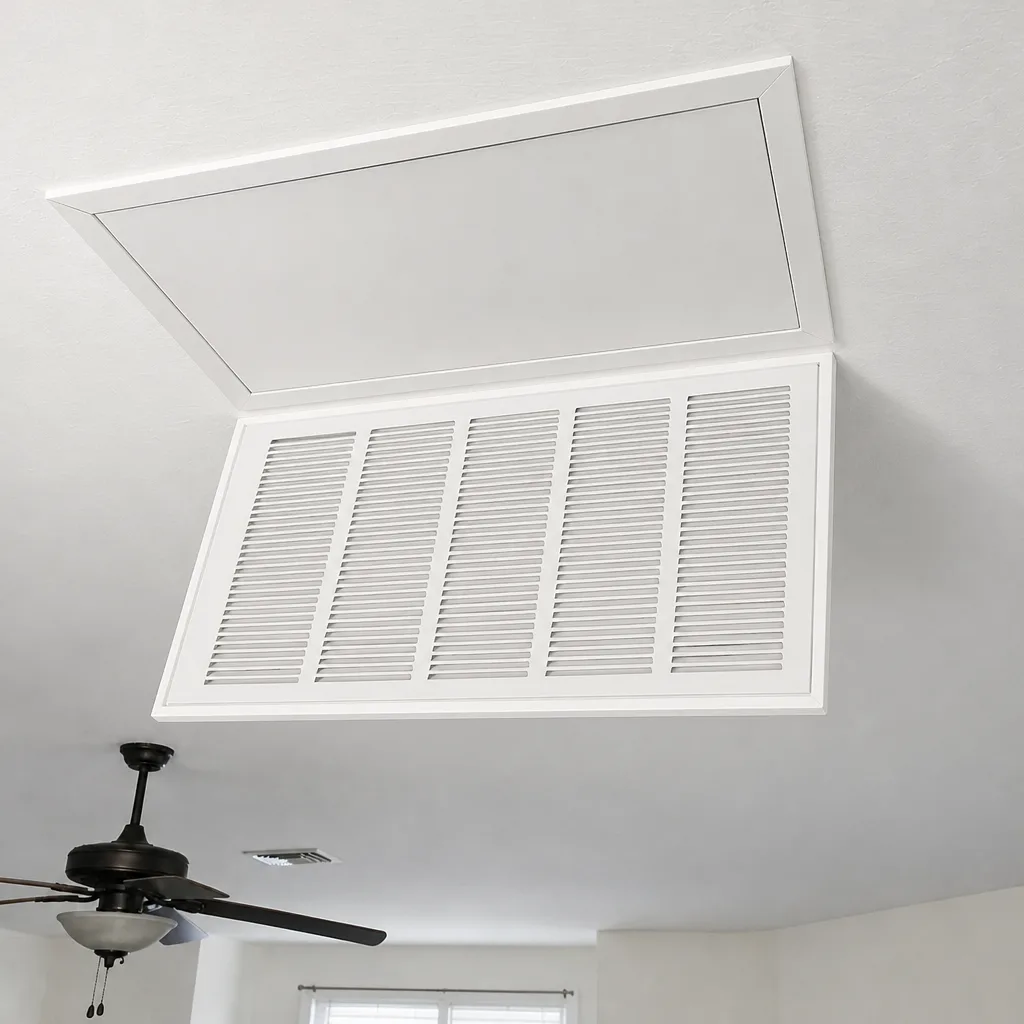
Whole-system duct and dryer vent check with before-and-after photos - you see exactly what came out of your vents
That "$99 whole-house special" is a bait ad - the real number appears once they are in your hallway, or the "clean" is a shop-vac at the register. We photograph the inside of your ducts before and after instead.
Air Duct Cleaning Troubleshooting in Goodyear: Common Problems and How to Fix Them
If a duct cleaning didn’t fix your airflow problem, there’s a good chance cleaning was never going to fix it. Restricted airflow is frequently an HVAC-side issue – a tired blower motor, a choked evaporator coil, an undersized return – not a contamination issue, and no amount of brushing inside a duct run changes a mechanical fault. That’s the single most expensive misunderstanding in this trade. Homeowners in Goodyear pay for a cleaning, the symptom stays, and they assume the duct work was done wrong. Sometimes it was. Often the ducts are spotless and the real problem is sitting in the air handler. This guide walks you through how to tell which category your symptom belongs to before you spend a dollar, what post-cleaning symptoms are normal, and how Goodyear’s particular ground and summer heat change the equation.
Quick Answer
Most duct “problems” in Goodyear fall into one of two buckets: a duct-side issue (debris, a collapsed or disconnected flex run, a torn liner, leaking joints) or an HVAC-side issue (a failing blower, a restricted coil, an undersized return, a blocked filter). Diagnose the bucket first, because a cleaning fixes the first and does nothing for the second. If you’ve already had ducts cleaned and airflow is still weak, uneven, or musty, treat it as an HVAC or duct-integrity question, not a cleaning question – and get the static pressure measured before you spend money on anything else.
Styles & brands we work with
- Whole-home duct cleaning
- Dryer vent cleaning
- Camera inspection
- Sanitizing & deodorizing
Table of Contents
- Duct Problem or HVAC Problem? Start Here
- Simple Airflow and Pressure Checks You Can Do Yourself
- What’s Normal After a Duct Cleaning – and What Isn’t
- How Goodyear’s Caliche Soil and Summer Heat Age Your Ductwork
- Why Static Pressure Explains a “Clean” System That Still Underperforms
- The Troubleshooting Decision Tree: Symptom to Next Step
- When Duct Repair Beats Cleaning – and When It Beats Both
- Common Mistakes to Avoid
Duct Problem or HVAC Problem? Start Here
Every complaint we hear about ductwork in Goodyear can be sorted before anyone opens a panel. The sorting question is simple: is the air not getting into the ducts, or is it not getting out of them? A duct-side problem means the passage itself is compromised – a run has come apart, a flex duct has sagged and pinched shut, a liner has torn and shed material, or the trunk is packed with debris. An HVAC-side problem means the machine moving the air is underperforming – the blower wheel is caked, the coil is restricted, the return can’t supply enough air, or the filter is starving the system. You can clean a duct run to bare metal and the second category will still choke your house.
Why does this distinction matter so much in Goodyear? Because the symptoms overlap almost completely. Weak airflow at a far register, a room that never cools, a faint musty smell when the system kicks on – all of these are listed by nearly every company as reasons to book a cleaning. In our experience, airflow complaints that persist after a proper cleaning are more often the machine than the duct. An air handler that’s pulling against a restricted coil or a pinched return will underdeliver air no matter how clean the passages are.
Here’s the practical split you can apply without tools:
- Duct-side clues: airflow is strong near the air handler but dies at the far end of one specific run; a room is consistently hotter or colder than the rest of the house; you can hear air escaping in a wall or attic cavity; visible dust collects quickly at one register.
- HVAC-side clues: airflow is weak at every register across the whole house; the system runs constantly and never quite reaches set point; the filter fills in a week or two; the blower sounds labored or the system short-cycles.
- Mixed clues: weak airflow everywhere plus a musty smell plus one noticeably worse room – which usually means a mechanical restriction with a leaking or dirty run on top of it.
Simple Airflow and Pressure Checks You Can Do Yourself
Before you call anyone, run a handful of checks that cost nothing and give whoever comes out a head start. These aren’t repairs; they’re observations that point at the cause. A trained technician will go further with a manometer and a suction gauge, but what you notice on your own narrows the field considerably.
- Test each register with your hand. Walk every room and hold your palm near each supply. Is the weak flow house-wide or isolated to one or two runs? House-wide points to the blower or a shared return; isolated points to that specific duct run.
- Check the filter first, every time. A clogged filter is the most common cause of “weak airflow” and the cheapest to rule out. Hold it up to a light – if you can’t see through it, replace it. If a fresh filter restores airflow, the ducts were never the issue.
- Listen for the blower. A dull, labored hum or a grinding sound from the air handler suggests the blower wheel or motor is struggling. That’s a mechanical problem, full stop.
- Look at the return grille. A return that’s undersized for the equipment, or one blocked by furniture or rugs, starves the whole system. Air can only come out as fast as it goes in.
- Sniff for mustiness at the register. A smell that appears only when the system runs points at a dirty evaporator coil or damp liner, not airborne dust.
- Watch for dust streaks at a specific boot or grille. A single register throwing more dust than the rest usually means a loose connection or a torn flex run behind it.
None of these checks tells you everything. What they do is tell you which of the two buckets your symptom belongs to – and that’s the whole point. A house-wide weak-airflow complaint with a clean filter and a labored blower is an HVAC call, not a duct call. A single-room dust complaint with everything else normal is almost always a duct run that’s come loose or torn.
If you decide the ducts themselves are the problem, professional air duct cleaning with contact-vacuum equipment is the right next step, and we’ve got the machinery for it. If the checks point to the air handler, you need an HVAC technician – and we’ll tell you so rather than sell you a cleaning that can’t help.
What’s Normal After a Duct Cleaning – and What Isn’t
The two days after a cleaning confuse a lot of homeowners, because some symptoms are expected to fade and others are a sign the job wasn’t finished or the fault was never in the ducts to begin with. Knowing the difference saves you a second call – and tells you whether your original technician actually did the work.
Normal, and it resolves within 24 to 48 hours:
- A brief puff of loosened dust at the registers the first time the system runs. Cleaning dislodges material clinging inside runs; the system pushes the remainder out.
- A faint odor for a day or two, especially if the system sat unused through a hot stretch. It clears as the air moves.
- Slightly stronger airflow that levels off as the system rebalances. Contact-vacuum cleaning removes debris from the trunk and runs, which changes resistance.
Not normal – something’s still wrong:
- Weak airflow that persists past 48 hours. Cleaning can’t fix a collapsed flex run, a disconnected joint, or a failing blower, and if those were present before the job they’re still there after.
- A musty smell that returns within a week. That points to a damp evaporator coil, water intrusion, or contaminated liner – a contamination or mechanical problem that routine cleaning doesn’t solve.
- Dust returning to the same single register fast. That register has a leak behind it – a torn boot, a separated connection, a hole in a flex run.
- Visible debris left in the runs or at the boots after work was done. That’s incomplete work, plain and simple.
This is why we take before-and-after photos of your own ducts at Duct Cleaning Goodyear – not as a marketing gesture but as a record. When work is documented, “was the job actually done?” stops being a question. You can see the runs before and after. If you’ve already had a cleaning elsewhere and your symptoms match the “not normal” list, the honest answer is usually that either the work was incomplete or the underlying cause was mechanical all along.
How Goodyear’s Caliche Soil and Summer Heat Age Your Ductwork
Duct problems in Goodyear don’t look quite like duct problems anywhere else, and the local ground and climate explain why. Two forces do most of the wear: the caliche soil the valley is built on, and the summer heat that pushes ducts into permanent, punishing duty.
Caliche and ground movement. Much of the West Valley sits on caliche – a dense, cemented soil layer that’s notoriously hard to dig and slow to settle evenly. Homes here are often built on lots where grading and settlement don’t move the way they do in softer soils. What that means underground: buried duct runs can shift as the ground settles unevenly, and connections at the boot or where a run passes under a slab can pull apart over time. A sudden weak register in a home on a caliche-heavy lot is often a joint that’s separated where the ground moved. That’s a duct-repair call, not a cleaning call.
Summer heat and liner degradation. Goodyear summers are long and hot, and duct systems here run for months longer than they would almost anywhere else. Flex duct has an inner liner that does the sealing and an outer jacket that insulates. Under sustained heat and constant runtime, that inner liner grows brittle. It can tear, sag, and shed material – and shed liner looks different from routine dust buildup. Dust is gray and even. Liner breakdown shows up as fibers, papery flakes, or a powdery film at a specific register, often with reduced airflow on that run. If you see that, the fix is a duct repair (replacing the damaged section), not another cleaning.
What routine dust buildup looks like instead. Fine, even, gray-brown film across registers and boots. No fibers, no flakes, no single-register failures. That’s the cleaning case. When dust is uniform and the system’s airflow is fine, a cleaning restores the system. When the dust is fiber-like or concentrated on one run, suspect the liner or a joint.
Working from Goodyear means we see both patterns constantly, and telling them apart on arrival determines whether you need cleaning, repair, or both. If you’re reading this because your ducts look wrong, our local guide to Goodyear lays out how the climate shapes what we look for.
Why Static Pressure Explains a “Clean” System That Still Underperforms
If your ducts have just been cleaned and the house still doesn’t cool evenly, the most useful number you don’t have yet is static pressure. Static pressure is the resistance the blower works against. A clean duct system with a coil caked in dust, an undersized return, or an over-restrictive filter can carry high static pressure – and the blower simply can’t overcome it. The passages are clear; the machine can’t push through the restriction. That’s why “we cleaned the ducts and it’s still weak” is such a common story.
Here’s the crucial part: you can’t feel static pressure by hand. It’s measured with a manometer at the air handler, and it can be measured during a cleaning as well as by an HVAC tech. Total external static pressure above the equipment manufacturer’s rating is a mechanical fault – and it’s the first thing a competent technician checks on a system that underperforms after cleaning.
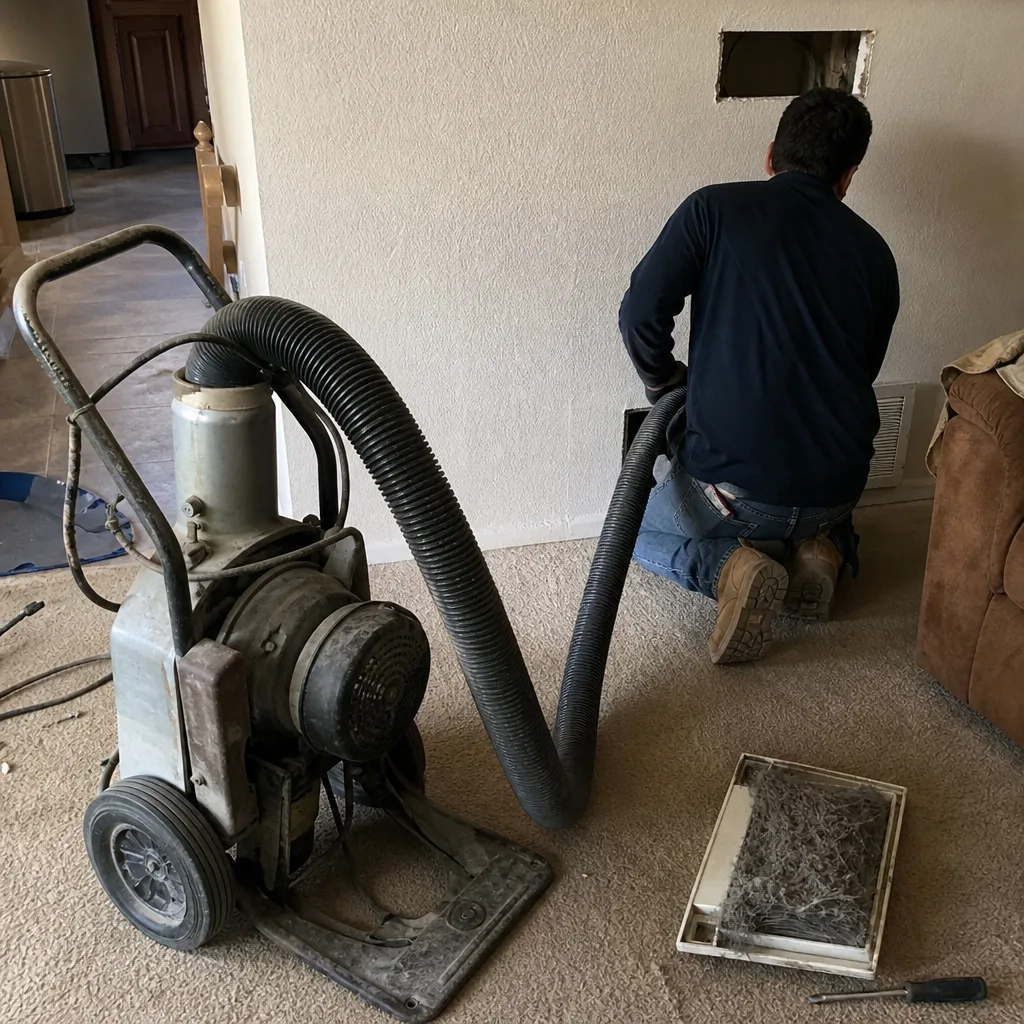
This is also why professional-grade equipment matters more than most homeowners realize. Serious contact-vacuum rigs like the Nikro systems we use include suction monitoring – a gauge showing the actual negative pressure at the hose. That reading does two things. It confirms the vacuum is pulling the way it should (so you know the cleaning actually happened), and it tells the technician whether the duct system is holding pressure or leaking somewhere – because a system that won’t hold vacuum is a system with a disconnected run or a leak to find. Consumer-grade vacuums and shop-vac rigs don’t have this. They pull, but nobody knows how much.
We also carry Abatement Technologies negative-air equipment for jobs where contamination is the issue – mold spores, heavy allergens, post-construction particulate – and Guardsman products for protecting surfaces during service. Using remediation-grade gear on a residential home is overprepared for most jobs, which is the point: it means the same tools handle the everyday work and the harder cases. And if your static pressure turns out to be high, familiarity with dryer vent cleaning and overall airflow helps us spot a clogged dryer run as a separate contributor to a hot, stuffy house.
The Troubleshooting Decision Tree: Symptom to Next Step
Here’s the practical sequence we’d walk a homeowner through on the phone. Find your symptom, follow the branch, and stop at the first “call” line.
- Weak airflow everywhere. Check the filter. Fresh filter and still weak? Check the return is unblocked. Still weak? That’s HVAC-side – blower, coil, or return sizing. Call an HVAC technician, not a duct company. A cleaning won’t move the needle.
- Weak airflow at one or two rooms. Look for a crushed or disconnected flex run behind the boot, a fully closed damper, or a boot that’s come loose. If nothing’s obvious, this is the duct-integrity case – a duct specialist with a camera and pressure gauge can find a hidden break. This is a duct-repair job.
- Dusty registers house-wide. Uniform gray dust across the house with okay airflow is the classic cleaning case. Book a contact-vacuum cleaning, and ask for before-and-after photos of your own runs. If the dust is fast to return after cleaning, suspect a leak behind a specific boot.
- Dust at one register, fast. That’s a leak on that run – torn boot, separated joint, hole in the flex. A duct repair, not a cleaning. If you can see fibers or flakes, suspect liner damage too.
- Musty smell that appears while the system runs. Suspect the evaporator coil, water intrusion, or damp liner. An HVAC tech should check the coil first. If the coil is fine and the duct liner is damp, that’s a repair-and-cleaning job with contamination-level equipment.
- Hot spots persisting after a cleaning. High static pressure from a mechanical restriction or an undersized return. Needs a manometer reading at the air handler – that’s an HVAC diagnosis.
- Dry, dusty air and static in winter or spring. That’s humidity control, not ducts – look at whole-home humidification (Aprilaire systems are common here) and filtration. A cleaning doesn’t change seasonal humidity.
Print it, screenshot it, keep it. Following it in order will save you from paying for a cleaning that can’t solve an HVAC problem – and from paying for an HVAC call when the actual issue is a collapsed flex run a duct specialist could find and fix.
When Duct Repair Beats Cleaning – and When It Beats Both
Cleaning restores a duct system that’s intact but dirty. Repair restores a duct system that’s broken. Replacing rather than repairing is a question for the scale of the damage – if one flex run has a tear, that’s a repair; if half the trunk line has failed liner, repair becomes a bigger project and you should discuss replacement with whoever inspects the system. The middle ground matters: a run with a separated joint and heavy debris needs both the joint sealed and the run cleaned, which is why we handle cleaning and repair together. One company can find the breach, fix the ductwork causing it, and leave the system clean and sealed.
What does a duct-repair job look like in practice? The technician locates the failure – camera inspection where needed, pressure testing to find leaks – then either reseals the joint, replaces the damaged flex section, or repairs the damaged boot. After the repair, the system gets cleaned where needed and pressure-tested again so you know it holds. That sequence matters in Goodyear specifically, where caliche movement can slowly pull joints apart: a repair that doesn’t include sealing the joint on either side of a new section will come back. Getting the diagnosis right is why we ask which rooms first went weak and roughly when.
Common Mistakes to Avoid
- Booking a cleaning to fix weak airflow without checking the filter and blower first. If the airflow is weak everywhere and the filter is fresh, a cleaning won’t fix it. You’ll pay for a job that doesn’t touch the cause.
- Assuming a single dusty register is a cleaning issue. In Goodyear’s caliche-heavy lots, a single failing register is often a separated joint from ground movement. That’s a repair, and a cleaning will leave it leaking.
- Ignoring a musty smell that appears only when the system runs. Airborne dust smells nothing like a musty smell. That’s the coil, the liner, or water – and cleaning alone won’t fix it.
- Skipping the before-and-after photos. If a company won’t photograph your own runs before and after, you have no way to know the work was completed. Ask.
- Accepting a shop-vac rig for a whole-system job. A consumer vacuum can’t reach the trunk or hold enough negative pressure on a residential run. Professional contact-vacuum equipment (Rotobrush and Nikro are the standard names) with suction monitoring is the difference between “cleaned” and “actually cleaned.”
- Confusing flex-liner breakdown with dust. Fibers, flakes, or powdery film on one register aren’t dust buildup – that’s a degraded liner. Cleaning makes it worse; repair is what’s needed.
- Overlooking the dryer vent because the HVAC was the visible problem. Dryer vents are a documented residential fire hazard and a separate run from the HVAC system – worth clearing regardless of what the ducts need. It’s part of the same air-quality picture.
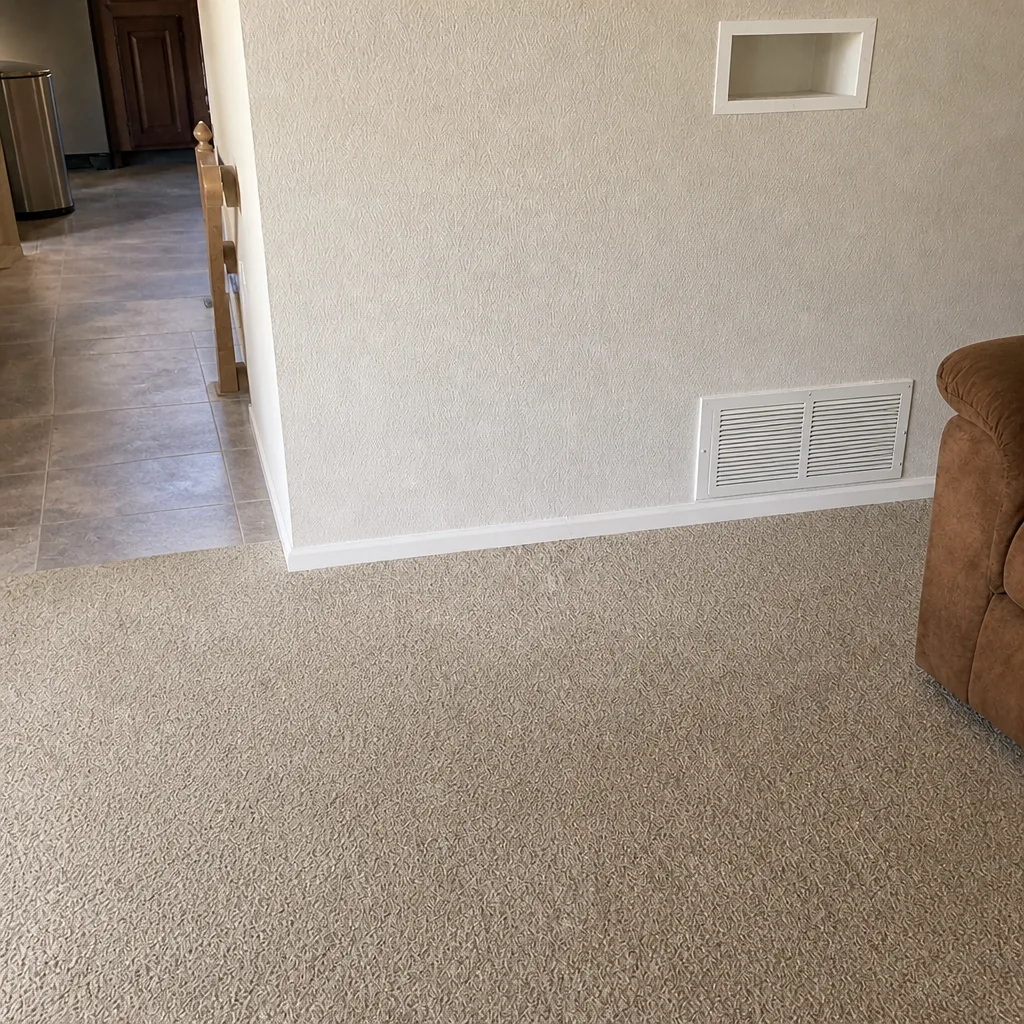
See the difference
 Before
 After
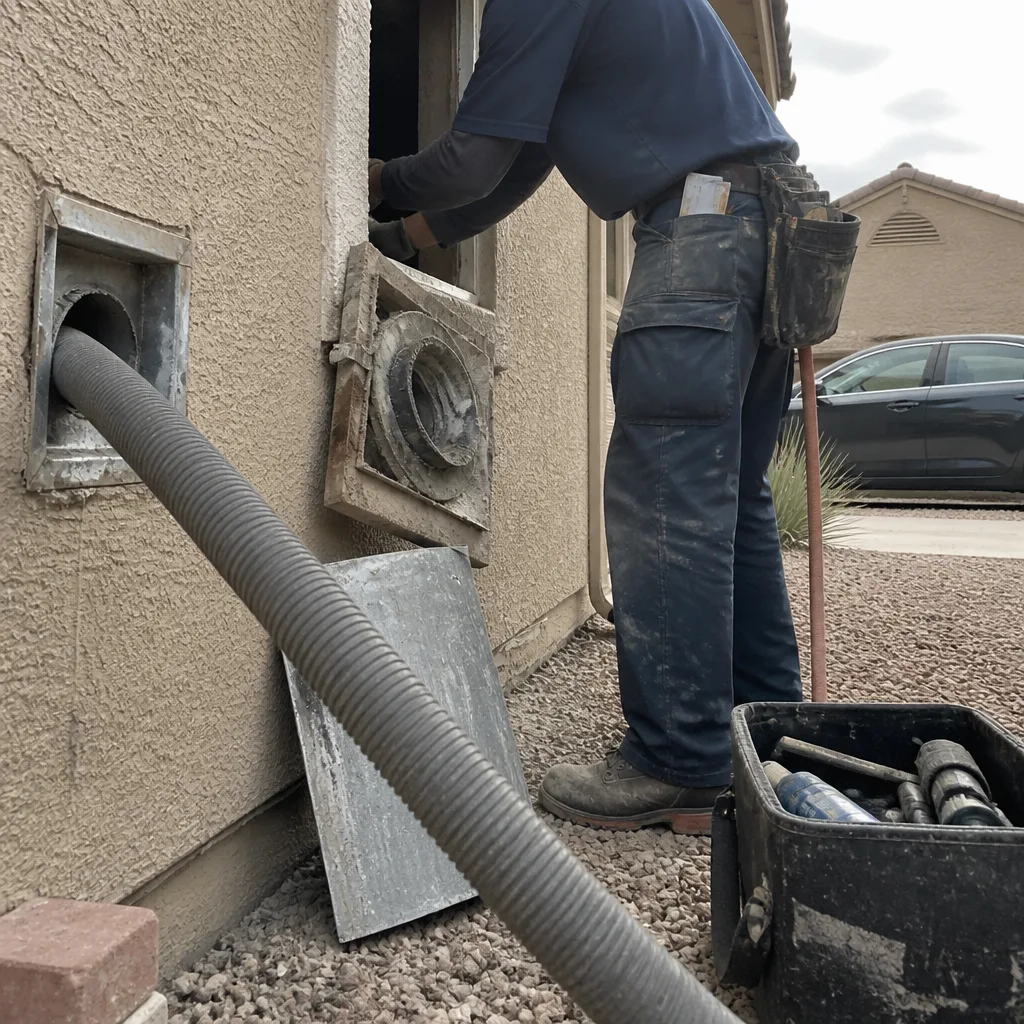 Before
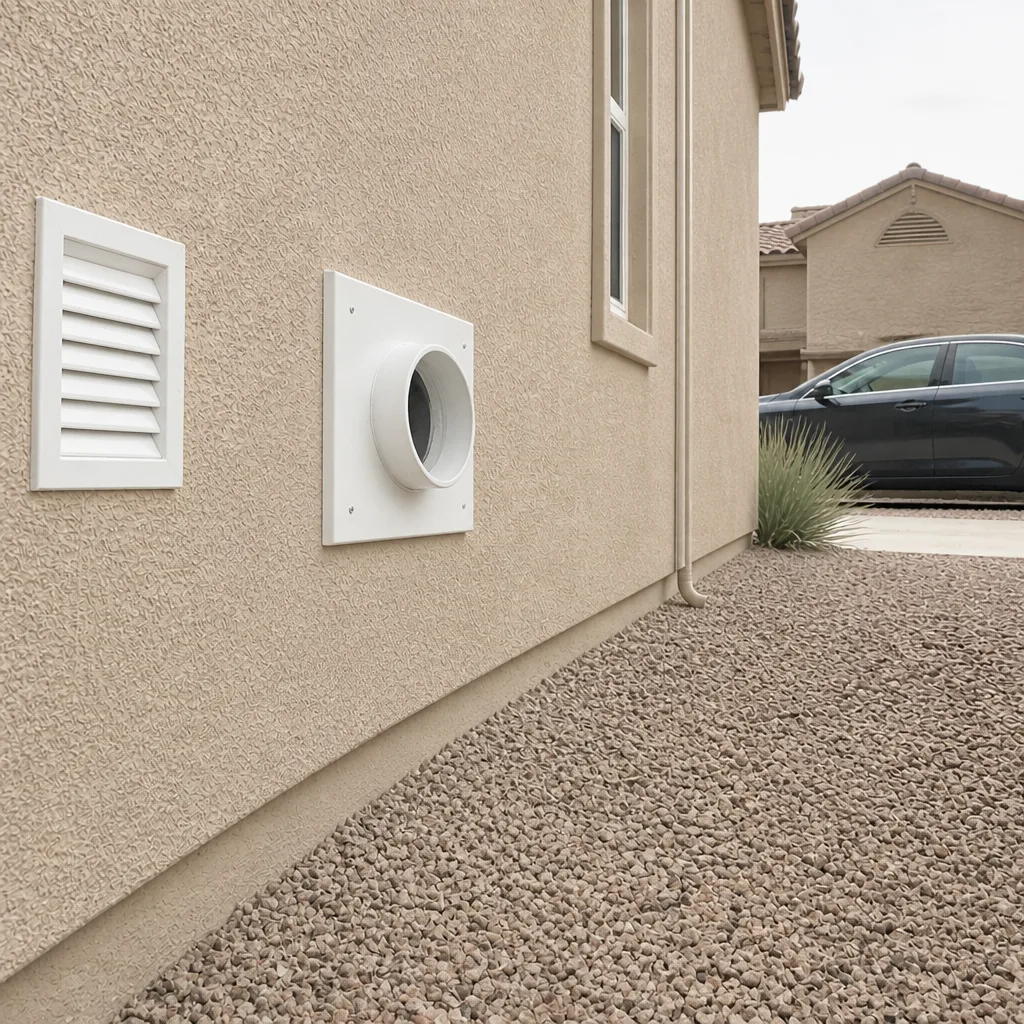 After
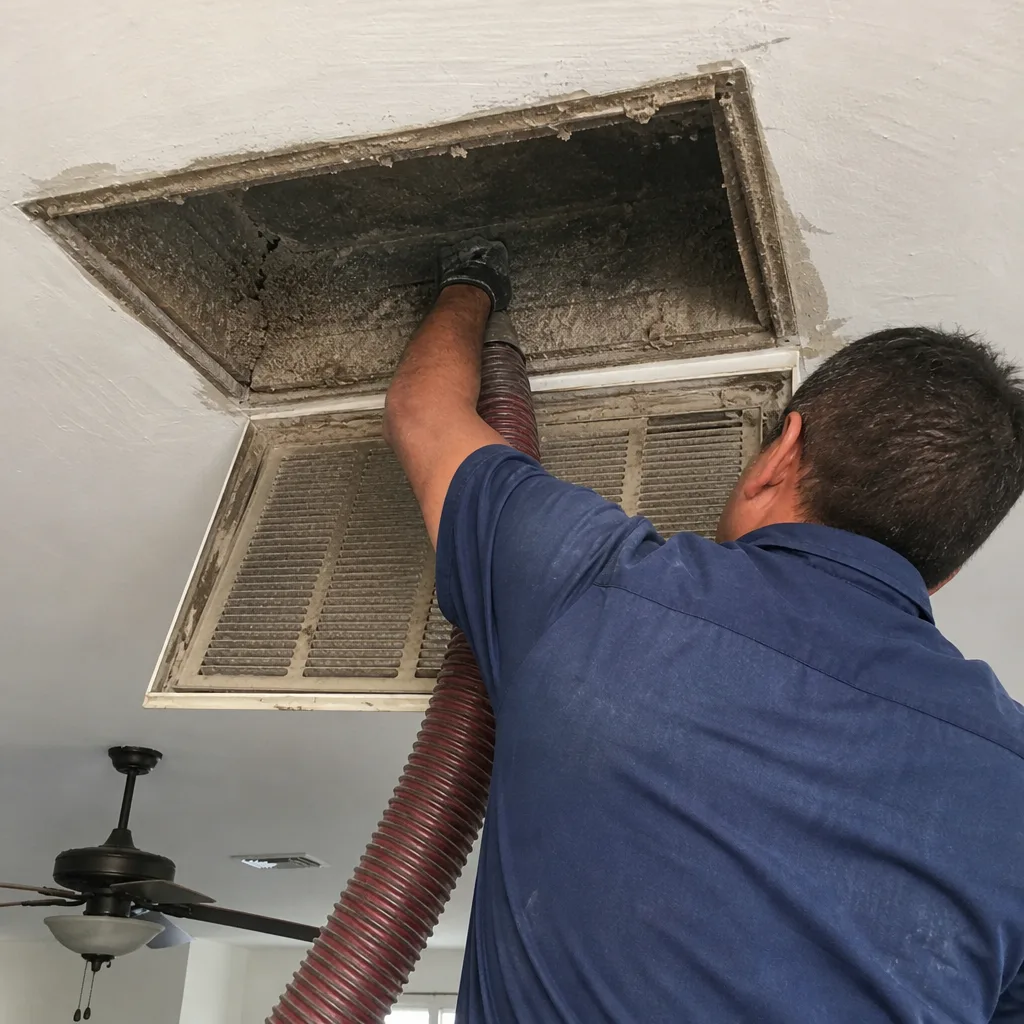 Before
 After
When to Call a Professional
Call a duct specialist when you have a single-run airflow problem you can’t trace, visible debris or fiber material in the runs, a musty smell coming from a specific register, a register that fills with dust in days, or any sign that a run has separated under a slab or in an attic. Call an HVAC technician when the airflow is weak house-wide, the blower sounds labored, the system short-cycles, or the filter fills in a week. If you’re unsure which category your problem belongs to, that’s exactly the call we can help sort – Duct Cleaning Goodyear offers free estimates in Goodyear, so you can find out which bucket you’re in before you commit to a job. We answer 24/7, and we’ll tell you honestly if the fix is ours or an HVAC technician’s. Call (844) 287-2528. Fast dispatch from 7am to 7pm, Sunday through Friday.
For a system that’s been checked and is clearly a duct job, we bring the equipment to handle whatever we find: Rotobrush contact vacuums, Nikro rigs with suction monitoring, and Abatement Technologies negative-air gear for contamination cases. Our technicians have up to 13 years of experience diagnosing these systems, and we can work with your insurer if your situation requires it. Estimates are free, and the final price is set by the written estimate so you know the number before any work starts.
Frequently Asked Questions
Because weak airflow after a cleaning is usually an HVAC-side problem – a clogged filter, restricted coil, failing blower, or undersized return – and cleaning doesn’t touch any of those. The one exception is a separated or collapsed duct run the cleaning missed. Before booking another cleaning, check the filter, confirm the return is unblocked, and have static pressure measured at the air handler. Call (844) 287-2528 for a free estimate – we’ll help you figure out which bucket the problem is in.
A brief puff of loosened dust at the registers, a faint odor that clears within a day or two, and slightly stronger airflow that settles as the system rebalances. Those resolve within 24 to 48 hours. Weak airflow that persists, a musty smell that returns within a week, or dust returning fast to a single register are not normal – that’s a mechanical problem or a leak behind a boot. Call (844) 287-2528 for a free estimate if any of those persist.
Run the two tricks before calling anyone: check the filter and walk every register with your hand. Weak airflow across the whole house with a fresh filter points to HVAC; weak airflow in one or two rooms points at a duct run. Isolated dust at one register is almost always a leak behind that boot – a duct-repair job. For an exact diagnosis, a technician can measure static pressure and camera-inspect the runs. Call (844) 287-2528 for a free estimate – estimates are free and we’ll tell you which bucket you’re in.
Two reasons: the caliche soil West Valley homes sit on moves unevenly as it settles, which can pull buried duct joints apart, and the long, hot summers mean duct systems here run far more hours per year than in milder climates. That extended runtime ages the flex liner and eventually causes brittle, shedding material. Neither is routine dust – both are duct-integrity problems that cleaning alone won’t solve. Call (844) 287-2528 for a free estimate – we’ll tell you whether it’s cleaning, repair, or HVAC.
An inspection with camera and pressure readings is typically part of a duct-cleaning estimate, which is free – you don’t pay to find out whether cleaning or repair is the right call. A cleaning itself is priced per system by written estimate, never per vent; that’s how we avoid the bait-and-switch quote-becomes-invoice problem. Call (844) 287-2528 for an exact quote – estimates are free.
Sometimes yes. If the diagnosis is a disconnected joint or a torn flex run, the repair is what matters and cleaning that run may be part of the repair job anyway. But a repair without cleaning leaves the debris that accumulated through the break sitting in the system. In our experience the two are usually done together, and we’ll tell you plainly which you need. Call (844) 287-2528 for a free estimate and a straight answer.
The Bottom Line
The core lesson of this guide: sort your symptom into a bucket before you spend money. Weak airflow house-wide with a fresh filter points at HVAC, and a cleaning won’t fix it. Isolated weak flow, fast-returning dust at one register, fibers at a register, or a musty smell from a specific run point at the ducts – and that’s where contact-vacuum cleaning and duct repair belong. In Goodyear, caliche ground movement and heavy summer runtime add two more failure modes to watch for: separated joints under slabs and brittle, shedding liner in flex runs. Use the decision tree. Check the filter first, every time. Ask for before-and-after photos, always. And if the diagnosis comes back as a duct-side problem, call Duct Cleaning Goodyear at (844) 287-2528. We answer 24/7. Fast dispatch from 7am to 7pm, Sunday through Friday. We’re closed Saturday. Estimates are free, we price per job by written estimate, and we use the same professional-grade equipment that remediation crews rely on.
Written by the team at Duct Cleaning Goodyear.