
Last updated November 15, 2026
 Whole-home duct cleaning
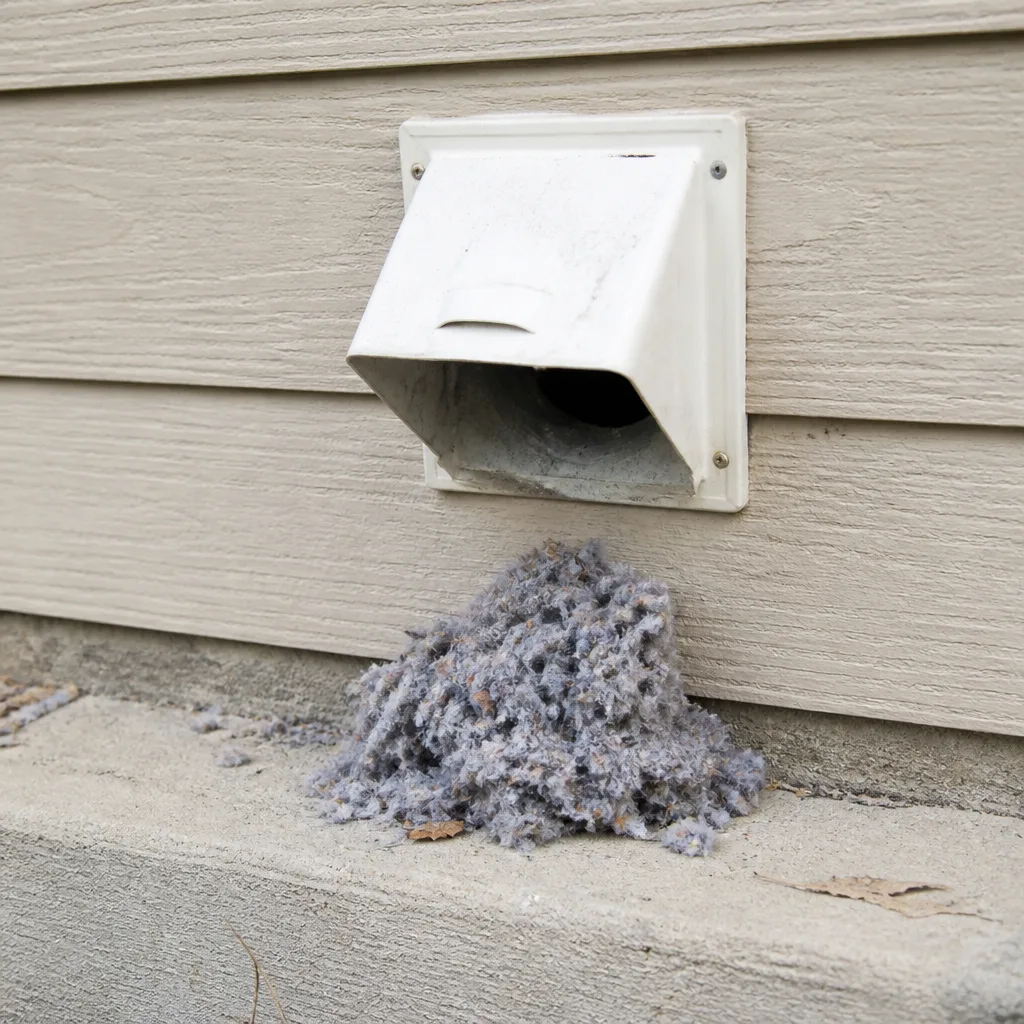 Dryer vent cleaning
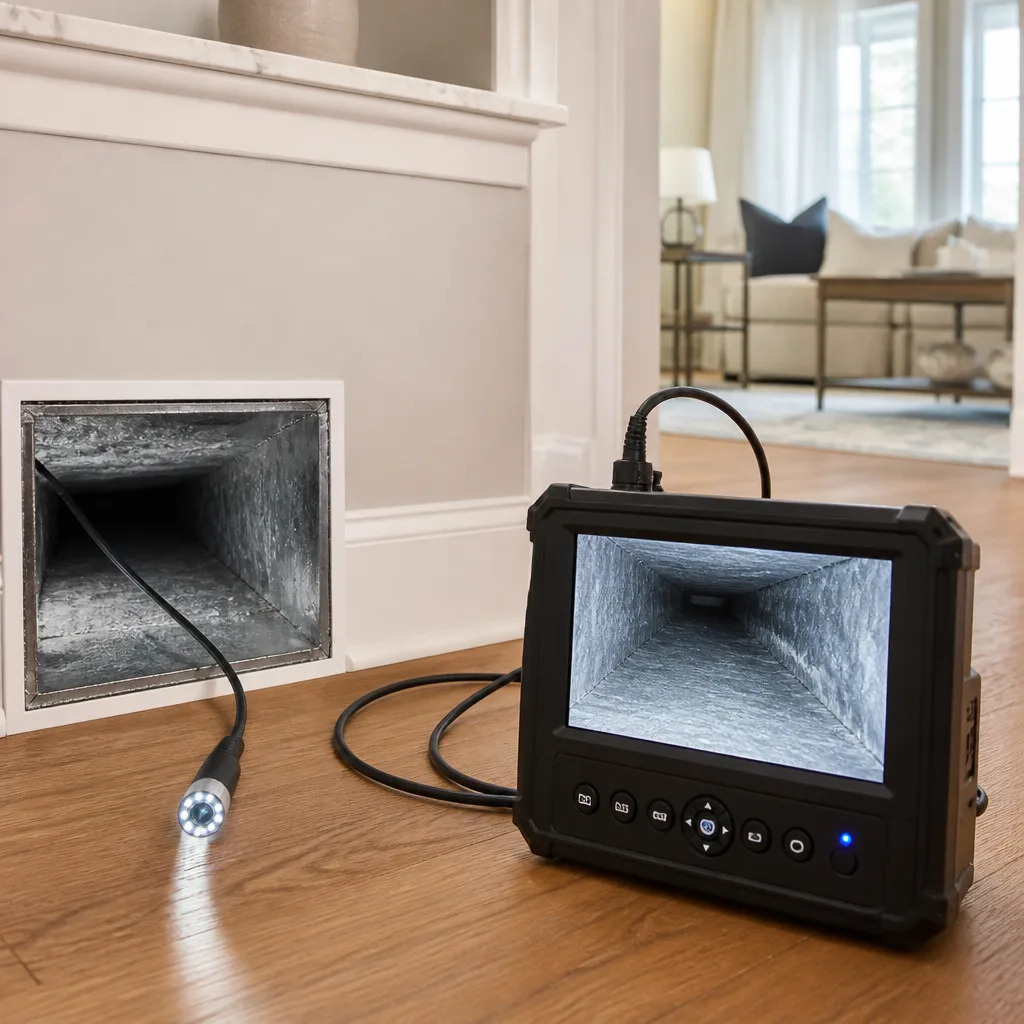 Camera inspection
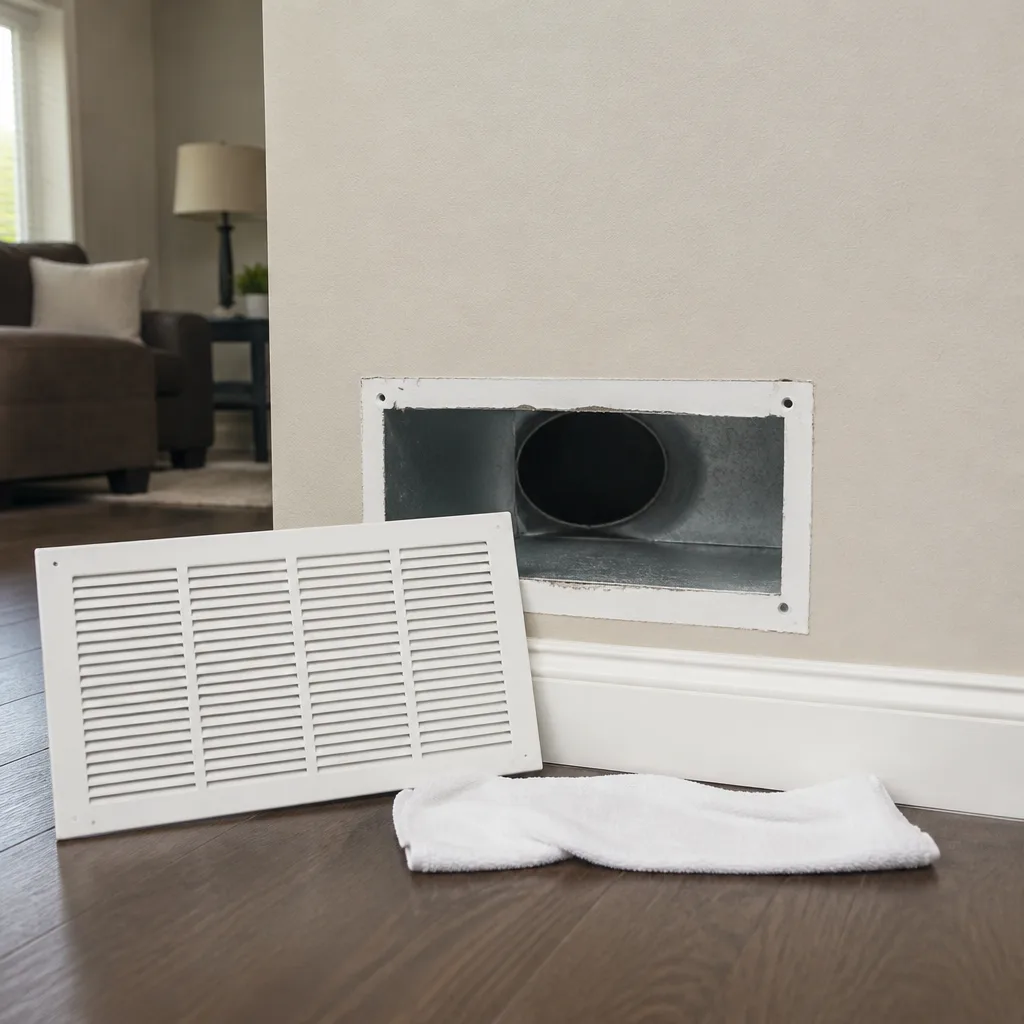 Sanitizing & deodorizing
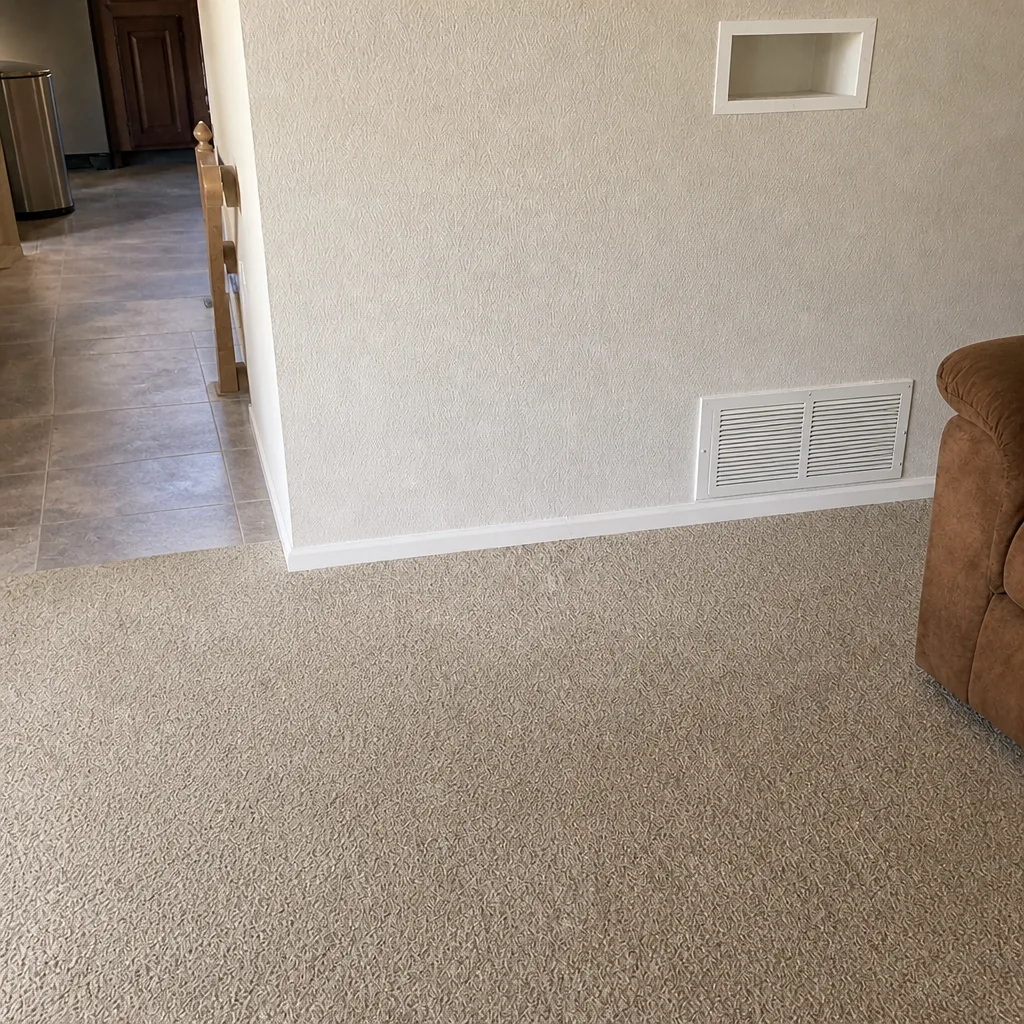
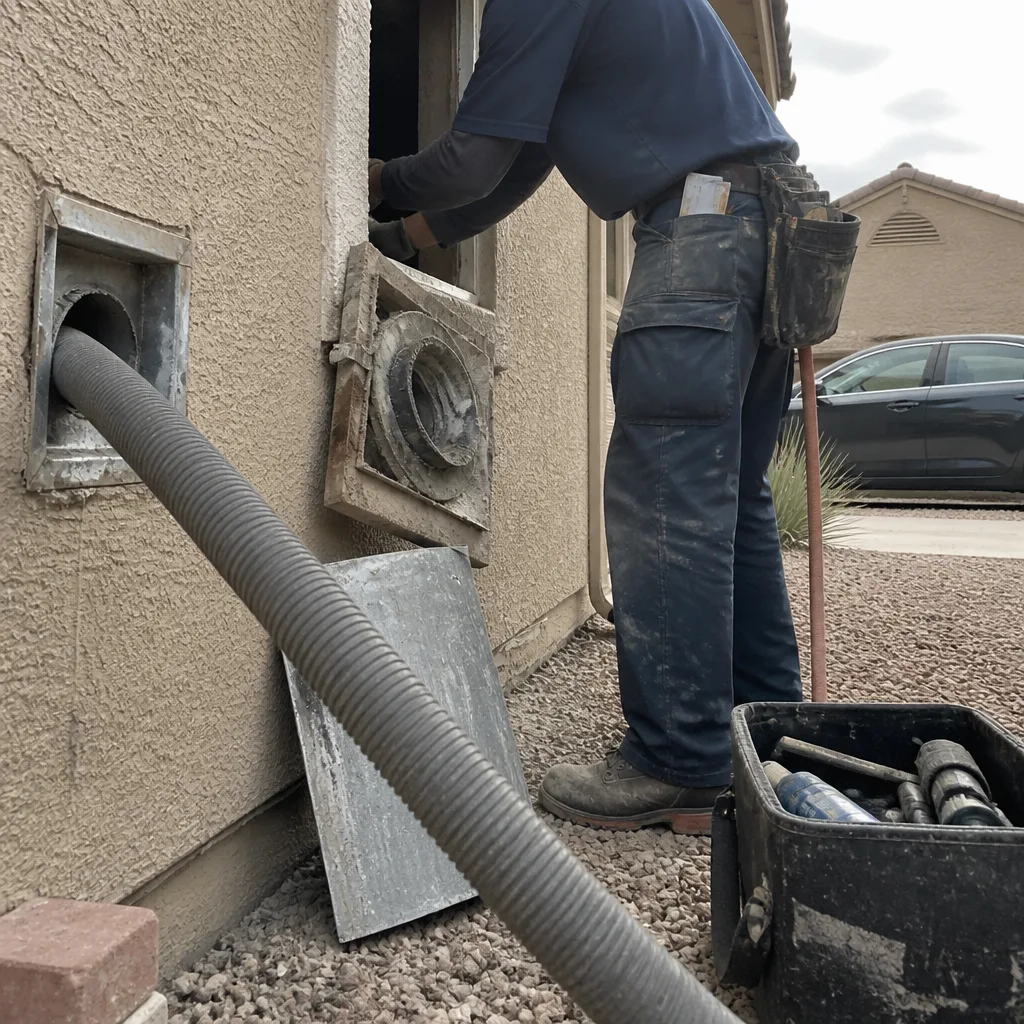
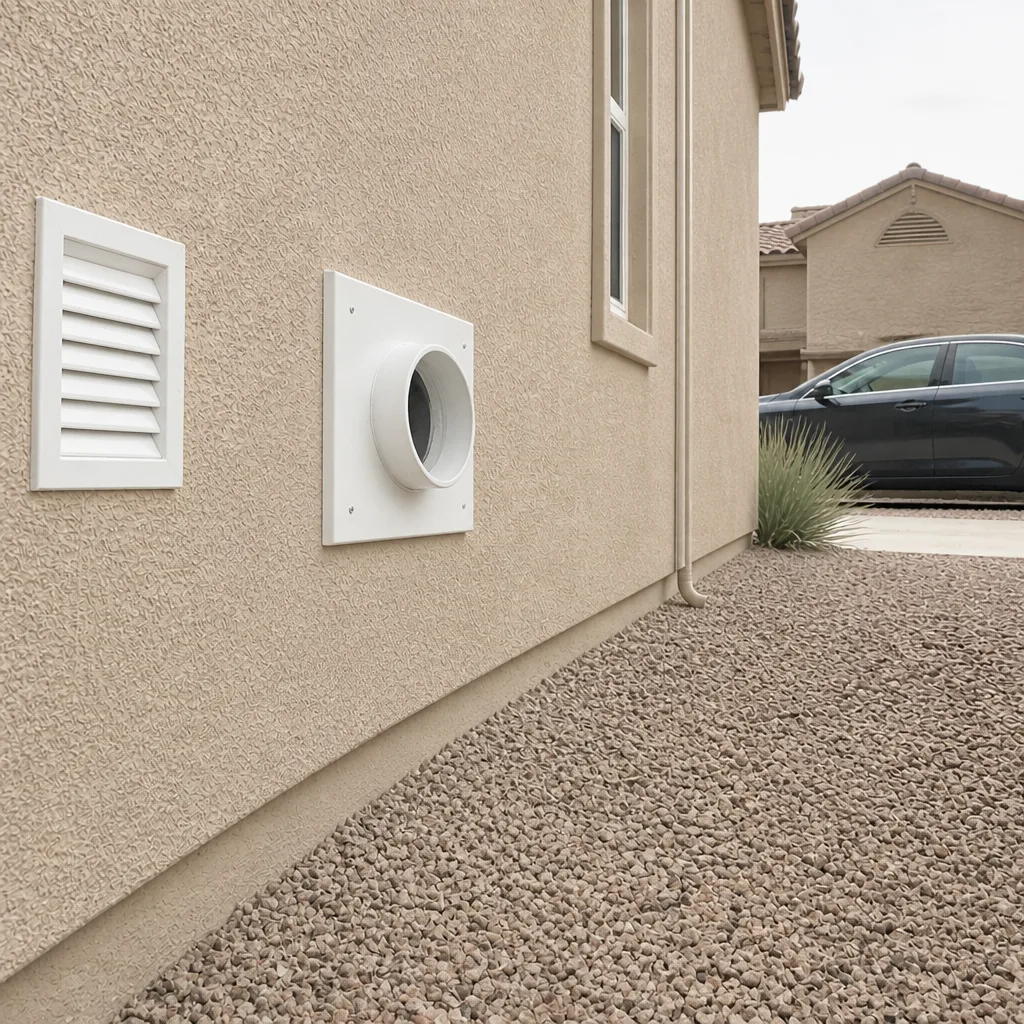
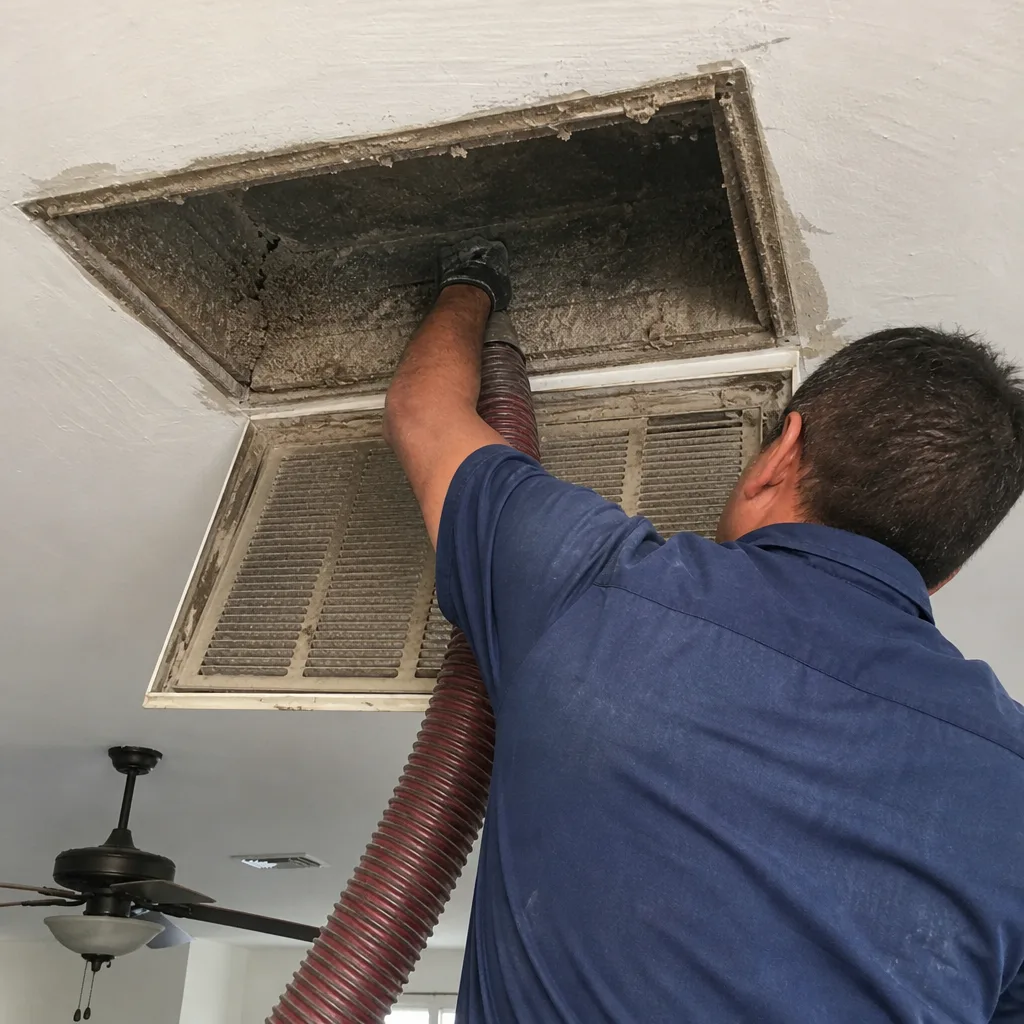
Whole-system duct and dryer vent check with before-and-after photos - you see exactly what came out of your vents
That "$99 whole-house special" is a bait ad - the real number appears once they are in your hallway, or the "clean" is a shop-vac at the register. We photograph the inside of your ducts before and after instead.
Air Duct Cleaning Permits, Codes & Inspections in Goodyear, AZ: What You Need to Know
No permit is required to clean your ducts in Goodyear. But if your contractor reseals a disconnected joint, replaces a section of flex, or modifies a register boot during the job, that work can cross into licensed mechanical contractor territory under Arizona Registrar of Contractors rules. That line matters more than most homeowners realize, and it matters differently in Goodyear than in older valley cities. This guide explains where cleaning ends and regulated work begins, how new-construction builder warranties in Goodyear interact with duct work, what HOA communities expect in writing, how to verify a contractor’s status with the ROC, and what documentation to request if a technician finds a genuine code problem behind your walls.
Quick Answer
Air duct cleaning in Goodyear does not require a permit under Arizona rules, because cleaning is maintenance and not construction. Any repair or modification of ductwork, a plenum, or a register connection is licensed mechanical work, and the contractor performing it must hold the appropriate Arizona Registrar of Contractors license. Always ask to see that license before allowing repair work, and get documentation of any deficiency the contractor identifies.
Styles & brands we work with
- Whole-home duct cleaning
- Dryer vent cleaning
- Camera inspection
- Sanitizing & deodorizing
Table of Contents
- The Legal Line in Arizona: Cleaning vs. Repair
- Arizona ROC License Classes That Cover Duct Work
- How to Verify a Contractor Before You Allow Repairs
- New Construction and Builder Warranties in Goodyear
- What HOA Communities Need in Writing
- Inspections: What Gets Checked and What Doesn’t
- Insurance Documentation When a Deficiency Is Found
- Why Goodyear’s Climate Changes the Conversation
The Legal Line in Arizona: Cleaning vs. Repair
Cleaning ductwork removes material. Repairing ductwork changes the system. That is the cleanest way to think about the legal boundary in Arizona, and it holds across every city in the valley, Goodyear included. A contractor with vacuum equipment and a brush system can pull years of dust, pet hair, and construction debris out of your supply and return runs without a permit and without a license in most cases, because nothing about the system is being altered. The moment a joint is reattached with mastic, a crushed flex run is swapped for a new one, or a plenum seam is sealed because it was leaking into a wall cavity, the work becomes mechanical in nature.
That second category is where the Arizona Registrar of Contractors enters the picture. The ROC regulates contractors, not cleaners. Duct cleaning as a standalone service does not map to a specific license class, but duct repair does, because the contractor is now working on a component of an HVAC distribution system. If a technician tells you mid-job that you need “a quick repair” to finish the cleaning, that is the moment to ask which license the company holds and who is performing the repair.
What counts as cleaning
- Contact vacuuming of supply and return runs
- Agitation with rotary brushes or air whips inside the duct
- Negative-air containment during the job
- Removal of debris from registers and grilles
- Sanitizing with surface products after cleaning
What counts as mechanical work
- Replacing a section of flexible or rigid duct
- Sealing a disconnected joint or a leaking plenum
- Modifying or relocating a register boot
- Changing duct sizing or rerouting a run
- Any work that alters airflow balance in the system
This distinction matters for a practical reason. When we’re on a job, we clean it, and if we find a breach, we fix it. That single-company continuity is why Duct Cleaning Goodyear offers air duct cleaning alongside air duct repair rather than passing you to a second contractor who may not be licensed for the repair or may not document it properly. The documentation is the part most homeowners forget to ask for, and it’s the part that protects you later.
Arizona ROC License Classes That Cover Duct Work
Arizona issues residential and commercial contractor licenses in specific trade classes, and HVAC mechanical work falls under a defined scope rather than a single catch-all category. The practical takeaway for a Goodyear homeowner is simple: the company performing duct repair should be able to name its license class and show it when asked, and you should confirm the class covers the type of work being quoted. A license in an unrelated trade does not authorize duct modification, and a business license from the city is not the same thing as an ROC contractor license.
Two categories tend to come up in residential duct work. The first is the class that covers heating, ventilation, and air conditioning systems as a whole, which includes the ductwork attached to those systems. The second is a specialty class that may cover sheet metal or duct installation and repair as a narrower scope. Which one applies to your job depends on what the contractor is proposing to do. Cleaning a run is neither. Replacing it is one of the two.
Why this is not a technicality
Unlicensed contracting in Arizona carries real consequences for the homeowner, not just the contractor. An unlicensed contractor generally cannot place a lien on your property for unpaid work, but that cuts both ways: if the work is faulty, your recourse through the ROC complaint process is limited because there is no license to act against. Licensed contractors are also required to carry certain bonding and insurance, and those protections disappear when you hire someone operating outside the system.
The confusion usually starts with a phone quote. A cleaning company quotes a flat price for the cleaning, arrives, finds a disconnected joint in the attic, and offers to reattach it for a small add-on. Sometimes that company is licensed and the offer is legitimate. Sometimes it isn’t. Asking one question before the job starts settles it: “If you find a repair, who performs it, and what license do you hold?” A straight answer is a good sign. A vague one is not.
How to Verify a Contractor Before You Allow Repairs
Verification takes a few minutes and it happens before a technician climbs into your attic, not after. The Arizona Registrar of Contractors maintains a public database of licensed contractors, and the lookup is free. You can check whether a license is active, whether it has any complaints or disciplinary actions attached, and what trade class it covers. That last part is the one most people skip.
- Ask for the company’s legal business name and ROC license number.
- Look the license up in the ROC’s public database and confirm the status is active.
- Confirm the license class actually covers the work being proposed, not just HVAC in general.
- Check for any disciplinary history or unresolved complaints on the record.
- Ask for a certificate of insurance showing general liability and, if they have employees, workers’ compensation.
- Get the scope in writing before any repair begins, including the exact components being replaced or sealed.
For landlords and property managers in Goodyear, step six is the one that matters most at the end of the year. A written scope plus a written service summary gives you a clean paper trail for the property file, and it protects you if a tenant disputes what was done or a future contractor questions the condition of the system. We’re familiar with what property managers need because we work with them, and the documentation is not a nuisance. It’s the deliverable that outlasts the job.
What a reputable answer sounds like
When you ask the license question, expect a specific response. A licensed company will name its class, offer the number, and not be bothered by the request. If the response is “we don’t need one for cleaning,” that may be true for the cleaning itself, and it’s a fair answer as long as the conversation stays on cleaning. Push on the repair scenario. If the contractor cannot explain who performs repairs and under what license, treat the repair as something you’ll source separately.
New Construction and Builder Warranties in Goodyear
Goodyear has grown fast, and a large share of its housing stock is recent construction. That changes the duct cleaning conversation in a way older cities don’t face. New homes in Goodyear often still carry an active builder warranty on the HVAC system, and that warranty may specify who is permitted to service the system and under what conditions. Reading the warranty language before scheduling anything is the single best way to avoid a problem.
What most homeowners miss is that cleaning itself rarely voids a warranty, but poorly executed or undocumented work can. A warranty administrator looking at a claim will ask what was done, by whom, and whether the work contributed to the failure. If the answer is a vague “someone cleaned the ducts,” and the failure involves a disconnected joint or damaged flex, the claim can get complicated. If the answer is a documented cleaning with before-and-after photos and no repair performed, the claim stays clean.
Practical steps for new-build homeowners
- Read the HVAC section of your builder warranty before scheduling anything.
- Confirm whether the warranty requires a licensed contractor for any repair work.
- Ask the cleaning company to document the system’s condition before and after cleaning with photographs.
- Keep the written service summary with your closing documents in case you sell the home.
- If a deficiency is found, report it to the builder’s warranty department in writing before authorizing a third-party repair.
That last point belongs in bold on every new-build guide in the valley. In our experience, a homeowner who contacts the builder about a duct deficiency found during cleaning sometimes gets the correction covered, and sometimes doesn’t, but the homeowner who authorizes a third-party repair without notifying the builder first rarely gets it covered. The order of operations decides the outcome.
What HOA Documentation Your Community May Require
Much of Goodyear sits inside planned communities with active homeowner associations, and HOAs have their own documentation habits. Cleaning a duct system is interior work, so it doesn’t typically touch HOA architectural review. But two situations do bring HOA requirements into play. The first is any modification visible from outside, such as relocating a vent or adding an exterior penetration. The second is a community that maintains service records for common-wall or shared-system buildings such as townhomes.
For most single-family homeowners in Goodyear, the HOA question is about records rather than permission. If you’re a landlord renting to tenants in an HOA community, or if you’re preparing a home for sale in one, a written service summary from the contractor is a useful document to have on hand. It shows the work was performed professionally, names the equipment used, and gives a date and scope that can be filed with the property records.
When to request a written service summary
- You’re a landlord and the property sits inside an HOA community.
- You’re preparing a home for sale and want documentation of recent maintenance.
- Your HOA requires records of work performed on shared building components.
- You’re making an insurance claim related to indoor air quality or a moisture issue.
- An inspection or appraisal flagged the ductwork and you want to show it was addressed.
Ask for the summary before the technician leaves, or specify in the booking that you need one. A summary that names the equipment rather than just the service is worth more, because it tells a future reader whether professional-grade tools were used. Our dryer vent cleaning work is documented the same way, and it’s often the service an HOA or insurer asks about first because of the fire risk involved.
Inspections: What Gets Checked and What Doesn’t
Arizona does not require a routine inspection of residential ductwork, and no government agency shows up to verify a cleaning job. Inspections happen for three reasons: a home sale, an insurance claim, or a specific problem like moisture, mold, or a comfort complaint. Understanding which of those applies tells you what kind of inspection is actually relevant to your situation.
During a home sale, a general home inspector may note visible duct conditions, but most home inspectors don’t inspect the interior of ductwork because doing so requires specialized camera equipment. That means the inspection report you receive at sale is often silent on the inside of your ducts, which doesn’t mean they’re clean. It means nobody looked.
What each type of inspection covers
- Home sale inspection: visible duct condition at accessible points, attic connections, and register condition. No interior duct camera work.
- Insurance claim inspection: documentation of damage, cause, and remediation scope. Photographs and written reports carry the claim.
- Air quality concern inspection: interior camera inspection, moisture readings, and often a look at filtration and ventilation compatibility.
The third category is where equipment matters most. Abatement Technologies negative-air equipment is built for contamination-level work, and having it available means a job involving mold spores or heavy particulate can be handled without a second call to a remediation company. Familiarity with Honeywell and Aprilaire systems also lets a technician speak to filtration and ventilation upgrades when the inspection finds a duct system that’s clean but under-filtered, which is a common finding in Goodyear homes with high summer dust loads.
Insurance Documentation When a Deficiency Is Found
If a technician identifies a code-deficient duct condition during cleaning, the most valuable thing you can walk away with is a written description of what was found and photographs of the condition. This is the documentation an insurer, a builder warranty department, or a future contractor will ask for. A verbal description of “a leak in the attic” is worth very little six months later when the wall has a water stain.
What counts as a genuine deficiency worth documenting varies, but some findings show up repeatedly in Goodyear homes. Disconnected flex at a boot, crushed runs behind a knee wall, unsealed plenum seams, and ductwork running through unconditioned attic space with insufficient insulation are all common. In a climate where attic temperatures reach punishing highs, those are not cosmetic issues. They affect how hard the system works and where the cooled air actually ends up.
What to ask for in writing
- A photograph of the deficiency with the location noted.
- A plain-language description of what is wrong and what it means for the system.
- Whether the condition is a code issue, a performance issue, or both.
- Whether the repair should be handled by a licensed mechanical contractor and why.
- A written estimate for the repair that identifies the components involved.
If the deficiency might be a builder warranty matter, send the documentation to the builder’s warranty department in writing before authorizing anyone to repair it. That written notice is what preserves your options. And if the issue involves your dryer vent rather than your HVAC ducts, know that dryer vent concerns are their own category: a blocked or crushed vent is a fire risk regardless of warranty status, and it should be addressed outright. If you want the broader picture of how cleaning fits alongside repair in the Goodyear market, the Goodyear service page lays out the local picture in more detail.
Why Goodyear’s Climate Changes the Conversation
The desert climate in Goodyear matters to this topic in a way that permits and paperwork don’t capture. Ductwork in a large share of Goodyear homes runs through an unconditioned attic, and attic temperatures climb high enough through the summer that a leak or a crushed run wastes more energy here than it would in a milder climate. That’s a performance issue, and performance issues don’t appear on any permit application. They show up on your electric bill and in rooms that never quite cool down.
Dust behaves differently here too. Fine desert particulate moves into return systems and settles in runs, and the load is heavier in homes near active construction, which describes a lot of Goodyear’s newer neighborhoods. We see the difference when we run equipment in a home that’s been through nearby building activity versus one that hasn’t. Nikro contact-vacuum systems and negative-air containment are the reason we can pull that material out rather than stir it into the air and call it done.
What changes with the local climate
- Attic duct runs face extreme summer temperatures, so leaks and disconnected joints have outsized energy costs.
- Fine particulate from construction and open desert land settles in return runs faster than in greener climates.
- Filtration matters, which is why knowing Honeywell and Aprilaire systems helps when recommending upgrades.
- Dryer vents in exterior-wall or attic locations can crush or block, and that’s a fire risk worth checking.
None of that requires a permit. All of it is worth understanding before you hire. The Duct Cleaning Goodyear home page gives a full view of the services that apply to this climate and these homes.
Common Mistakes to Avoid
- Authorizing a repair mid-job without checking the license. The cleaning is unregulated, the repair may not be. Ask before the technician touches a joint.
- Skipping the builder warranty call. In Goodyear’s newer neighborhoods, a deficiency found during cleaning sometimes gets corrected by the builder. Not calling first can forfeit that option.
- Accepting a verbal finding. A description of a problem without photographs and a written scope is nearly useless when a claim or a sale comes up later.
- Assuming the home inspection covered your ducts. Most home inspectors don’t look inside ductwork. A silent report is not a clean bill of health.
- Letting a landscaping project or HVAC change crush a flex run. Construction is one of the most common causes of disconnected and crushed ductwork in newer Goodyear neighborhoods.
- Overlooking the dryer vent. It’s ductwork too, and it’s the run most likely to be blocked or crushed. It deserves attention on the same visit.
- Assuming a business license equals a contractor license. They’re different things. A city license to operate a business does not authorize mechanical work on your HVAC system.
See the difference
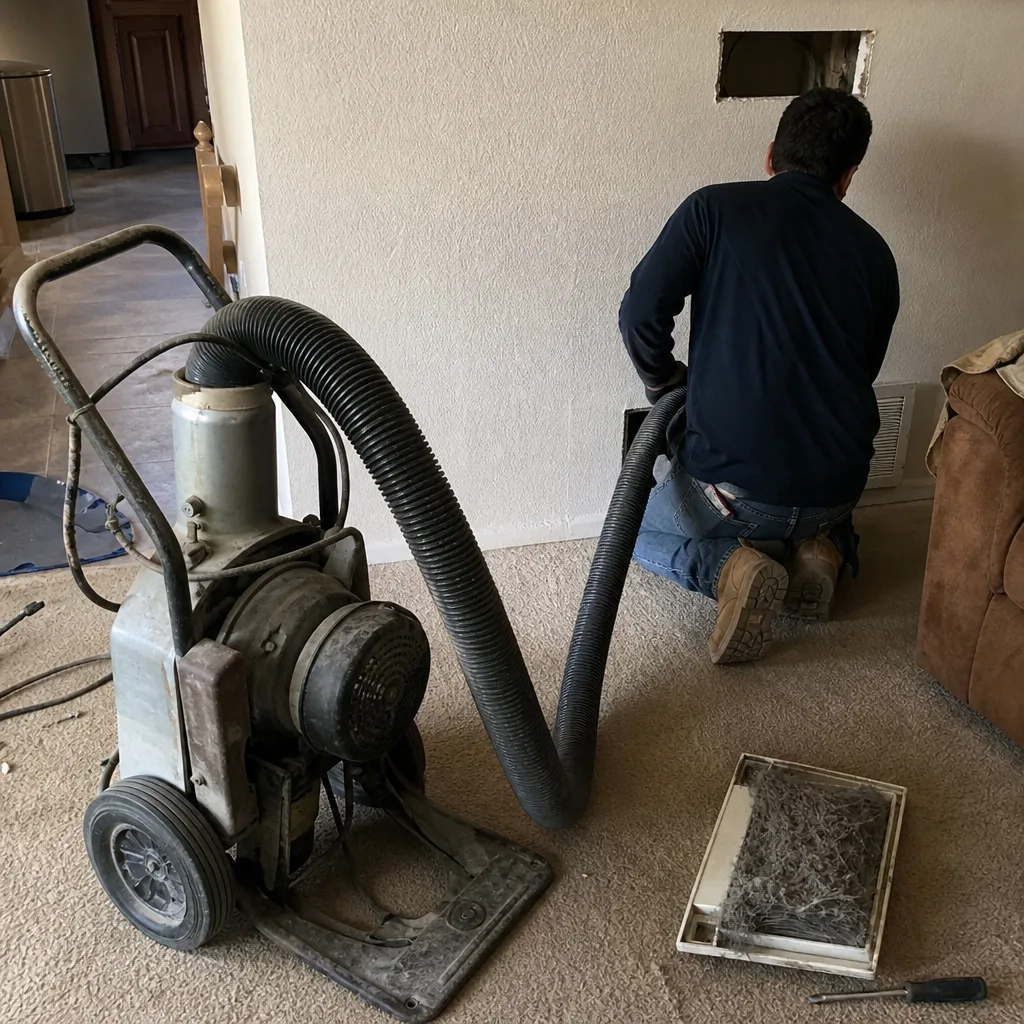 Before
 After
 Before
 After
 Before
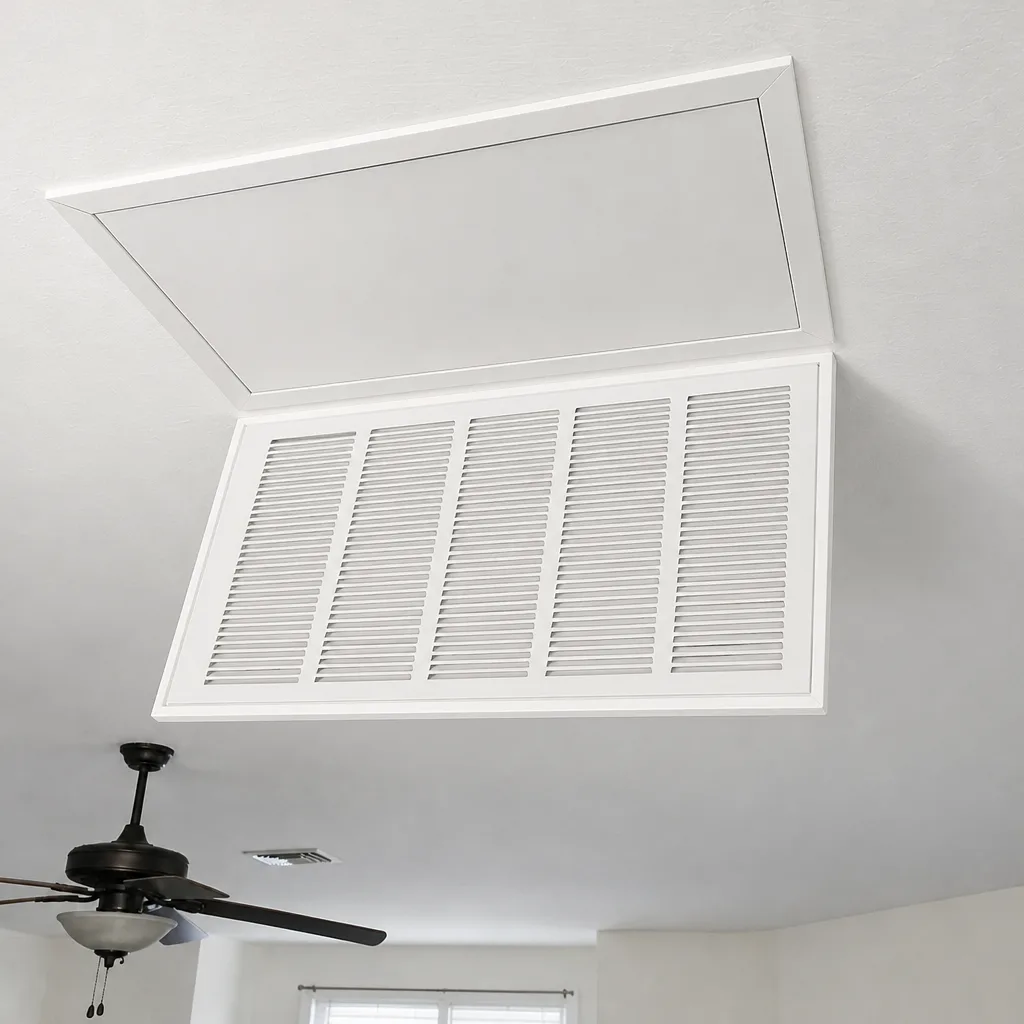 After
When to Call a Professional
There are situations where the permit question is beside the point because the problem needs a professional on site. If you’re seeing visible dust streaks around a register, if rooms don’t cool evenly, if you smell a musty odor when the system starts, or if your dryer takes far longer to dry clothes than it used to, those are all signs that something inside the duct system needs a look. If a contractor has already told you a joint is disconnected or a run is crushed, get the repair scoped properly by someone licensed for it. And if you’re in a new-build Goodyear home and a deficiency turned up during cleaning, document it in writing before authorizing anything. Duct Cleaning Goodyear offers free estimates in Goodyear – call (844) 287-2528. We answer 24/7. Fast dispatch from 7am to 7pm, Sunday through Friday.
Frequently Asked Questions
No. Air duct cleaning in Goodyear does not require a permit under Arizona rules, because cleaning is considered maintenance rather than construction or mechanical modification. The permit question only arises if the job involves altering, replacing, or sealing components of the duct system. Call (844) 287-2528 if you’d like to know which category a job falls into – estimates are free.
Cleaning alone typically does not void a builder warranty, but undocumented or poorly executed work can complicate a future claim. Read the HVAC section of your warranty before scheduling, keep the written service summary and photographs, and notify the builder’s warranty department in writing if a deficiency is found. Call (844) 287-2528 to talk through what your warranty might require.
Duct repair falls under licensed mechanical contractor work, and the contractor should be able to name the specific Arizona ROC license class that covers it. Verify the license number in the ROC’s public database and confirm the class matches the proposed work, not just that a license exists. Call (844) 287-2528 and we’ll be clear about which parts of the job are cleaning and which require a licensed repair.
Usually no, because cleaning is interior work that doesn’t affect exterior appearance or shared building components. Landlords, property managers, and homeowners in townhome communities may still want a written service summary filed with the property records. Ask for it at booking so it’s ready when the job is finished. Call (844) 287-2528 to request one with your estimate.
Get it documented in writing with photographs and a plain-language description before anyone touches it. Then decide who should perform the repair: a licensed mechanical contractor if the work is a modification, or the builder’s warranty department if the home is still under warranty. Call (844) 287-2528 and we’ll walk through what we found and what it means for your system.
Generally no. Most home inspectors don’t inspect the interior of ductwork because it requires specialized camera equipment, so a home inspection report usually says nothing about duct cleanliness. If you want to know the actual condition of your ducts, that requires a dedicated inspection. Call (844) 287-2528 to schedule one in Goodyear.
The Bottom Line
Permits, codes, and inspections in Goodyear come down to one line: cleaning is maintenance, repair is licensed mechanical work, and the paperwork between them is what protects you. Get the license question answered before any repair is authorized. Read your builder warranty before scheduling in a new-build home. Ask for a written summary and photographs regardless of whether anyone else requires them. And remember that the climate here raises the stakes on leaks and crushed runs, even though it raises nothing on a permit form. Duct Cleaning Goodyear offers free estimates in Goodyear. Call (844) 287-2528. We answer 24/7. Fast dispatch from 7am to 7pm, Sunday through Friday. Our technicians have up to 13 years of experience, and we’ll explain what’s actually happening inside your ductwork before you decide anything.
Written by the team at Duct Cleaning Goodyear.